
Adam Hernandez embraces public art as a means ‘to keep a story or an idea alive … in our world’
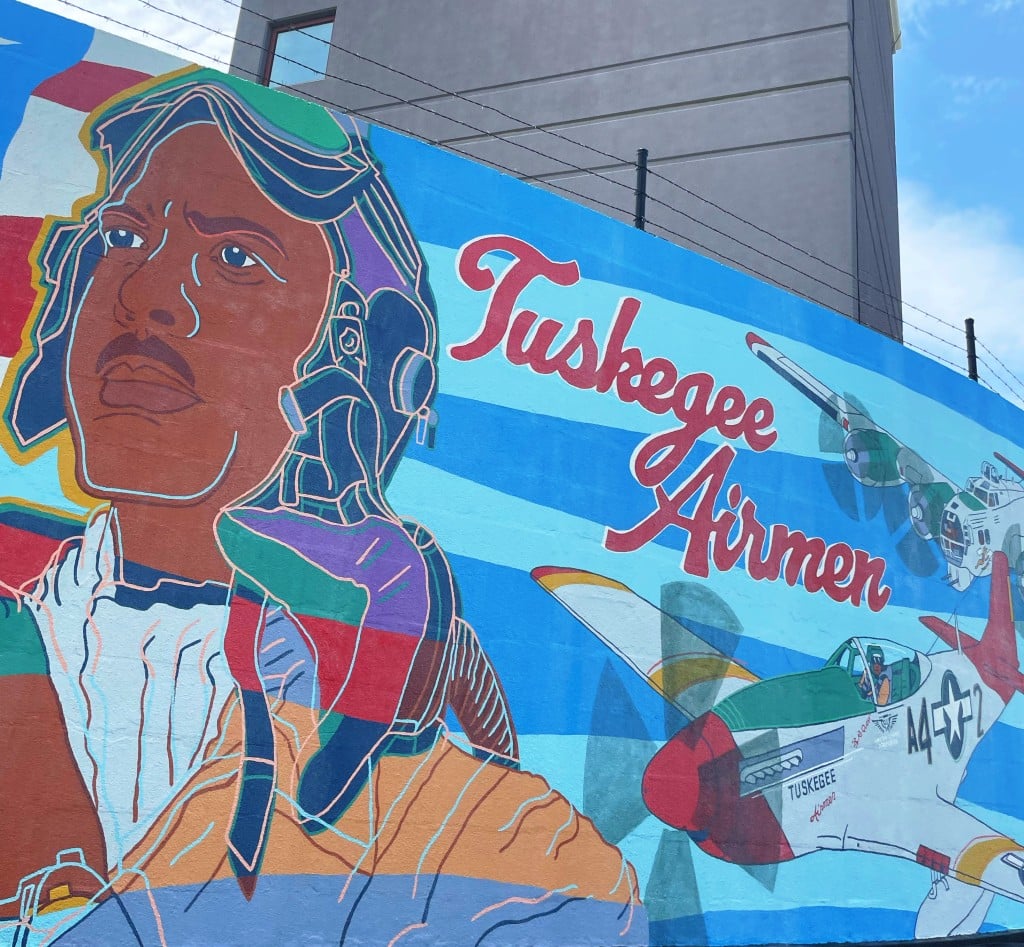
The Columbus artist, who last year painted a mural honoring the Tuskegee Airmen at Rickenbacker Airport, recently spoke out on social media about the injustice at play in the Air Force’s decision to pause educational programming related to the famed pilots.
Since returning to the presidency a couple of weeks ago, Donald Trump has issued executive orders at what could fairly be described as a whiplash pace. Adding to the chaos, a number of orders in this growing tsunami have been described by critics as “deliberately sweeping and chaotic,” leaving various entities scrambling to interpret their meanings and leading some to initially take more extreme stances out of an abundance of caution.
Such was the case when in response to Trump’s order halting diversity, equity and inclusion (DEI) initiatives, the Air Force paused the educational use of a documentary on the Tuskegee Airmen, a famed group of Black pilots who fought overseas in segregated units during the second world war. (The video was reinstated to course instruction following a review.) Meanwhile, federal agencies such as the Defense Intelligence Agency have ceased all activities and events related to Black History Month, Pride Month, and Holocaust Remembrance Day, among other occasions, in an attempt to comply with the wide-ranging order.
Part of the confusion sown by Trump’s DEI order rests in the way in which the term has been weaponized by right wing activists to implicate a range of targets, some of which have little to no tangible connection to the corporate practice. (Absent evidence, Trump and his acolytes blamed a recent deadly plane crash outside of Washington D.C. on DEI policies, a move condemned as “stomach-turning” by Democratic leaders.) On X, the journalist Moira Donegan wrote that “‘DEI’ is a capacious term that is meant to evoke tedious and ineffectual sexual harassment trainings but in practice is code for women or people of color having any dignity or prestige in public life.”
A donation powers the future of local, independent news in Columbus.
Support Matter News
“It does feel that way, and it’s ridiculous,” said the Columbus artist Adam Hernandez, who released a video to Instagram in which he lambasted the injustice at play in the Air Force’s decision to pause programming related to the Tuskegee Airmen, particularly in light of “the racist bullshit” to which the famed pilots were subjected to throughout their lives. (Hernandez painted a mural honoring the Tuskegee Airmen at Rickenbacker Airport in May 2024.) “And the irony of the Tuskegee Airmen is that they were essentially part of a DEI initiative. Black people weren’t allowed to be pilots, but [the Airmen] were more than qualified, and they ended up being literally some of the best pilots. … And I think that proves the value of DEI, because if someone decides to exclude you because of your skin color, your race, it’s keeping out people who we could all benefit from, and who could make a difference in our world.”
Initially, Hernandez hesitated to release the video, worried about public blowback – could he be putting himself or his family at risk? – and the potential impact on his career. “I often get scared when I post something like that. What kind of heat am I going to take? What kind of things are people going to say to me? Am I going to lose followers? Supporters?” said the artist. “I’m sure other people come up against this, but when you post something that people see as divisive, you’ll get some support, but then you also get people who are like, ‘Well, actually.’ … But I painted a mural of these guys, so I felt like I had to say something.“
In the aftermath, Hernandez received a number of responses, the bulk of which were positive, including a message from a woman who said her uncle was one of the Tuskegee Airmen, and who shared with the artist a story about the time he was jumped in public by a white mob while out in uniform.
When Hernandez learned of the pause put on the Tuskegee Airmen documentary by the Air Force, he was sad and angry. He wasn’t shocked, though, sharing that he entered into the New Year with an awareness that Trump’s return to office would be defined by an immediate flurry of actions that would have tangible negative impacts on the various communities in which he moves. (Much of Hernandez’s art takes inspiration from his Puerto Rican heritage and he expressed his concerns for friends and family members who are part of the community, members of which have been harassed in recent weeks by ICE agents in spite of their status as U.S. citizens.)
“In my brain, it almost feels like a movie montage going on, where it’s like, how am I going to prepare for all this stuff? How can I fight this kind of thing? What can I bring to the table?” said Hernandez, who has found fresh comfort in the new album from the Puerto Rican rapper Bad Bunny, which he described as overflowing with messages of cultural empowerment. “I’ve even seen reports from Navajo reservations about Indigenous people being harassed, as well, which is fucking crazy to me. … It feels like [Trump] has created this legal loophole that allows people to be racist.”
The complex emotions surfaced in Hernandez by recent events helped to give him the courage to speak up, with the rash of executive orders further reaffirming the essential work artists do in documenting history, preserving events in a way that they can’t be erased by stroke of a president’s pen.
“I think that’s why I’m drawn to public art, and why I make it, because it’s a way to keep a story or an idea alive in our community, in our world,” Hernandez said. “Being blessed to have the little platform that I do, the one thing I always come back to is that I have to use it. … And it’s not like I believe that one post is going to change the world, but if it can maybe help inch us a little closer to the light, I think that’s important.”
Author
Related Articles
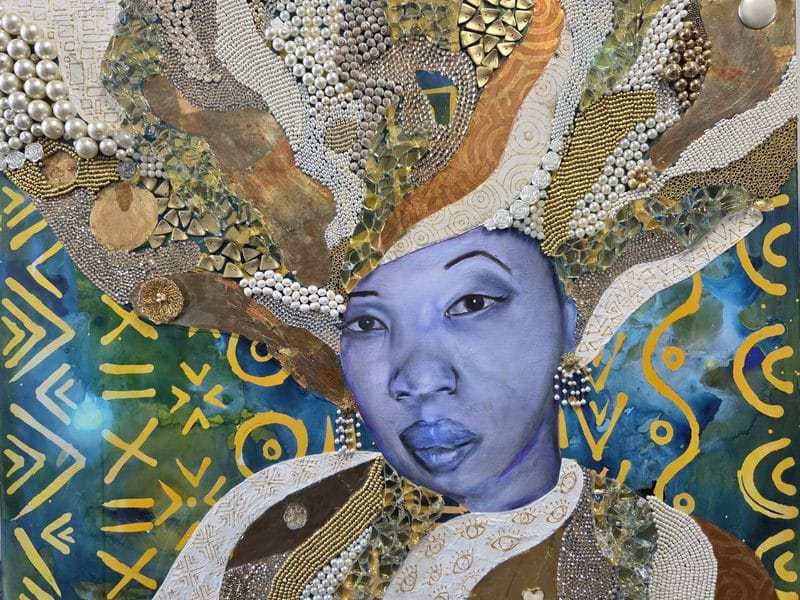
April Sunami is learning to take up space
The Columbus artist will be on hand when her new exhibition, ‘Living Mythologies,’ opens at Lindsay Gallery tonight (Friday, Nov. 6).
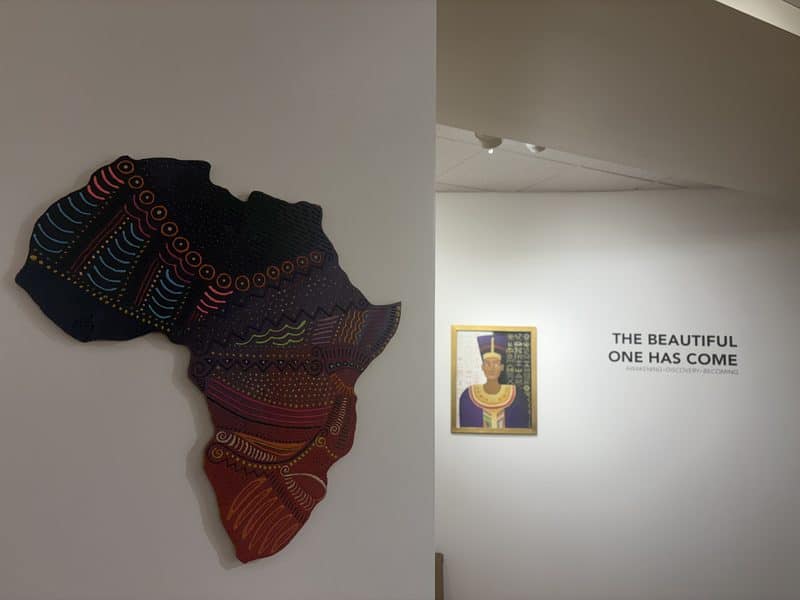
Community takes center stage in Shelbi Toone’s ‘A Village Folk Artist’
The Columbus artist will celebrate the long-delayed opening of her new, career-spanning solo exhibition beginning with a reception from 6-8 p.m. on Thursday, Nov. 5.
Forget about happy little trees: Ben Lamb translates his anxieties to ‘Axe of God’
The Columbus artist’s new exhibition kicks off at St. James Tavern with an opening reception on Thursday, Nov. 5.