
Katherine Fahey finds the magic in handmade crankies
The Baltimore artist and shadow puppeteer will present her hand-turned, panoramic scrolls in a performance at Secret Studio on Tuesday, July 21, joined by Dan Van Allen and the Columbus poet Maggie Smith.
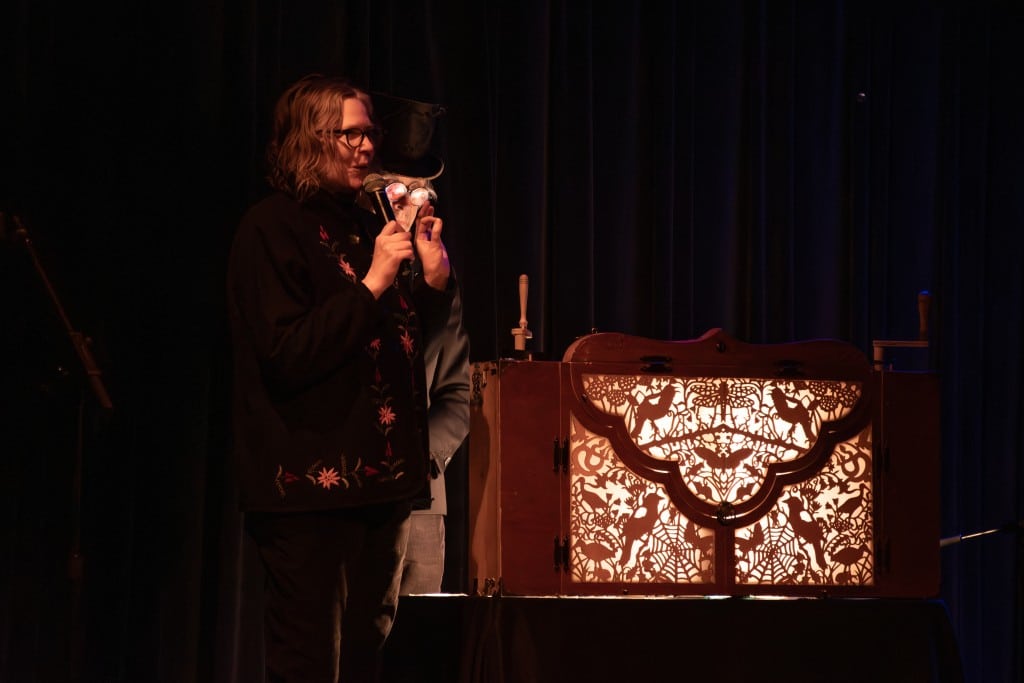
A couple of decades back, Katherine Fahey attended a show at a Baltimore rowhouse where she witnessed a hypnotic shadow puppet performance staged by Eric Ruin and friends.
“And near the end of their story, the screen they were using as a shadow puppet screen began to move, and then at the end, [Ruin] punched his fist through the screen,” said Fahey, who recalled being captivated by what she had just witnessed. “I was like, ‘What was that? How did they do that?’ Because I did not expect the screen to move at all.”
The moment served as the multidisciplinary artist’s introduction to “crankies,” or illustrated scrolls wound onto spools that are set within a box and then turned by hand, allowing the scenery to shift as the story advances. At the time, Fahey said she had already become infatuated with shadow puppetry, describing the form as having “an ethereal, magical effect.” And when set against crankies, the combination opened up her artistic practice in ways she hadn’t previously believed possible.
A donation powers the future of local, independent news in Columbus.
Support Matter News
“All my musician friends had this way they could share their art live an in person, and there was this interaction and connection I never thought I would have as a visual artist,” said Fahey, who will present a series of crankies at Secret Studio on Tuesday, July 21, joined by Dan Van Allen and the Columbus poet Maggie Smith, whose collection Good Bones includes a series of poems based on a performance of Fahey’s “Francis Whitmore’s Wife” that Smith witnessed during a residency attended by the two at the Virginia Center for the Creative Arts nearly 15 years ago. “And so, when I shared my first crankie, it was this a-ha moment where I realized I could share my art live and in person. And I was hooked.”
The first crankie created by Fahey was done at the request of friends Andy Stack and Jenn Wasner of the Baltimore band Wye Oak, who commissioned the artist to create a moving silhouette for the video to their song “Fish,” off the 2011 album Civilian. At the time, Fahey said at the time she knew little about the form, reaching out first to Ruin to learn the nuts and bolts of crankie construction, and then deploying these lessons in the construction of a large vertical scroll painted with ink and further animated by shadow puppets. Shortly thereafter, another pair of artist friends introduced Fahey to the smaller horizontal crankies that have since become her go-to, since they can be more easily transported, allowing her to bring the projections into galleries, art spaces, and venues throughout her Baltimore home and across the United States. (On the mid-July Sunday we spoke, the artist was in Cincinnati for the inaugural Cincinnati Crankie Festival.)
“Francis Whitmore’s Wife,” one of the crankies Fahey plans to present at Secret Studio, is the first of these more compact creations, telling the true story of a pioneer woman and her child surviving on their own in the wilds of southern Vermont.
“And she was a local hero up there, and the kind of person I thought was amazing but might be forgotten,” said Fahey, who in preserving the woman’s story to a scroll decorated with hand-cut shapes began to see echoes of the pioneer’s experiences in her own life. “A few years before that, I had moved back from France, where I lived for five years with my first husband. And we lived in the countryside, where I felt very isolated and very alone. And so, I think her story really moved me.”
To a degree, Fahey said all of her crankies have some personal element, perhaps none more so than “The Map Room,” a projection she created while navigating the death of her father, and in which she compared him to different birds as a means to stem her sadness. “I wanted to make something where I could talk about birds and beauty … and all of these incredible, mind-blowing, magical things that exist in nature,” she said. “And then bring that in with the remembering and processing of grief.”
Creating a single crankie can be a time-consuming process, with Fahey sometimes investing a month or more of research before beginning construction. From there, the process depends on the length of the scroll being created, with the artist once investing more than six intensive months to craft a 1,000-foot scroll for a Revolutionary War museum in Virginia. Comparatively, Fahey said most of the scrolls she creates on her own tend to run around 40 or 50 feet and can take a couple of months to complete.
Over the years, Fahey has developed a fascination with the history of crankies. She recalled how theaters were once constructed to show massive, 15-foot-tall scrolls and invoked the story of Henry “Box” Brown, a formerly enslaved man from Virginia who escaped by shipping himself to abolitionists in Philadelphia and later toured with a moving panorama on the topic of slavery. And yet, the artist is equally enamored with the future of the form, seeing it as an antidote to the AI slop art currently flooding social media feeds.
“And I think that started to happen even 15 years ago, with all these craft movements across the country and around the world, where people were getting back into knitting and sewing and old-fashioned printmaking techniques,” Fahey said. “But I do feel like there’s been more reaction to technology, and … more and more I think people want to see something handmade, something that they can relate to in a personal way. And so, it’s nice to watch something like a crankie, where it’s not all of these crazy special effects, and where you can understand how it’s happening but there’s still this element of magic to it.”
Author
Related Articles
Scrawl meets Scrawl
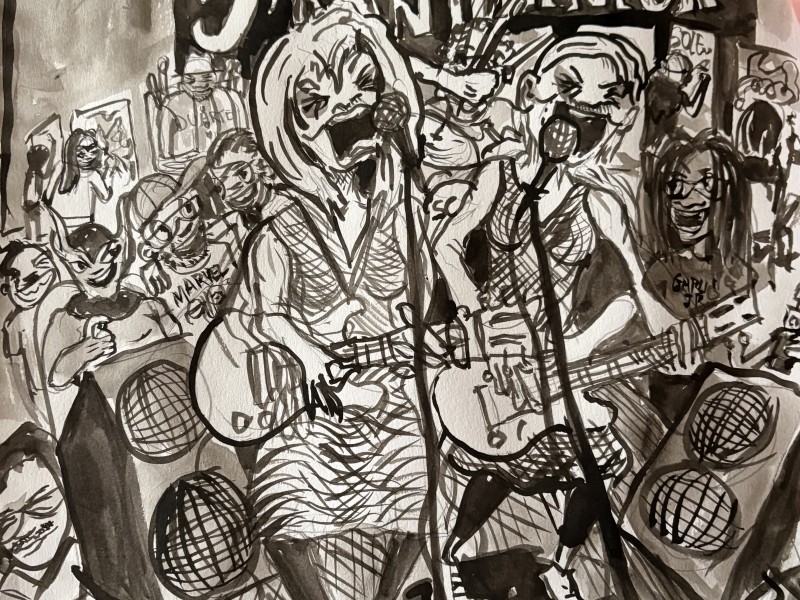
Marcy Mays and Sue Harshe recently joined pioneering Urban Scrawl artist Dan Gerdeman for a conversation ahead of the band’s performance at the Franklinton art event that has been a longtime source of confusion for some of their fans.
‘Immigration: A Journey of Belonging’ seeks deeper understanding
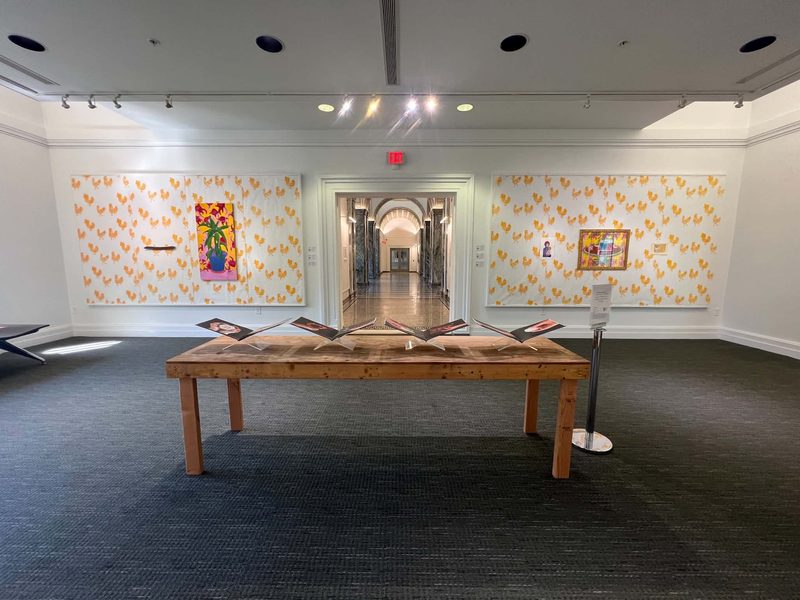
The new group exhibition, open now at the Losinski Gallery at the Main Library, will host a reception from 2-4 p.m. on Saturday, Oct. 3.
Deep conversations pave the way to ‘Chasing the Light’
A couple of years ago, Loren Bucek invited a group of artist friends to her Clintonville home. The gathering soon evolved into regular meetups that shaped the creation of a new exhibition opening this week at McConnell Arts Center.