
M/O, The Madman is still asking questions
On the newly released ‘Fight Club,’ the Columbus rapper confronts the past and begins to stake out a better future.
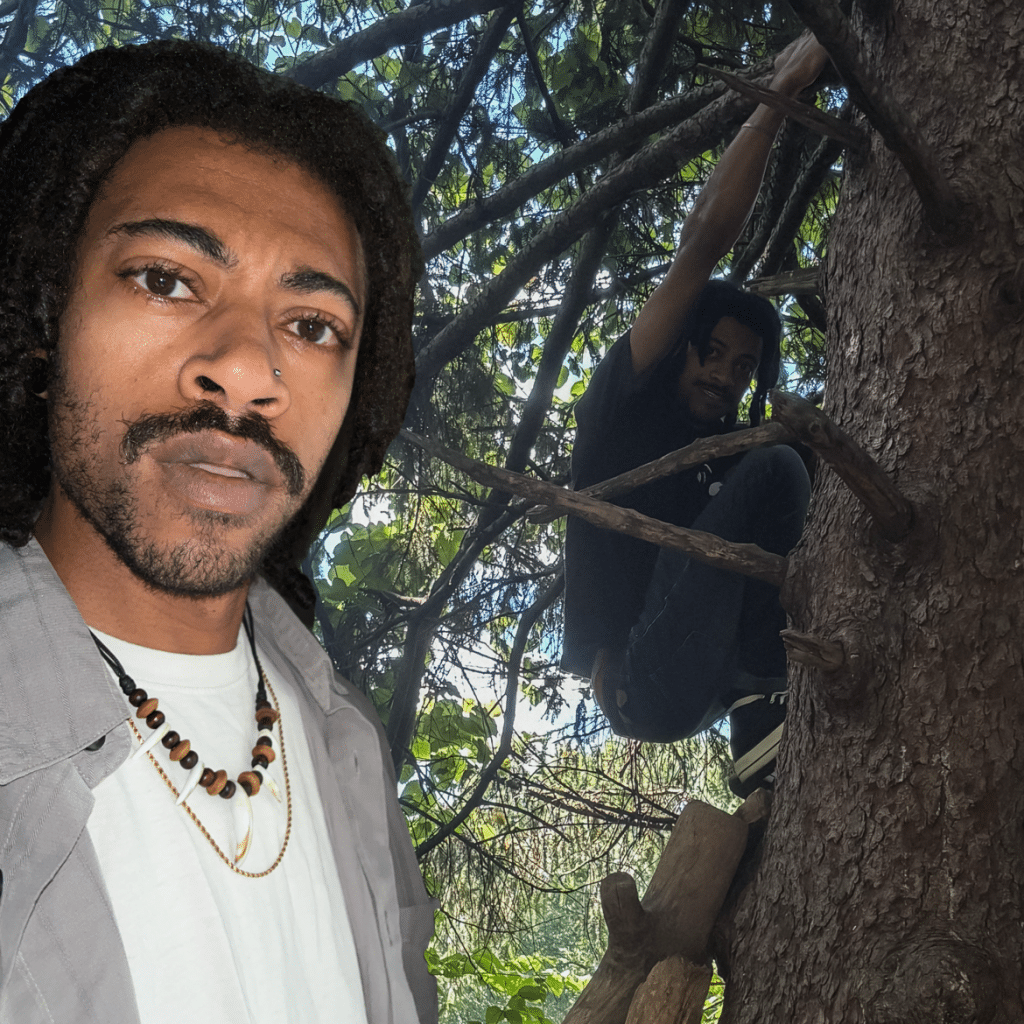
The title track on Fight Club, the newly released album from M/O, The Madman, finds the Columbus rapper homing in on those things they have discovered are worth fighting for, and foremost the ability of all people to live freely and happily.
“It’s a constant fight for me to give myself space to feel joy,” M/O said in a mid-June interview a couple of days after Fight Club released to streaming services. “And I want the people who listen to my music to experience the same thing. When I was younger, I was listening to a lot of Kid Cudi, and I downright would not have made it through high school were it not for him. So, when I started making music, I was doing it with the hope that someday I could make something that someone could listen to and feel a little more seen, a little more understood, a little bit less alone.”
This is especially true in this social and political moment, where certain communities and people are being routinely criminalized, brutalized, and erased. Throughout Fight Club, M/O lingers on the impacts of these turbulent currents, their songs addressing the abduction of children by ICE agents (“The Kids Are (Not) Fine”) and the challenges of scraping by in a capitalistic economy structured to enrich the few to the deficit of the many (“Black & Rich”). And yet, M/O remains resolute, rapping on “River” that the strongest soldiers are forged by the hardest battles.
A donation powers the future of local, independent news in Columbus.
Support Matter News
In writing toward this new album, M/O said it was initially a challenge learning how to open up, having been raised in a family where they were pressured not to complain but rather to tamp down their emotions and present as if everything were okay even in those times when things were not. Indeed, the rapper said they adapted the line in “River” from a sentiment they often heard repeated in church as a child, the phrase “God’s soldiers got the strongest battles” used as a means to quell any complaints they might have raised.
“And it was like, yeah, I guess, but I don’t want to fight, dude,” M/O said, and laughed. “As a kid, I didn’t need to fight. I didn’t need to learn to survive. I just needed to be a kid, I needed to be a child. … But I would always bite the bullet and keep pushing, because there was this voice in my head that was like, ‘Will complaining fix this?’ … And I think now that has given me a slight coldness about things. And because of it, I’m unlearning things now as an adult while I’m also out here in the wild. And I’m a dad, so it’s truly just paddling upriver. And I have one oar, and there’s a hole in the middle of it, but we’re going up.”
As part of this process, M/O said they began to ask themselves a number of questions about their own nature and experiences, but also about the outside world, the harms it could enact on the less fortunate, and how they could best operate within it. “And during that time [when I was writing Fight Club], these questions were just rattling in my brain, and so I really allowed myself to take all of those thoughts and put them into the music,” said the rapper, who acknowledged the vulnerability required of this process. “I had to allow myself to be open to criticism in that way, because when you make your viewpoint known, there’s always going to be someone who is on the other side of it.”
M/O described their progression within music as one of constant evolution, each release shedding another external layer and bringing listeners closer to the core. Part of this desire to invite people in, the rapper explained, extends from a natural distaste for the kind of “money, clothes, hoes” rap to which they said they were exposed earlier in adolescence, and which they have always worked to distance themselves from in their own writing.
“At a certain point, I remember asking myself, what are they even saying here? What’s the point?” said M/O, who traced this innate curiosity back through childhood. “I was always the one asking the why questions. Growing up, it would be like, ‘Oh, it’s this time of year, and that’s why we go to church and do this and this.’ And it was like, okay, that’s cool. But why? And there were times that got me in hot water, but one thing you learn in asking those questions is that a lot of people who are trying to pass down whatever to you don’t know the why. And so, it becomes a matter of [asking], are you going to keep going along and doing what everyone else is doing, or are you going to learn to think for yourself?”
Author

Related Articles
Kill Gosling rediscovers its joy on the way to ‘Super Plume’
The Columbus rock band will celebrate the release of its excellent new album in concert at Cafe Bourbon Street on Saturday, Sept. 26.

Keith Hanlon takes advantage of an unexpected layover to create ‘Music for Airport Workers’
The Columbus musician will celebrate the release of his new ambient album in concert at Old First Presbyterian Church on Friday, Sept. 25.

‘Obviously, we make songs for the sad folks’: BeachKitty gears up for 934 Fest
Ahead of the release of new album ‘Cool Breeze,’ the shoegaze-indebted Columbus band, led by songwriting duo Milly May and Keano Smith, will feature at the annual art and music festival on Saturday, Sept. 12.