
Rachel Moss finds deep cultural connection ‘In the Girls’ Room’
‘When I think of my bedroom now, it was almost this little incubator for what my life would become as a writer and researcher, getting to explore things I liked without anybody watching or commenting on it.’
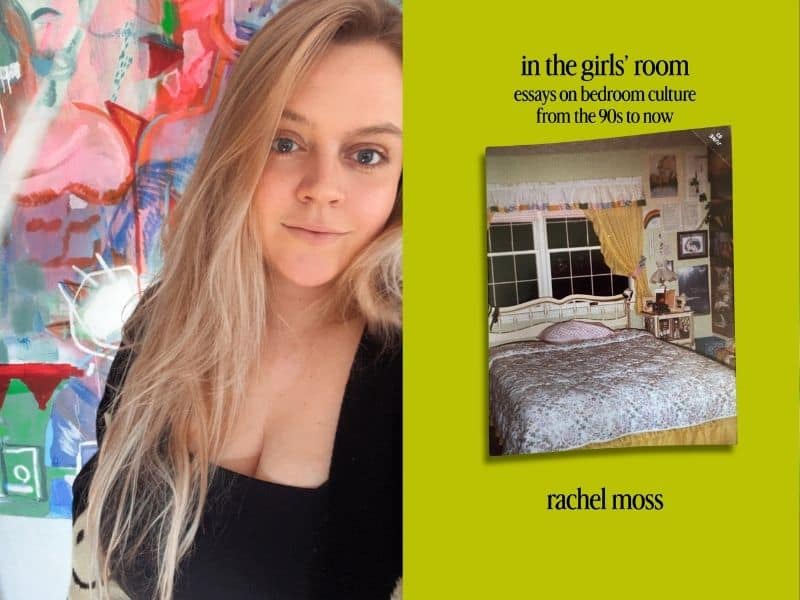
Kathleen Hanna has served as a recurring source of inspiration for Rachel Moss, who first discovered the musician when she stumbled onto Le Tigre’s self-titled debut, from 1999, in the stacks of CDs available to check out from the public library, which Moss frequented in accompanying her librarian mom to work.
“And I listened to it, and I just really connected to this world Kathleen Hanna was singing about, and which seemed to mirror my own and what I did in my bedroom, which was listen to records and make things,” said Moss, who crossed (metaphorical) paths with Hanna again years later when she began her graduate studies at Ohio State University, which she attended in large part because of how closely the Billy Ireland Cartoon Library & Museum aligned with her interests. “I was really interested in mini-comics and zines, and I wanted to do something studying those materials. And very early on when I was in grad school, I found the documentary ‘The Punk Singer.’ And again, Kathleen Hanna sort of led the way for me, because she talks a lot in the documentary about girls’ bedrooms as these connective spaces, and the things that girls made in their bedrooms as the tissue that kind of existed pre-internet to help girls connect with one another. … And my advisor probably thought I was insane, but I was like, I’m going to do my thesis about girls’ bedroom culture, so let’s go.”
Moss has since spun this thesis off into a Substack, Internet Bedroom, which boasts more than 8,000 subscribers, and a book, In the Girls’ Room: Essays on Bedroom Culture from the 90s to Now, which recently received a second printing after the initial 1,500-unit press run sold-out. (Both In the Girls’ Room and a companion collection dubbed The Internet Is Our Bedroom can be purchased here via Moss’ official website.)
A donation powers the future of local, independent news in Columbus.
Support Matter News
In this now-decade-long interrogation, Moss has developed three ways to define and interrogate bedroom culture. The first is rooted in the various things that girls make in their bedrooms, from zines to YouTube vlogs and TikTok shorts, with Moss positioning these individuals not as consumers of the culture, but the creators of it. She then looked at bedroom culture as an archival practice, examining the ways girls process media as an archive in their bedrooms and the way “these things are held together by feelings like desire or obsession or love or occasionally even revulsion,” as she explained it. Finally, Moss explored bedroom culture as a place of resistance, digging into installations that utilize the bedroom as a space for talking about social and political issues that include racism, homophobia, misogyny, and sexual violence, among other things.
As one example, Moss pointed to the work of performance art carried out beginning in September 2014 by Columbia University student Emma Sulkowicz titled “Carry That Weight,” which involved the visual arts senior carrying around her 50-pound dorm mattress as a means to call attention to the school’s handling of her sexual assault allegations against another student.
“There are a lot of artifacts of the bedroom, like the bed itself, or certain materials that girls have in their rooms, that come up again and again in a lot of performance art by fem people,” Moss said. “And so, there’s an underlying narrative in the book that’s tracking these art pieces and their political undertones.”
Growing up, Moss shared a bedroom with her sister until she was 14 or 15, and she recalled the shift that took place once she had a space of her own, describing how her bedroom transformed into “a little factory” in which she began to make mixtapes, draw, and create her own zines. “And it was both a way of consuming culture in a safe way but also creating something that was personal to me beyond just a diary,” she said. “And when I think of my bedroom now, it was almost this little incubator for what my life would become as a writer and researcher, getting to explore things I liked without anybody watching or commenting on it.”
Moss allowed that there were challenges in approaching her thesis, most pressingly the lack of academic study that had been conducted on the subject – with past research papers tending to serve as the backbone for most theses. Instead, Moss turned to a number of archives, including the Billy Ireland, the Queer Zine Archive Project, and the Sallie Bingham Center for Women’s History and Culture at Duke University. “And I spent time in those archives searching for materials that could really connect these zines and music and even short films that these girls were making to their bedrooms,” Moss said. “So, it was very much an archival project at first and then I filled in the academic theory around that.”
Initially, much of this research centered on the feminist punk riot grrrl movement of which Le Tigre’s Hanna was a vital part, though the discovery of “Action Girl Comics,” an anthology series edited by Sarah Dyer and featuring the work of a diverse array of female comics creators, cracked open this approach and introduced a broader range of voices. “Riot grrrl is quite white dominated,” Moss said, “and [‘Action Girl’] opened my eyes to like, okay, there’s more of a story here than I initially thought.”
With In the Girls’ Room, Moss continues this expansion, building on her early academic studies and incorporating aspects of memoir and stories pulled from friends.
“So, ultimately, the book I created is a hybrid,” she said. “But that felt more accurate to bedroom culture than a strictly academic project.”
Author

Related Articles
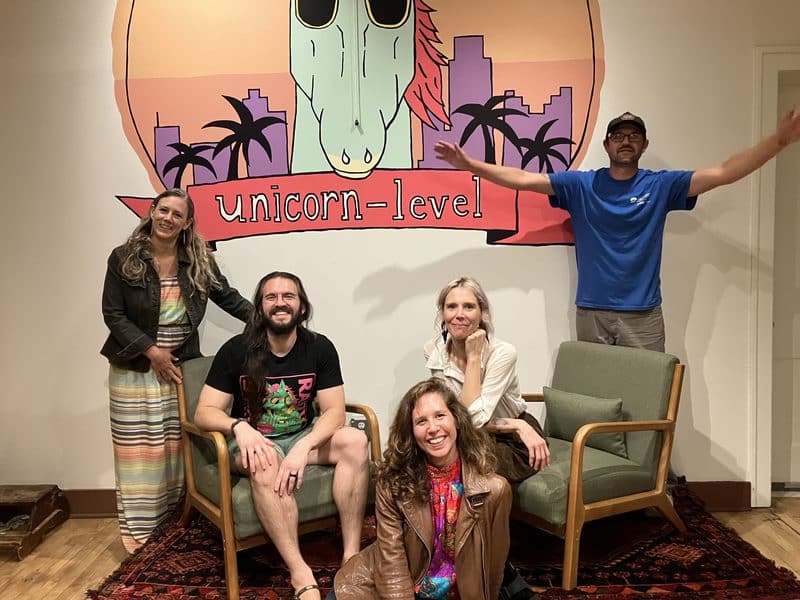
Two Dollar Radio HQ reopens with an expanded ownership group and a similarly expanded vision for the future
‘I think a big part from opening was to give authorship of the space to people with good ideas, to open the doors to people to try different things.’

Edward Julian Sr. embraces poetry as a means to release and reflect
Ohio’s poet laureate features at Urban Arts Space tonight (Thursday, Sept. 24), appearing as part of the Poetry Festival, which continues through the weekend at Thurber House and the Grange Insurance Audubon Center.
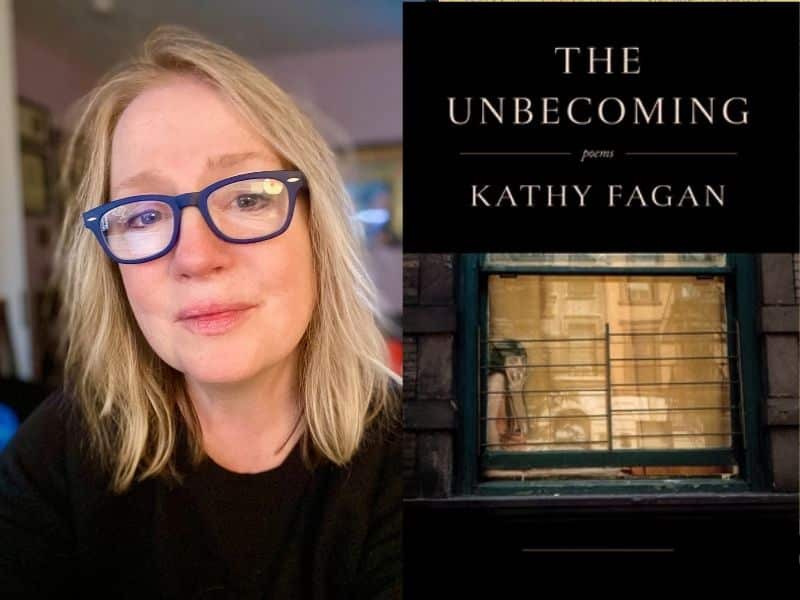
Kathy Fagan takes stock with ‘The Unbecoming’
The poet will celebrate the release of her new collection with a reading at Gramercy Books on Thursday, Sept. 24.