
Mythological sisters lead Columbus filmmaker Kah’lil Newton to ‘Grace’
Newton’s debut short film will premiere via the online platform Film Shortage on Saturday, June 28.
During a visit to the Columbus Museum of Art early last winter, Kah’lil Newton found himself transfixed by Odilon Redon’s painting “The Two Graces,” struck, he said, by a melancholic feeling that emanated from the canvas and which he later connected with Redon’s decision to include just two of the mythological sisters born to Zeus, generally depicted as a trio and representing joy, radiance and fertility.
“[The painting] was very beautiful, but it was also tragic at the same time. And there was this loneliness to it,” said Newton, who upon returning home immediately started to write a script for what would become his directorial debut, the short film “Grace,” which will premiere via the online platform Film Shortage on Saturday, June 28. “And once I learned about all the connections and how there was this absence within the piece, it really started to speak to me, because I see a similarity in my own work.”
Newton manages to explore an expansive number of themes in the film’s comparatively short, five-minute runtime, ranging from female beauty and the poisonous impact of the male gaze to the emotional labor required to put on a brave face in those times when your mind might exist elsewhere – a concept that feels particularly prescient living through this social and political moment. Some of these ideas were present in early drafts, while others surfaced over the course of a series of rewrites that followed extensive conversations with people such as production designer Brooke Vaughn-Saige and hair and makeup artist Erica Stewart, among others, all of whom offered feedback the director described as crucial.
A donation powers the future of local, independent news in Columbus.
Support Matter News
“It was cool to work with a lot of female filmmakers and have a lot of that authorial input in the room,” said Newton, who viewed the script as a living, mutating document throughout the entire process of creating the short. “Even when we brought on our actors, it was the same process, like, ‘This is the script. It’s fluid. How does it feel to you?’ … I feel like, as a director, what you’re trying to do is get everyone in the sandbox to where you can say, ‘Go play. Make something cool.’ And then my job is to make sure the machine fits around that.”
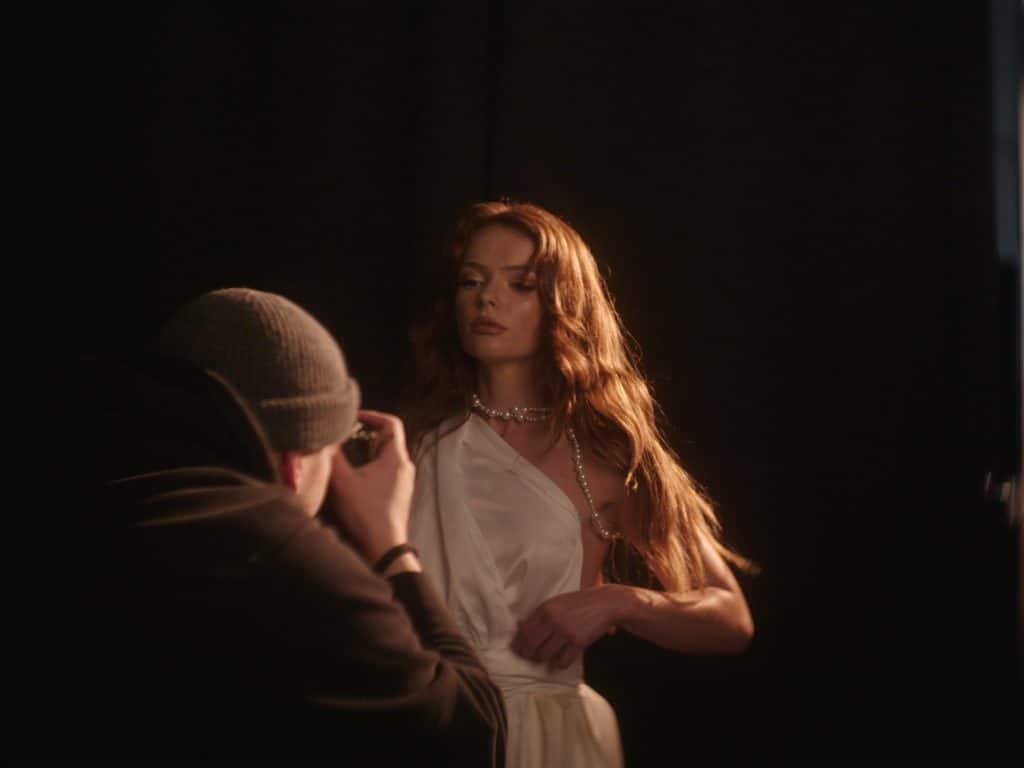
In contrast to this offscreen harmony, it’s clear from the opening frames of “Grace” that something is amiss. The film begins with an extended shot of a model, Grace (Mackenzie Phalen), being photographed in a dark room, her emotional detachment evident as a disembodied voice gives a series of directions. “Okay, Grace, give me mysterious,” the voice intones, each command accompanied by the relentless click of a digital camera. As the shot unfolds and Newton’s camera drifts away from Grace and toward the people working behind the scenes, these instructive words begin to give way to pleas. “Give us more, though. Keep what you have but just increase it. Energy, Grace. C’mon, energy!”
The pervasive sense of unease is heightened by the film’s tension-inducing score – a steady burn of droning, ominous synths that could alternately soundtrack the scene-setting shots to a modern horror flick. Fittingly, blood does eventually spill in the form of a nosebleed experienced by Grace, whose movements cease and whose expression remains nearly static as a thin stream of red begins to run from her nose to her lips. “Perfect. That’s perfect, Grace,” the director, portrayed by actor Jabari Johnson, says in response. “Hold that.”
“I think there’s a reason why the creative director only accepts her when we are literally seeing her in pain,” said Newton, who shot “Grace” in eight hours on Super Bowl Sunday at Chromedge Studios in Franklinton last year. “It’s a very in-your-face metaphor that I think we all can relate to, where you just have to keep performing and bear whatever it is you’re going through in order for the world to accept you. I mean, how many times have all of us gone to the bathroom at work because some shit is affecting us and we need to calm down? … I wanted every element of [the film] to feel overwhelming – the color gradient, the lighting, the score – so the audience would experience the same anxieties as Grace.”
The beautifully paced short is lit and framed in such a way that a number of stills from the film could double as standalone portraits – a development Newton traced in part to an early fascination with photography. Growing up on the North Side of Columbus, Newton said he first picked up a camera at age 16, filming videos for rappers such as Eljay Marquise and Tobilla while also pursuing regular portrait work, which he described as essential to developing his eye as a director.
“With photography, if you capture the right frame, it captures the whole world with it, if that makes sense,” said Newton, who grew up in a blue-collar home, raised by a dad who worked as a public housing handyman and a mom who managed school cafeterias. “And I was chasing that back when I was a photographer. And I’m still chasing that now in making films.”
On a deeper level, Newton allowed that his pull toward these visual mediums extends from a desire for connection, tracing threads of vulnerability and empathy through his still photographs and his more recent early stabs at filmmaking. “I think it is a want to capture human connection, and a desire to tell these human stories,” he said. “For me, it’s about taking an emotion that seems universal and then finding a way to make everybody feel it.”
Author

Related Articles
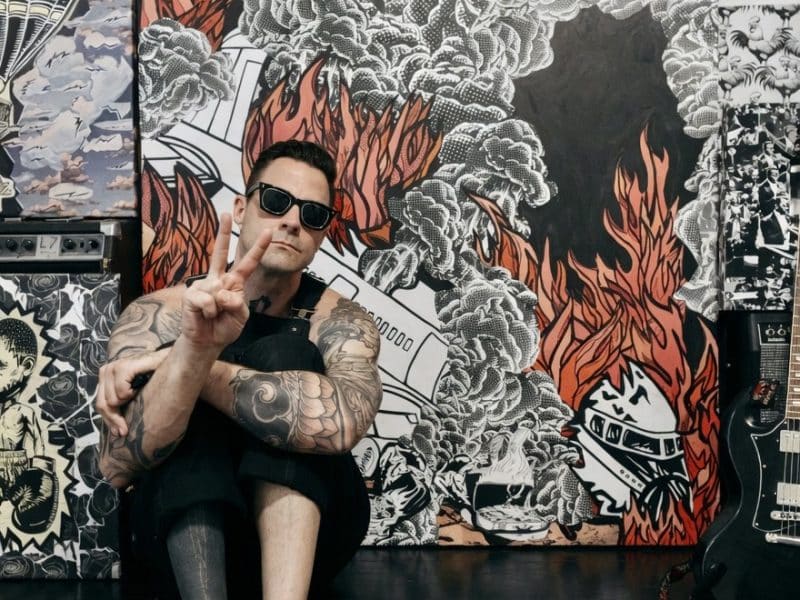
Johnny Williamson finds himself on the other side of ‘Nightmares’
In the midst of rebuilding his life for the second time, the Columbus artist and musician will host a dual album listening party and exhibition at Rehab Tavern in Franklinton on Friday, June 5.
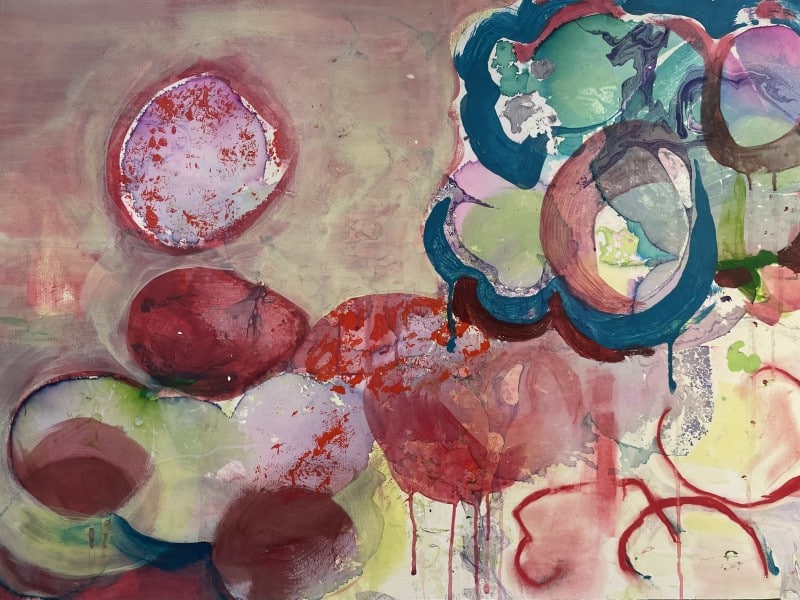
Mark and Anne Spurgeon embrace their familial bond with ‘Blood Harmonies’
The new exhibition from the Spurgeon siblings kicks off at the downtown gallery Blockfort with an opening reception on Friday, June 5.
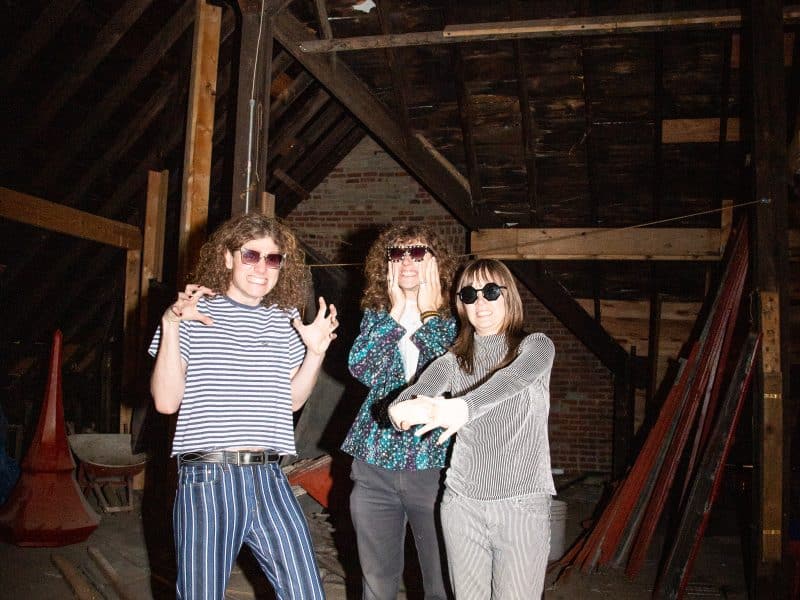
Jackoff Demons traverse heaven and hell with ‘Second Coming’
The Columbus trio will celebrate the release of its sophomore album at Cafe Bourbon Street this weekend, performing as part of the Bobobalooza anniversary show on Saturday, June 6.