
Tavares Strachan’s ‘The Day Tomorrow Began’ demands to be seen today
The Bahamian artist is an installations man, and his new Columbus Museum of Art at The Pizzuti exhibition is loaded with room-swallowing experiences.
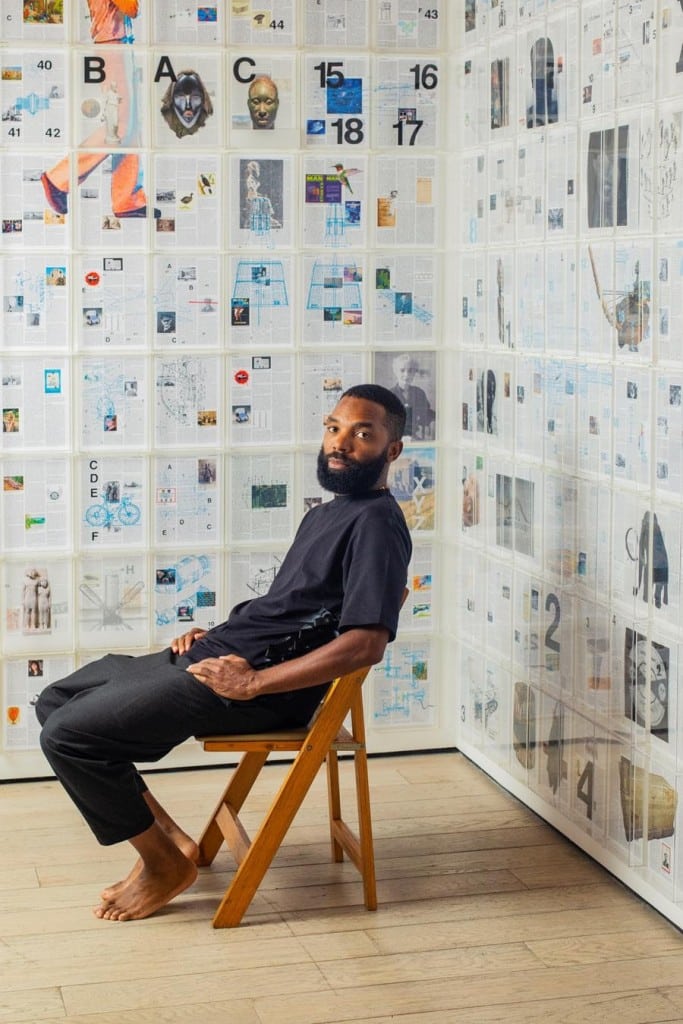
The recently launched exhibit, “The Day Tomorrow Began” at the Columbus Museum of Art at The Pizzuti is a tight, accessible conglomeration of styles, ideas, and histories with which Tavares Strachan is known to contend.
Labeled most frequently (including by the artist himself) as a conceptual artist, his work leaps across mediums and forms, combining elements that trigger one’s senses. Strachan is a curious artist who relishes in delivering work that plucks at sensory harp strings. It is a body of work as tactile as art can get without allowing you to touch it.
Strachan is an installations man – what faster shorthand to conceptualization than immersion? – and “The Day Tomorrow Began” is loaded with room-swallowing experiences. The tea room, the rum bar, the barbershop, the room filled with rice grass all seek to upload viewers into full-bodied experiences upon entry, which, frankly, is a laudatory use of the Pizutti’s medium-sized museum space.
A donation powers the future of local, independent news in Columbus.
Support Matter News
You would think a pitch-black 11 foot-tall statue of Nina Simone sitting on a throne astride an upside down Queen Victoria (“In Praise of Midnight (Simone x Queen Victoria)”) would be the centerpiece of the exhibit, but you’d be wrong. The work that best captures whatever philosophical considerations Strachan is willing to engage is embodied by his daunting installation, “The Encyclopedia Room.” In it, we are presented with two complementary works: “The Encyclopedia of Invisibility” and “SIx Thousand Years.”
“The Encyclopedia” is as advertised: a massively thick tome containing more than 17,000 entries that catalog a massive array of people and things that have gone unheralded by time and historical canon. And since you can’t touch the book, “Six Thousand Years” offers a 2000-page, wallpaper-styled glimpse into its agenda. Some of the entries I was familiar with, some not at all. None of it is presented as rote. There is plenty of artistic license here to keep you pouring over the panels. Ultimately, “The Encyclopedia Room” drives home a repeating lesson of the exhibit: The more you know about the subjects of the work, the more resonance the work delivers. It is a formula usually reserved for an artist’s background and influences, but Strachan’s art keeps the focus on the events and people we have left behind.
Strachan’s place in the art world is such that there are lots of conversations that materialize every time his work is present. The museum one. The Black audience one. The civic one. The artist one. The colonialism one. The capital-A Art one. Taken on the whole, “The Day Tomorrow Began” is smartly poised to engage them all. Where they intersect gives the work even more prescience, as it is impossible to talk about the transformative nature of his exhibits without unpacking how such transformations attract or repel non-traditional museum audiences given the same access as the donor set. Generating intellectual and cultural safety in frequently hostile art spaces is literally a goal of his work.
As a Black person who sees a lot of art, his tact was initially a challenge for me. I walk into traditional art spaces with a different scorecard than other patrons, especially when the art is by a Black artist. There are things I know that I bring with me into the work that go beyond the basic subjectivity of like/dislike. I gauge how the work sits politically, mark whose purses it lines, whose stories it tells. What diasporic threads does the art weave into its narrative, which, contrary to the existence of a scorecard, the artist is allowed to apply however they see fit? None of this should suggest that the art is only for Black audiences. Quite the contrary; it is work that very much wants to have the conversations that people are always suggesting will make the world a better place if we make the time to have them.
The newer work (and some remixes/recontextualizations) definitely keep with Strachan’s interrogative value set about who gets to be seen, whose stories have been missing, and how traditional art spaces can be made to bend to the culture in and around them – and not always the other way around.
The artist tackles these long-standing dilemmas with earnest presentations: a black-on-Black barbershop, a meadow, a working rum bar. Immersion is his jam. There were moments when I wanted a deeper dig in a given installation, but Strachan prefers conversation over confrontation, and there are definitely parts where void and silence are part of the medium. “The Day Tomorrow Began” is a strong exhibit by a world-class artist in his prime. And is an exhibit demanding to be engaged – not seen, engaged – in person.
Related Articles
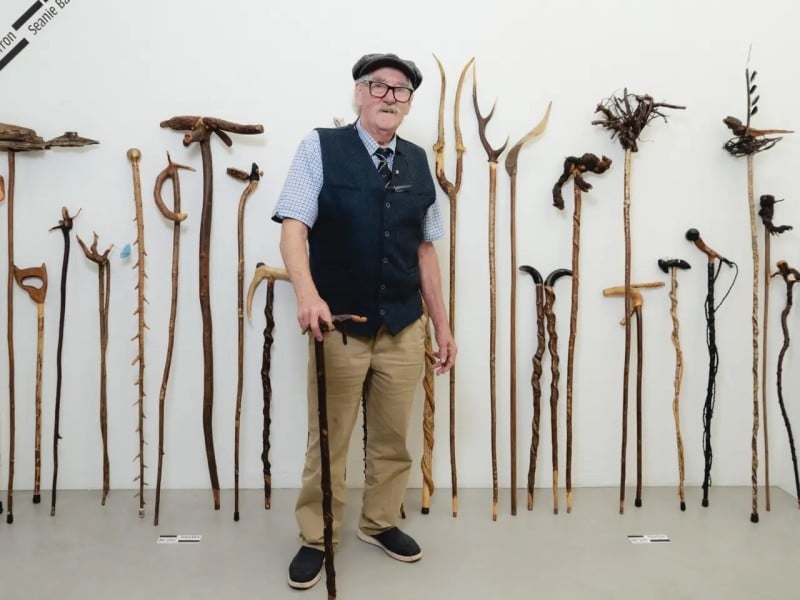
Take a leisurely stroll through the woods with Seanie Barron
The Irish artist’s new exhibition of hand-carved walking sticks kicks off at No Place Gallery with an opening reception today (Friday, Oct. 16).

New Urban Arts Space exhibition opens up a conversation about death
‘Spirit & Dust,’ co-curated by Diane Callahan and Michelle Burdine, explores grief, loss, and the weight of mortality from a wealth of perspectives.
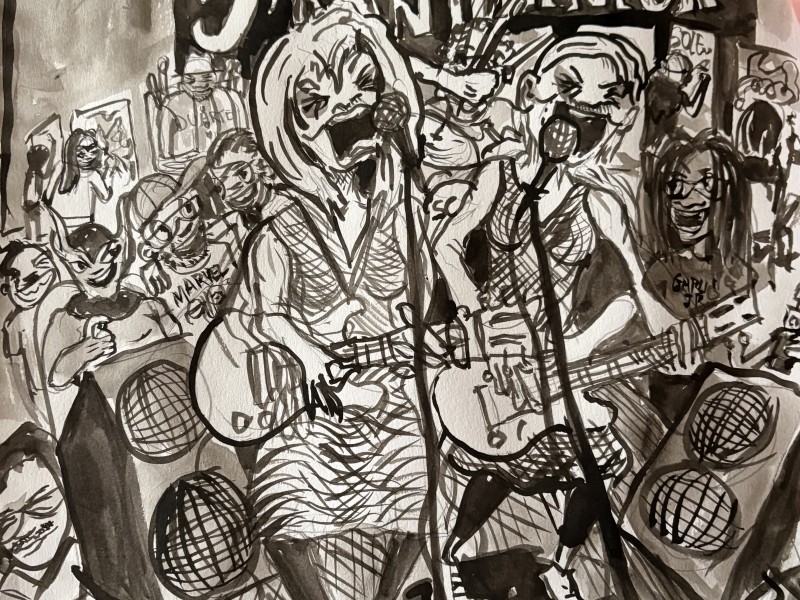
Scrawl meets Scrawl
Marcy Mays and Sue Harshe recently joined pioneering Urban Scrawl artist Dan Gerdeman for a conversation ahead of the band’s performance at the Franklinton art event that has been a longtime source of confusion for some of their fans.