
There Is Power in a Union: Filmmakers take viewers inside the Amazon labor battle
Director Brett Story will appear in conversation with Steven Bognar following a screening of her new documentary, ‘Union,’ which takes place at the Wexner Center on Thursday, Oct. 17.
Filmmaker Brett Story has long had an interest in labor organizing, with her first feature film, “Land of Destiny,” from 2010, transporting viewers to Sarnia, Ontario, a petrochemical town experiencing an epidemic of cancers.
“Somewhat naively but also earnestly, I expected it to be a rousing, ‘Harlan County, USA,’-like film about these workers, and especially these widows, rising up against the environmental pollution and workplace hazards of these industries,” Story said in a September interview. “And the film evolved to be much more a meditation on the weakness of labor … and the decline of the American labor movement in this era of deindustrialization.”
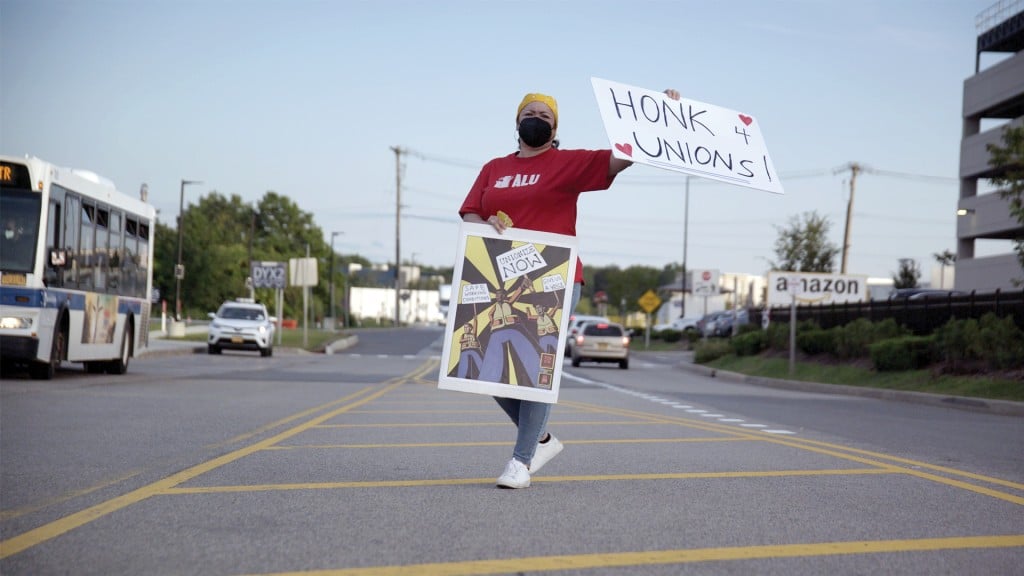
With her most recent film, “Union,” which will play as part of Unorthodocs at Wexner Center for the Arts, screening at 7 p.m. on Thursday, Oct. 17, Story captures the spark of labor resurgence, embedding alongside Amazon employees in Staten Island as they successfully rallied to become the corporate retailer’s first union in the spring of 2022.
A donation powers the future of local, independent news in Columbus.
Support Matter News
Working alongside co-director Stephen Maing (“Crime + Punishment”), Story crafts a documentary that operates as a David and Goliath tale for the era of globalization, the immense odds stacked against the workers evident from the series of images that kick off the film. As the movie begins, the filmmakers juxtapose footage of weary warehouse employees trudging into work with video clips of Amazon founder Jeff Bezos blasting into outer space in a rocket made by his Blue Origin company.
Though released less than 15 years apart, “Land of Destiny” and “Union” feel almost centuries removed from one another, with the former existing in a similar realm as documentaries like “Harlan County, USA” and “American Factory,” which showed workers subjected to shared conditions rallying together against leadership. The worker connections in “Union,” by contrast, are often more diffuse.
“I feel like [‘Land of Destiny’] represents the ashes of an era that created the conditions for the one we’re in now,” said Story, who will appear in conversation with filmmaker Steven Bognar (“American Factory”) following the Wex screening. “The Amazon Labor Union (ALU) is inaugurating a set of new models for worker-to-worker organizing, for internationalist organizing, and for organizing across supply-chain capitalism, as opposed to organizing around resource extraction or manufacturing.”
These relatively modern challenges are evident throughout “Union,” with organizers often beginning conversations with their fellow workers by asking them what department they work in, highlighting the difficulty of building cohesion across a more stratified workplace. Add to this hurdles that include a legal environment currently hostile to organizing, Amazon’s adoption of union busting tactics such as mandatory “captive audience” meetings (since banned in New York), and a larger corporate narrative that sells workers on a myth that many find compelling.
“If you’re an auto worker or a coal miner, the story your company tells you is that you have a job for life, and that you can achieve middle-class status and put your kids through college with this job. And that’s one way of keeping people from biting the hand that feeds them, and keeping them subservient to the bosses,” Story said. “There’s a different story being told to Amazon workers that is also a way of keeping them obedient. And that story is this is not a job for life. In fact, this job is only a very small blip in your life, and you are just here temporarily as a steppingstone before you achieve the kind of self-made success that Jeff Bezos represents. And that story might seem silly to hear when we understand the low wages and terrible working conditions of a lot of these jobs. But it’s also very powerful, because we’re so often told that our economic success is on us, and the shitty conditions in our lives aren’t the result of a bad actor, like our company or the government, but as a result of the poor choices we make.”
“Union” doesn’t dwell on the numerous, well-documented worker complaints that have been levied against Amazon, instead dropping viewers in the middle of the action as ALU organizers, led by the charismatic Chris Smalls, work to rally the 8,000-plus employees housed at the company’s JFK8 warehouse. Story said this was a choice the filmmakers struggled with in the editing room, ultimately deciding that the public perception around Amazon and its treatment of workers was so well-developed that the crew could focus attentions elsewhere.
Early on, the filmmakers circled the group dynamic existent amid the various divergent personalities who made up the ALU’s small but dedicated leadership team as one area of focus. And a large part of the movie centers on the disagreements that can boil over even as people continue to move toward a common goal.
“From the beginning, in some ways, we understood that was what the film was going to be about, in part because we had no guarantees they were going to be victorious,” said Story, who along with her co-director and crew embedded alongside the ALU organizers for three years. “In fact, there was lots of evidence to the contrary, and we had to assume for filmmaking purposes that we were documenting a struggle that was ultimately doomed to fail. … And so, what’s the complexity here to explore? And for us, as a team, it really became the question of what is going on with these people? Why are they showing up? … There was something really beautiful and important to watch as they found a sense of purpose, a sense of belonging.”
And yet, the film doesn’t unfold as some sepia-toned fairytale, the camera dwelling on moments of in-fighting, jealousy and egotism. “Organizing is hard, and in high stress moments that solidarity can break down,” Story said.
Ultimately, though, “Union” brings viewers along for the ride as the diverse collective pulls together and successfully votes the first Amazon Labor Union into existence, setting up a protracted and ongoing legal battle with the company, which has refused to recognize the union or negotiate a contract.
“I grew up in a working-class community and I’m very interested in the question of how people become political or not, how movements grow, and when they are weak and how to deal with that,” Story said. “And I think the Amazon struggle is pointing to a new kind of future. And that’s part of why this story is so inspiring, because people want and need to know that labor is alive and well.”
Author

Related Articles

‘Blood Pressures’ goes deeper at No Place Gallery
The exhibition, which closes on Saturday, Aug, 22, finds a group of artists engaged with interior worlds.
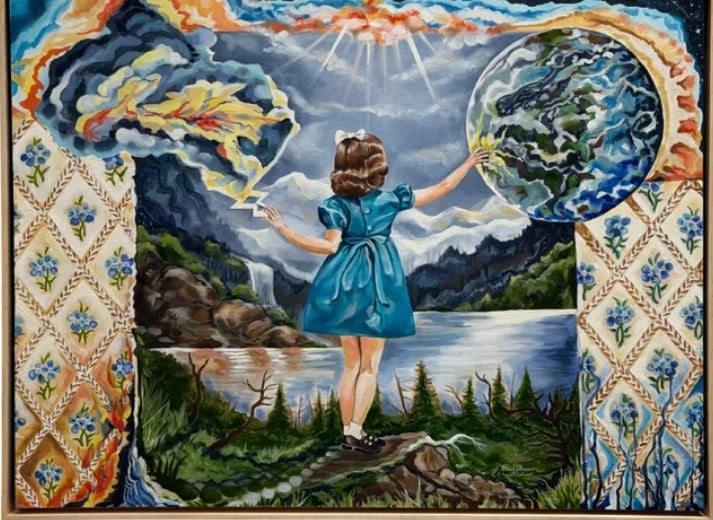
Amber Groome finds resilience in ‘Internal Garden’
The Columbus artist’s new exhibition will remain on display at Sarah Gormley Gallery through Sept. 5.
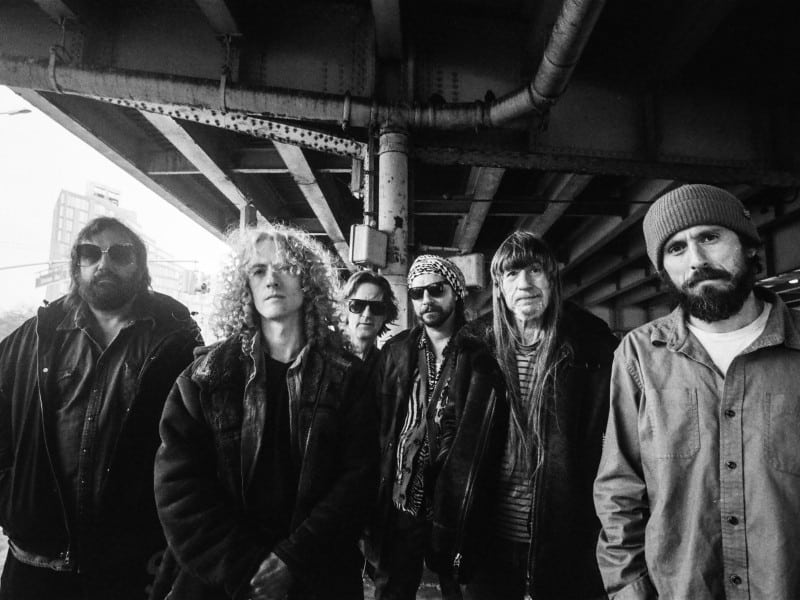
Prison finds freedom in sprawling psych-rock jams
The New York band’s current tour hits Rich Street Records on Saturday, Aug. 15.