The more wonder you see, the better you feel
There are those who believe investing in the drug war will address overdose and addiction rather than healthcare, compassion and connection. These people are wrong.
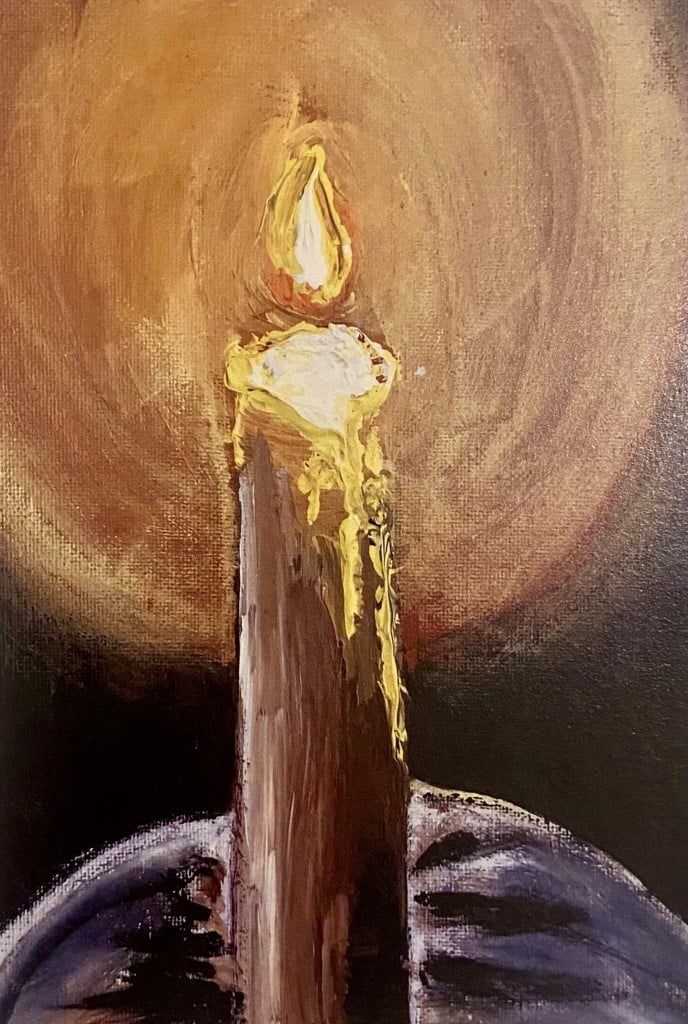
Two days after the election, I found myself with a group of senior Journalism students as they talked about the stories on which they were reporting. One student had spent weeks with people who work with our unhoused neighbors.
“The more you work in a community, the more wonder you see,” she said. “You feel connected when you work with others. The more you feel connected with others, the better you feel.”
Minutes before, I had offered some pathetic words to these young journalists, acknowledging their fears that the man who had just been elected had recently said he’d be okay with it if a few journalists were shot. And I said something about how doing this work is the best way to push back.
A donation powers the future of local, independent news in Columbus.
Support Matter News
But I wasn’t sure I believed it.
Since the first Trump administration, I have been writing mostly about the overdose crisis and the war on drugs. And I have no doubt that a second round will be worse for people who use drugs and for people with substance use disorder. There exists now an army of people calling for harsher penalties and a higher wall – and there’s a concerted pushback against harm reduction, an approach that is saving lives. There are those who believe investing in the drug war will address overdose and addiction rather than healthcare, compassion and connection.
The thing that presses against the lies is the truth. But often it’s not the truth that we write or tell, it’s the truth that we act on, the truth we live.
Trump and incoming Vice President-elect JD Vance paint a picture of a tragic and broken America that only they can save. It’s the kind of bootstrapping narrative you’d expect from two white men shored up by venture capital.
It’s an ancient narrative that streams through our veins. It goes back to Captain John Smith, Ben Franklin’s autobiography, and James Fennimore Cooper’s Natty Bumppo. It claims the force and power of the rugged individual makes America great, and not people working in concert. Vance’s own book implies that there’s something inherently wrong with the culture of Appalachia. And yet, it was people from Appalachia who paid the taxes that paved the roads on which his school bus traveled, taught him how to read, and shepherded him on to college.
There’s another story about Ohio and Appalachia, about America. There has always been.
We are only as strong as the most marginalized among us. We work together to lift the community. And the community that lifted up a young Vance is the same kind of community that is still fighting the overdose crisis today.
The tired bootstrap narrative propels disconnection and loneliness. And surely this is a lonely time. We have fewer and fewer public spaces and are encouraged to stay home, to scroll, to spend.
The response to that will always be connection, organizing.
And here’s the thing: We have so many road maps to follow. In the late 1980s through the ’90s, queer people and their allies supported those dying from a new virus. They took care of them in their own homes. They distributed clean syringes once they made a connection between IV drug use and transmission of this new virus. And they put failed government policies and agencies on blast. They did these things across the United States, even in Ohio.
The folks doing harm reduction work now owe a lot to those activists. Not only have they learned the efficacy of distributing sterile supplies, but also the importance of advocating for housing and long-term healthcare and of smashing stigma wherever it raises its ugly head. They live in the truth fascists can’t handle: mutual aid, mutual respect, and love.
In his forthcoming book, Words with Wings & Magic Things, my friend Matthew Burgess writes:
…leave the shouters with their schemes
while we continue with our dreams.
The world we’re making day by day
in our determined, quiet way.
I understand now how profound my student’s comment was.
The next day, I sat at a kitchen table alongside a group of friends and community organizers – people who work to make the world a more democratic place, who open doors rather than shut them. We ate pizza, drank beer and soda. We talked of love and exes and bad reality TV shows. And we imagined what might be next.
I’m wonderstruck by these courageous people. I feel connected. I feel better.
When it grew late, we hugged each other, said, “I love you,” and that we should do this again. Then we stepped out into the dark night together.
Author
Related Articles
Opinion: Trifectas are only good for racing and the lottery
The legacy of Ohio’s Republican Party is corruption, scandal, and culture wars. Our votes could put an end to their occupation of state government.
If you start from a place of love, you can’t go wrong
A vigil for an unhoused community member who recently died in Newark served as a call to not look away.
On Development: Rapid-transit is moving slowly. Maybe we need a new model
Our policies suggest a willingness to spend any amount to add lanes and bigger (towering!) interchanges for major highways, while transit spending is too often regarded as frivolous.