
The age of Damon Zex
Remembrances flow for the video provocateur and free speech champion, who passed away June 21, and for the Columbus DIY scene from which he emerged.
Before YouTube and smartphones gave motivated creators a chance to make videos and find an audience, the only free, open forum for video available in the U.S. was public access television.
A Federal Communications Commission rule issued in 1972, followed by a 1984 act of Congress, prompted cable companies to allocate funding for local access stations throughout the country. These would air government and educational programming but also offer airtime to anyone in the community with non-commercial content to share. The stations would provide training and fully equipped studios for production.
In Columbus, the public access station was Community21, or ACTV, broadcasting from 1980 to the end of 2001. And there was no one on the air more recognizable, more widely seen, or more controversial than Damon Zex. A flood of recollections were unleashed when news spread on social media last month that the video and performance artist and writer died in his sleep on June 21, just shy of his 63rd birthday. A short Facebook post about Zex from late night TV icon Fritz the Night Owl attracted nearly 200 comments.
A donation powers the future of local, independent news in Columbus.
Support Matter News
Zex is being remembered for his utterly distinctive, uncompromising contributions to local culture, through Community21 and the gritty scene that radiated from the pre-Y2K campus area. He embodied the DIY culture existent in that particular moment of local history, before development altered the landscape.
Comments shared by friends on Zex’s online obituary are warm and effusive. “He was and still is the love of my life,” wrote his wife, Isabelle Cavalier-Zex. (The two met on Facebook in 2013 and married in 2017.) “We would spend hours and hours on the phone every day, talking, laughing constantly, sharing our passions for music and art.”
“I’m still in denial,” Zex’s widow said from France during an early July phone call.
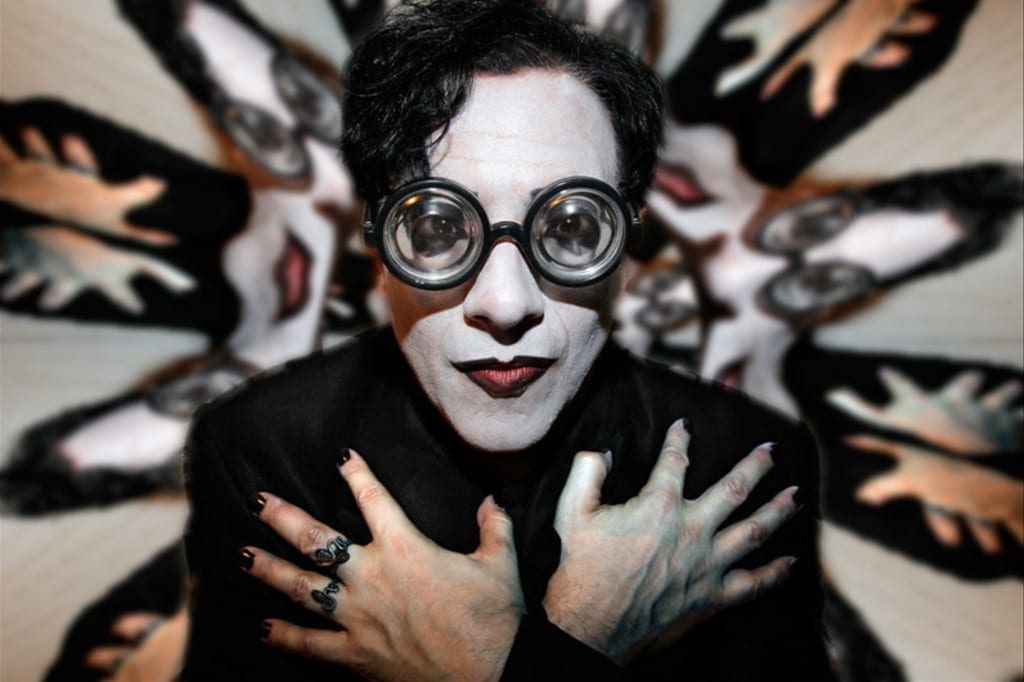
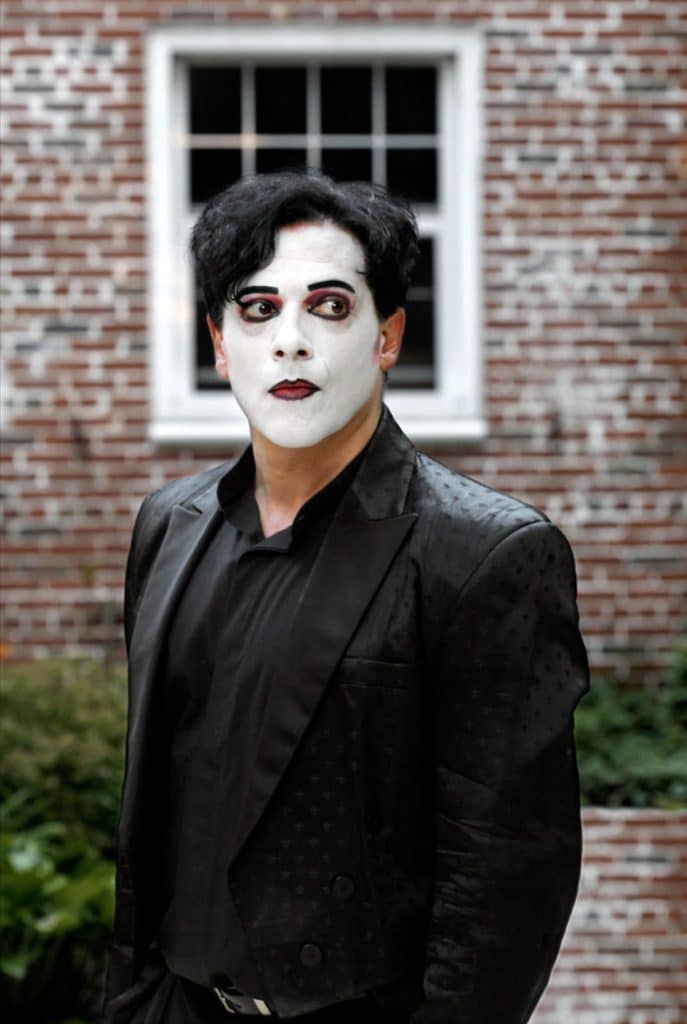
A compact, heavily muscled figure with a mop of black, wavy hair, Zex was always seen in eyeliner and head-to-toe black, whether at the club or at the supermarket. Starting with appearances on other public access programs, Zex eventually launched his first show, the anthology “Zextalk,” in 1992. Through that and ensuing programs, he became a fixture on Community21 for the remainder of the station’s existence. His work was eventually seen beyond Columbus, and his persona would attract media attention from the scandal-seeking talk shows that were popular at the end of the last century.
On air, he adopted heavy black-and-white makeup that echoed Cesare, the murderous somnambulist in “The Cabinet of Dr. Caligari,” a classic of German expressionist cinema. Zex worked with various collaborators, including his romantic partners – Arachnid Goddess, aka local artist Brigid McGovern, for four years, and Tamara Mitchell, currently a California crime scene investigator but then known as the Black Witch, for 12 years.
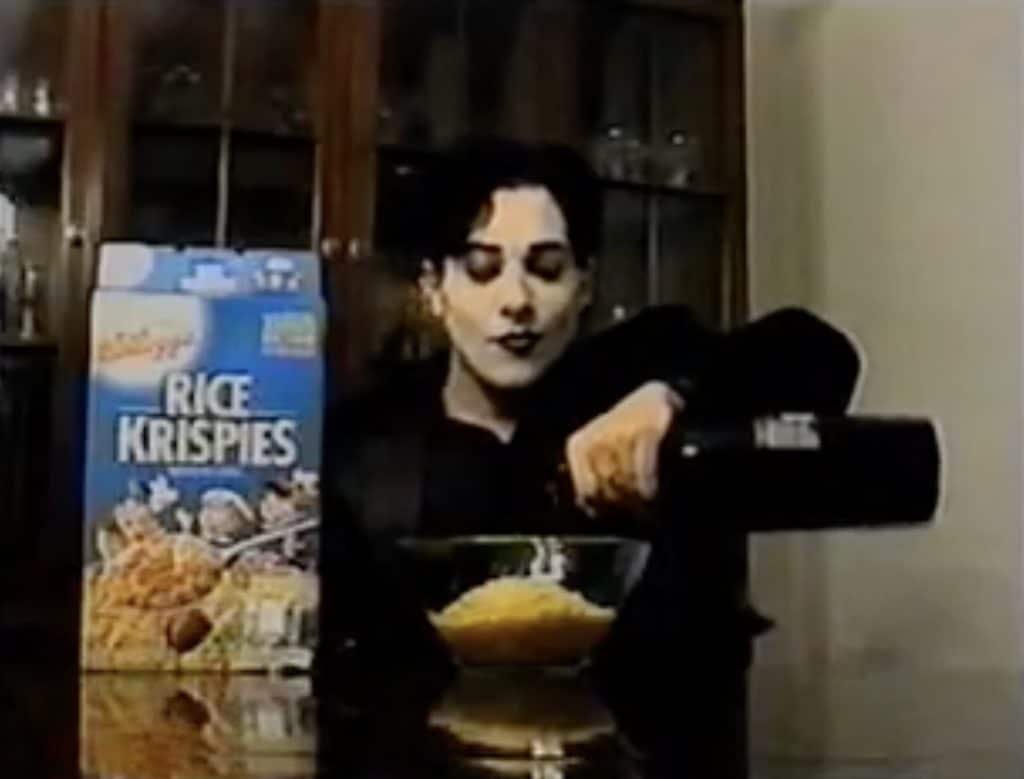
Episodes could feature anything from fairly straightforward skits to Zex throwing acceptable norms out the window. He’d don Coke bottle glasses for his “Geek” character to evangelize about God’s interest in your most private and potentially embarrassing moments. He dug into a breakfast of Rice Krispies doused in red wine and, through editing, appeared to regurgitate it and gulp it back down.
The most notorious episode involved a scene of Zex raising his head from between the legs of the Black Witch to reveal a tampon dangling from his mouth, drenched in a bloody substance. This, like all of the station’s broadcast content, aired under First Amendment protection.
“In all this darkness and gore and bloody tampons, there was no evil or darkness,” said Zex’s lifelong friend, Gary Handler. “It was a joke! Damon Zex was playing, through shock humor, with how we perceive reality. He was challenging our boundaries and calling us to expand our perceptions.”
Before legally changing his name, Zex was Fred Zaner, the son of a pharmacist and an artist who grew up in the Berwick neighborhood. According to Zex’s sister, Tammy Zaner, he was a prodigy with a photographic memory, who learned chess at age 5 and quickly went on to win a state championship in the game.
“My mom was the one who really encouraged [him] with art,” Zaner said. “He would draw pictures of pollution and the environment at an extremely young age. Around four years old, he would make dinosaurs out of clay that looked just like them. He read comics and would make little superheroes … It was just something innate. He never had to go to an art class or anything like that. It was all in there.”
In seventh grade, Zaner said, a gym class accident left Zex with a broken hip. It would cause chronic pain and a pronounced limp later in life, but it also instilled in him the habit of working out. “I think at some point, it made him feel a need to get healthier,” she said.
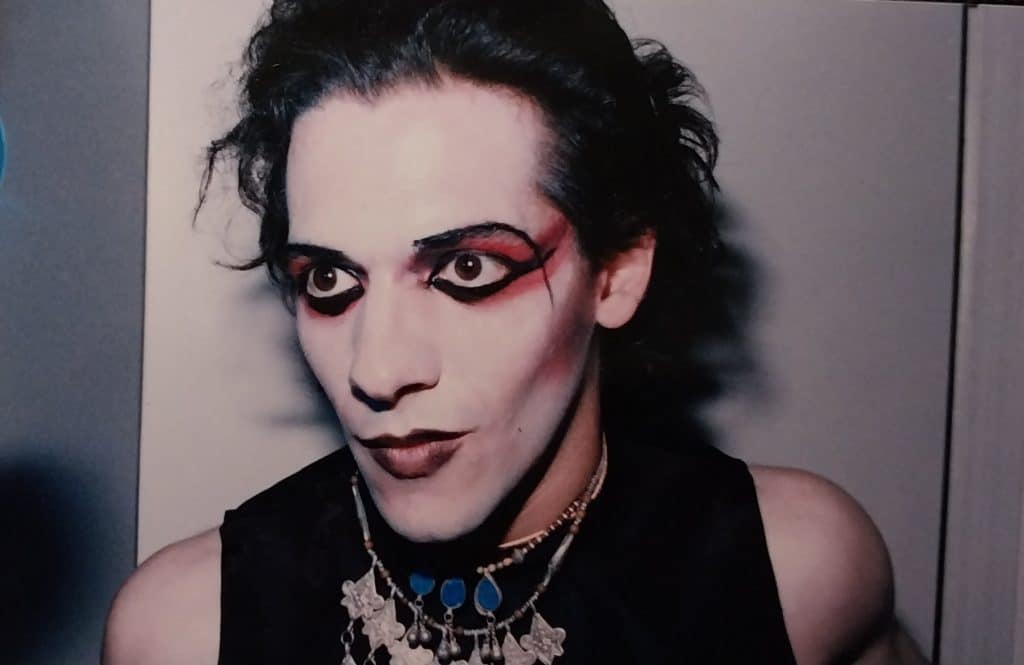
Zex transferred in his senior year to the newly opened Columbus Alternative High School. He affectionately called it “a place of complete weirdos” in a 2012 interview with Marion broadcaster Scott Spears. It was there that he started what one friend described in a written tribute as “his transformation from plaid-clad chess master to black-clad Crazy Mama’s dancer and beyond.”
As a student at Ohio State University, Zex earned a BA in philosophy in 1985 and an MFA with an emphasis on media and performance art in 1991. At the time, the campus stretch of High Street was an untamed strip of dive bars, record stores, vintage emporiums and head shops. Wire barriers lined the curb around one popular bar to keep drunken students from spilling into traffic. Zex gravitated toward a cluster of clubs that stood where South Campus Gateway is today – particularly the legendary rock venue Crazy Mama’s.
“It was unique,” Handler said. “It was where the misfits felt at home; the ones who just didn’t fit in with the crowds at [nearby] Papa Joe’s or Mean Mr. Mustard’s.”
Zex was a mainstay on the dance floor, with Handler recalling how “everyone, really out of respect and admiration, stepped aside to watch a man become the music and lose himself in it.”
Award-winning filmmaker Jennifer Reeder was a teenager sneaking into these clubs when she first spotted Zex in the late 1980s. “There were lots of skinheads and kids with mohawks and weird makeup and costumes, but he still stood out among that bunch,” she said. “His persona was clearly public and performative. It didn’t turn on and off, which I think is really fascinating.”
Reeder said that from the clubs and the city’s colleges there developed “a really intense, vibrant counterculture that was entirely based on DIY.” “It had no rules, you know?” she continued. “Because nobody had really gone to New York to see what that was like and imitate it. Nobody was going to L.A. People just invented it.”
Community21 was located downtown in the Oak Street building known for its monochrome mural of classic film stars Greta Garbo and John Garfield. Zex was already exploring performance and producing his own video when he first stepped inside.
According to Suzanne Patzer, who worked there in various capacities from 1989 to 1998, churches provided much of the programming then, along with radio hosts who’d been recruited to make talk shows. The station also featured content for the LGBTQ+ community and from the National Organization of Women. Generally, the production quality wasn’t out of line with Zach Galifianakis’ public access parody series “Between Two Ferns.”
Community21 eventually gained a following, attracting more on-air talent from the local music and comedy scenes. Once required training was complete, public access producers could use the shooting and editing facilities at a cost, or for free by banking volunteer hours.
“Damon Zex was there all day long, every day, for many months, if not years,” Patzer said. “So, although he walked around with makeup on and was considered pretty bizarre, he was well loved by all the other producers because he volunteered for other people’s shows all the time.”
The time helping and mentoring earned him ample access to the studio and allowed Zex to dig into the capabilities of the station’s equipment. He would also partner on-air with fellow Community21 talent such as Marshall Barnes, an inventor and science theorist who believed he had figured out time travel, and Howard Luken, who appeared on public access in the foul-mouthed, red-nosed persona of Angsto the Clown.
“When Damon first started making shows, they were not provocative the way they evolved to be later on,” said Patzer. “He really reminded me of Charlie Chaplin, and he was hilarious. He used video as an art form, rather than just to portray a message.”
When station management chose to remove an Angsto the Clown show in 1995 over charges of obscenity, Luken sued, and Zex was tapped to be a witness in defense of free speech for the station’s producers. Luken lost.
“Then Damon just started an all-out assault,” Patzer said. “‘I’m gonna just be as provocative and controversial, and do the craziest stuff on the channel as I possibly can to try to poke the bear,’ you know? I think it was just on the principle that public access is a First Amendment forum.”
Zex developed striking visuals with the station’s rudimentary digital tools and wrote splashy press releases about his daring on-air antics. He would also seek new eyes for his work through the practice of public access creators sending tapes to other stations for broadcast. Meanwhile, some viewers who appreciated Zex’s work were recording it on VHS and sharing it with like-minded souls.
Tamara Mitchell met Zex in 1996 – on Halloween, naturally – when she was living in the Indianapolis area and writing for the magazine M.K. Ultra. The woman who would become the Black Witch already knew Zex’s work through videocassettes that were mailed to her publisher by the proprietor of Columbus’ Ozoner Video, a haven in its time for cult and genre film lovers. She moved to Columbus and began working with Zex the following year.
As Mitchell explained, “Basically, everything that came out in his show was really an extension of his master’s thesis,” in which Zex posited that art needed a connection to social responsibility. Some ideas would come from their brainstorming; others came in a flash from Zex’s brain. In the studio, “He had a Stanley Kubrick level of perfectionism,” she recalled with a mixture of admiration and mild annoyance at the many takes and hours spent honing programs in the editing room.
For inspiration, they’d watch Turner Classic Movies and rent tapes from the Columbus Metropolitan Library. “Lon Chaney, Sr. was a big influence,” Mitchell said. “All of the silent greats: Buster Keaton, Harold Lloyd, and Chaplin, of course. And then German expressionism.” The work of actor Peter Sellers, the groundbreaking early television of comedian Ernie Kovacs, and the 1960s show “The Monkees” provided further influence.
“He also had an immense appreciation for Antonin Artaud and the Theatre of Cruelty,” Mitchell said. “The concept of putting your audience through the wringer, then you come out the other end and you’re like, oh, I survived that.”
One of these survivors was locally based, nationally recognized experimental filmmaker and editor Mike Olenick, who still remembers his first exposure to Zex while studying at Columbus College of Art and Design. “I was in the dorm in the fall of ’96 or spring of ’97, and you had a couple of channels. And then you flip, and there was this guy wearing white face makeup, staring directly at the camera and just saying, ‘Fuck for drugs.’ And it was just, like, what is this? Who is this? I knew it was a public access channel, but I sort of started to think of it as the Damon Zex channel, because that was really why you turned to it.”
Zex’s friend Handler noted that other viewers would show their appreciation on the street by yelling Zex catchphrases such as “Get high or die.”
The polarizing nature of the show could cause headaches for the station, at times, with a small handful of people lodging hundreds of complaints directed at Zex. “The most hilarious one was, ‘I watched that show over and over, three or four times, and it was just horrible,’” Patzer said.
Zex was also friends with the Patzer family through Suzanne’s brother, Carl, who collaborated on music for Zex’s videos. That’s how she learned that his renown had spread to unexpected places.
“He was picked up for a DUI and he had a choice between going to, like, a two-week course at [addiction treatment center] Maryhaven or three days in jail,” she said. “He chose three days in jail, but knowing him as well as I did, I knew he was terrified to go. And he goes in there, and they were his fans. They loved him. He had the greatest time.”
In the 1990s, Columbus musician Myke Rock was booking talent for national syndicated programs including “The Jerry Springer Show,” “Geraldo,” and “The Sally Jessy Raphael Show” – all highly rated for their lurid topics and panel discussions that would often devolve into chairs and bodies being thrown.
Zex’s look and attitude caught the eyes of producers. He, Mitchell, and Luken appeared together on “Springer” in 1998, where Zex proposed marriage to Mitchell against Luken’s physical objections. Zex also appeared on “Geraldo” and had a confrontational experience as a guest on Raphael’s show. It was so unpleasant, Zex created “Sally Attack,” described in a press release as, “a video which would serve as an active voodoo object … the first TV show ever created to purely destroy a media icon’s career.”
Though it didn’t immediately lead to Raphael’s cancellation, that work would go on to air on Manhattan Neighborhood Network, the still-active public access station serving New York City. Other Zex shows were seen in places including Los Angeles, Chicago, and Atlanta, and made it overseas in 2002 through a contract with the BBC Four program “UK Shock Video.”
By that point, Community21 had been brought down by management troubles and scuffles between the station and the city following what Patzer characterized as a bad decision to censor Luken.
One memory from this time sticks out for Mitchell. “We went to a City Council meeting where they were talking about funding or complaints about his show, from the same kind of people that wanted to put warning labels on records. And [Zex] marched right up and said to City Council, ‘Columbus is the sphincter of normalcy.’”
“It was almost like he was furious with how complacent people were, and it came out in that art form,” she said. “It was like splashing cold water on someone to wake them up.”
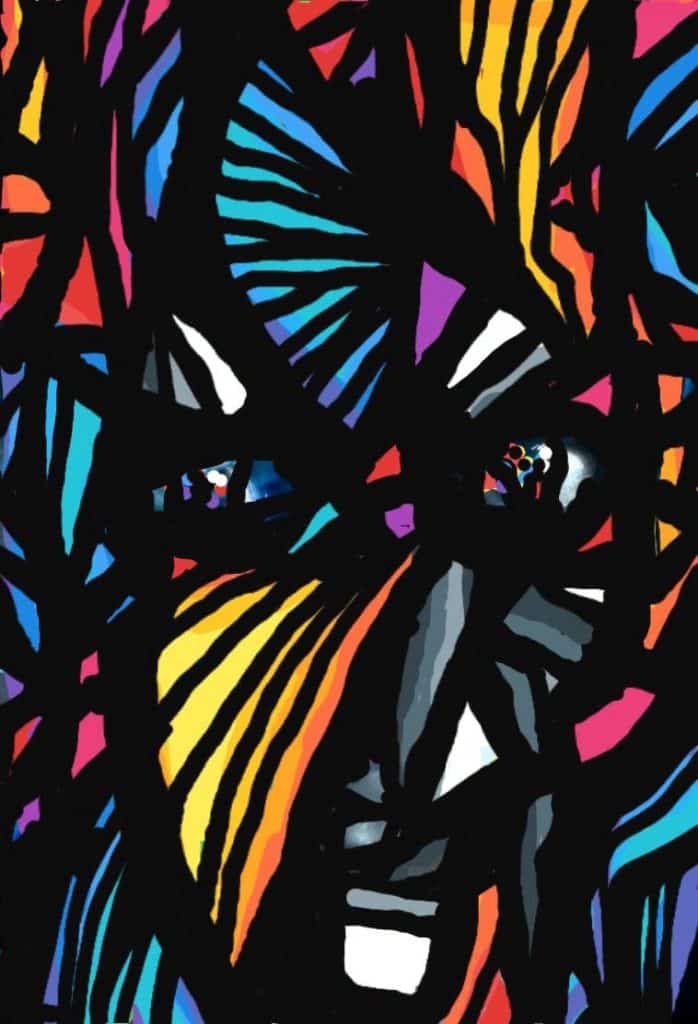
While they were together, Zex and Mitchell continued to collaborate on the newer platform of YouTube. Later, in 2019 and 2025, his work featured in public-access-focused programs at the revered Brooklyn microcinema Spectacle.
Following his public access heyday, Zex continued to host events before settling into a job as a loan officer. He also maintained a dedicated daily practice of making art and writing in his Grandview apartment, regularly posting wildly colorful digital drawings to Facebook up to the week he died. And he returned repeatedly to The Compromise of Form, a book he’d first written in 1986. The latest version, available digitally on Amazon, has a 2026 copyright.
As friend Gary Handler explained, “It stayed on a shelf until 2020. His first revised, finished copy was in 2022. Between then and the end of 2025, he put in thousands of hours at the library, polishing his magnum opus. It’s a philosophy book, but it is really a love story. He truly believed that he was in love with the spirit of a French singer, Marie Laforêt, and he was trying to reach her spirit using his book as a conduit. For all I know, he very well might be with her spirit now.”
In the corporeal world, Zex connected with Isabelle Cavalier, a French artist and singer. They wed in front of a crowd outside his favorite coffee house, Stauf’s. The couple produced some videos, but were separated in 2019 when Cavalier had to return to her native country to deal with some immigration and other issues with the French government. She was unable to attend Zex’s funeral.
This, combined with Covid lockdowns and Zex’s reluctance to go back to the office once restrictions were lifted, led to some isolation at the end of his life.
“He was a shy person who used the Damon Zex character to explore and share his philosophical teachings in a public space, and to get to know himself,” Cavalier-Zex said. “He was still working to get to know himself, so he decided to live in this apartment that he called his ‘temple.’”
Although a project by Marshall Barnes to revise and rerelease their 1990 collaboration “Crashing the Breykiot” never came to pass (Barnes died in 2025), Zex’s work has racked up tens of thousands of views on YouTube. And Reeder, who teaches film at the University of Illinois Chicago, noted that recently, Zex’s way of working has been coming back around, with students returning to analog video tools of the ‘80s and ‘90s that they’ve inherited from their parents.
Many of the themes Zex explored in his work also have continued resonance, including his concerns about the devaluing of human creativity and the addictive pull of social media. And his exploits remain the stuff of local legend for those who witnessed them first.
“Thinking about Damon after hearing that he’d passed, I realized in retrospect that he was the first artist that I knew their name in Columbus,” Olenick said. “That’s always been inspirational about him, to me. He was someone who showed you can make weird things. We don’t have to be somewhere else to do that.”
Jennifer Reeder, for her part, described Zex as wholly inseparable from the Columbus DIY scene from which he first emerged, saying, “I do feel like there’s something about the kind of lawlessness of central Ohio at that time – that beautiful, chaotic cloud – that allowed him to exist at all.”
Author

Related Articles

‘American Doctor’ asks viewers to not look away
The gut-wrenching documentary from director Poh Si Teng, who will be on hand when the film screens at the Wexner Center this weekend as part of ‘Unorthodocs,’ takes viewers inside Nasser Hospital in Gaza.
A newly restored ‘Riverbend’ finds fresh resonance in the modern era
A series of unlikely events collided to give new life to the 1989 film, which will screen at the Wexner Center for the Arts on Friday, Oct. 2.

‘Ice Cream Land’ balances fantasy, reality in making its way to the big screen
More than two decades in the works, the new documentary from artist David Denniston lovingly traces the life and experiences of Ricky ‘Ice Cream’ Jackson, who will be on hand when the film premieres at the Lincoln Theatre on Thursday, Sept. 17.