
Read Rob Harvilla’s foreword to the 15th anniversary edition of ‘Hitless Wonder’
‘[This] is a book about how and why this wonderful and awe-inspiringly resilient band won’t ever stop.’
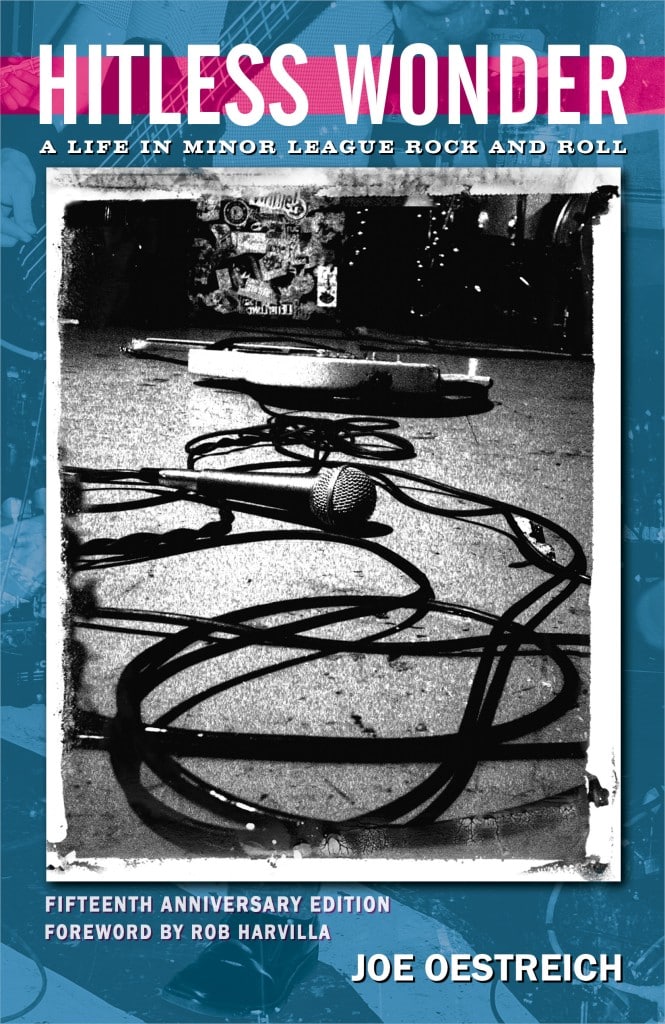
Thie foreword originally appears in Hitless Wonder: A Life in Minor League Rock and Roll, 15th Anniversary Edition by Joe Oestreich. Courtesy of B Minus Books.
One of my most cherished personal beliefs that is 100 percent bullshit—and it’s further proven to be bullshit by the gracefully hardcore and triumphantly bittersweet rock and roll memoir you now hold in your hands—is that being in a rock band would solve all my problems. It totally would, though. I imagine me and three to nine of my very best friends (maybe it’s a ska band) effortlessly writing hundreds of brilliant songs, and immediately getting a huge but also cool and punk-rock record deal, and merrily cramming into a touring van to rock and roll all night and party every day, etc. We got tons of chicks, we got tons of snacks, we got unrelenting joy and success and personal validation. And to quote Guns N’ Roses, it’s . . . so . . . easy. (Those guys were talking about something else, but never mind.)
Every rock and roll memoir you’ve ever read has reinforced this (delightful) bullshit. You know the proudly clichéd plot arc: youthful aspiration, teenage flowering (and deflowering), The Band Forms, The Band Rapidly Ascends, The Band Hear Themselves On The Radio, dazzling superfame, copious chicks + snacks, heated but ultimately frivolous inter-band disputes, regrettable drugs-and-alcohol-based low points that almost kill us but only make us stronger, rehab + spiritual rejuvenation, The Band Improbably Returns With Our Greatest Album Yet. No real obstacles, no real problems, and in fact no real people outside the band itself: Anybody not in the van is a video-game NPC, a mere adoring fan, a powerless awestruck onlooker, a shiny trophy, a vanquished adversary. We’ve seen a million faces and rocked them all, etc., but we remember none of them even if we’ve married a few of them.
A donation powers the future of local, independent news in Columbus.
Support Matter News
Watershed bassist / co-leader Joe Oestreich’s Hitless Wonder, as the (gracefully hardcore) title implies, is different, and better, and wiser, and more humane, and somehow far more triumphant despite deviating from the rock-memoir formula right before the Dazzling Superfame part. Formed by Joe and his childhood best friend and permanent invaluable musical foil, guitarist and co-leader Colin Gawel, Watershed are a truly phenomenal rock and roll band beloved in their hometown of Columbus, Ohio, but criminally undervalued outside it. Watershed have written (roughly) hundreds of brilliant songs but indeed do not have huge hits in, like, the Guns N’ Roses or (oof) Jim Steinman sense. (That “oof” will make sense to you later.) I first encountered these (delightful + humane) fellas in the early 2000s, while working as a rock critic and arts editor for a cool and edgy and only occasionally outright bitchy Columbus alt-weekly called The Other Paper, and not to brag or nothin’, but I am 95 percent sure I, personally, am quoted in this book, describing the 2002 Watershed song “Can’t Be Myself” in print as “the monster hit of the summer.” I’ve published zillions of objectively stupid opinions in my illustrious career, but that ain’t one of ’em. As you read Joe’s book, you will come to love Watershed as much as I do, and I gotta admit it’s gonna make me pretty mad if you don’t listen to a ton of Watershed songs while you do it.
Maybe start with the colossal jangling majesty of “How Do You Feel,” the version off Watershed’s 1994 live EP Three Chords and a Cloud of Dust (that’s a Columbus reference), recorded live at the Newport (that’s a super-cool Columbus rock club) before an adoring crowd of audible joyful Columbusites. (Joe’s book is full of so many simple and humble but unfathomably brilliant bits of rock and roll wisdom, including this one: “A live album is a lie. But like all good fiction, it’s a lie that tells a certain kind of truth.”) Definitely check out the absurdly exuberant pop-punk windsprint “Can’t Be Myself,” the monster hit of the summer (or so I have read) off the 2002 Watershed comeback album The More It Hurts, the More It Works, which also includes “Anniversary,” a heartrending breakup anthem all the more shattering for how kindhearted and reasonable and fundamentally decent it is. And please please please end your tour with the slow-burn scream-along title track to Watershed’s 2024 super-comeback album Blow It Up Before It Breaks, which, spoiler alert, came out 12 years after this book first got published. Hitless Wonder is a book about how and why this wonderful and awe-inspiringly resilient band won’t ever stop, and it turns out Joe meant it.
As a young-buck Columbus rock critic, I started a local-band column called Cusp O’ Fame. That name made me wince uncontrollably, but the other options were worse. (Another brilliant bit of Joe Rock Wisdom: Bands don’t choose the band name everyone likes best, but the one everyone hates least.) I interviewed dozens of Columbus rockers in various dive bars and trashy diners (shout-out the Blue Danube), and I loved them all, but no Columbus band got truly famous in my time, unless you count O.A.R., and come to think of it, those guys didn’t talk to me. Does the whole not-famous part make all those bands failures? Does that make all the rocking ‘n’ rolling not worth it? Another classic rock-bio cliché is that best times are right before the Dazzling Superfame hits: before the faceless crowds, the merciless paparazzi, the clueless critics (sorry), the various chemically induced rock-bottoms. The waiting is the hardest part, but the best part, truly, is not when massive success comes, but when you can feel it coming, when you’re still young and naive, when you’re still Doing It For The Love. One of this book’s gentle but startling provocations is: Does that all still hold true if the Dazzling Superfame never quite arrives? What if you’re just Doing It For The Love indefinitely? What if you never blow it up, and it never breaks?
And meanwhile, what happens to everyone around you? One thing I love about Hitless Wonder is that everyone is a character, an active participant, a whole-ass person. Joe’s girlfriend and eventual wife, Kate, is not a faceless voiceless powerless victim of rock and roll circumstance, but an active presence with her own agency, and desires, and exasperation, and outright anger, and sage wisdom. (She keenly observes, for example, that Joe and Colin are the true married couple, and whenever you hear the boys’ voices triumphantly intertwine in any given Watershed song, you know it to be true.) The band’s various mothers and fathers are likewise legit fleshed-out presences, in their unflagging support or heartbreaking indifference. So are all the crazed producers (oof) and music-biz hangers-on; so are all Watershed’s various loyal and delightful and only slightly occasionally unnerving fans. (Joe is likewise brilliant in his taxonomy of rock fans, in his delineation between a Crowd and a Scene, in the peculiar way that Columbus’s minor-league desire for major-league recognition gently poisons everyone who lives here, in the eternal tension between the Used to Be in a Band Guy and the Doesn’t Know When to Quit Guy.) The view outside the touring van is not an unimportant indifferent blur, here. There are other people. There is cause and effect. There are consequences. There is an essential unflappable humanity that coexists, splendidly, with the rock and roll mythos, with the (delightful) bullshit, with the You Drive Us Wild, We’ll Drive You Crazy of it all. Both can be true: the truth, but also all the lies.
What sets Hitless Wonder apart, ultimately, is not the hitlessness but the nonetheless undimmed wonder. Rereading it recently, I was thunderstruck (AC/DC reference) by a simple scene, about halfway through, featuring Joe and his bandmates crammed together in one room in a Midtown Manhattan apartment while making the major-label rock and roll album that will not, as it turns out, solve all their problems. Joe writes: “There was just enough extra space to set up a card table, where we’d sip tallboys and play euchre, Herb and me versus Colin and Biggie, a buck a game. We passed the same crumpled bill back and forth. We’d never had so much fun.” And that, in addition to being the most Midwestern series of words I’ve ever read in my life, is the most beautiful, the most life-affirming, the most rock and roll thing I’ve ever heard. Being in a rock band sounds so hard, dude. I know that now. I’ll still always believe otherwise. That’s the whole point.
Quick reminder: If you don’t listen to a bunch of Watershed, I’m gonna be pissed. Okay. Thanks for hearing me out. Go have fun. They sure did. And they sure do.
Related Articles
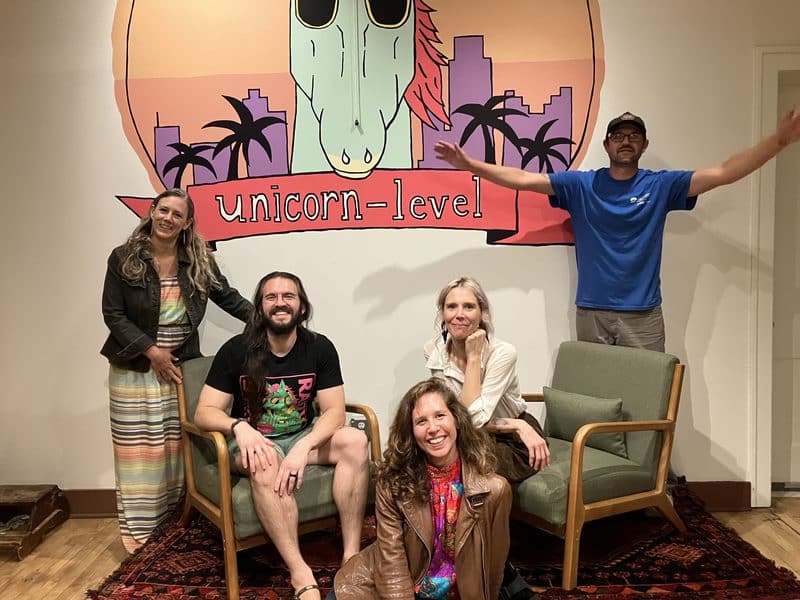
Two Dollar Radio HQ reopens with an expanded ownership group and a similarly expanded vision for the future
‘I think a big part from opening was to give authorship of the space to people with good ideas, to open the doors to people to try different things.’
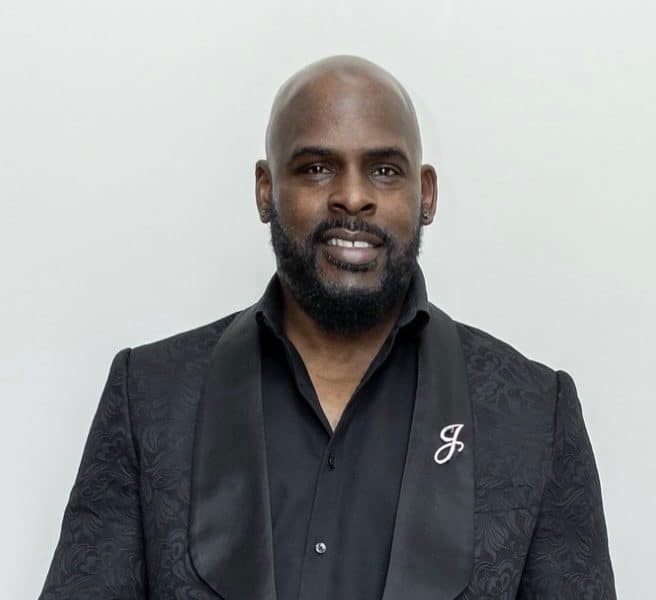
Edward Julian Sr. embraces poetry as a means to release and reflect
Ohio’s poet laureate features at Urban Arts Space tonight (Thursday, Sept. 24), appearing as part of the Poetry Festival, which continues through the weekend at Thurber House and the Grange Insurance Audubon Center.
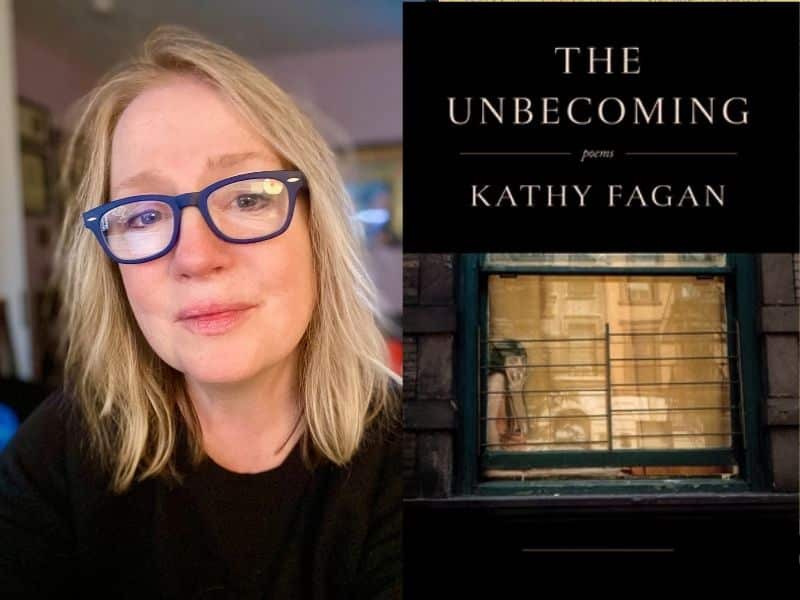
Kathy Fagan takes stock with ‘The Unbecoming’
The poet will celebrate the release of her new collection with a reading at Gramercy Books on Thursday, Sept. 24.