
Community Pride returns with a new urgency
Now in its ninth year, the volunteer-run festival takes place at Mayme Moore Park on Saturday, Oct. 10.
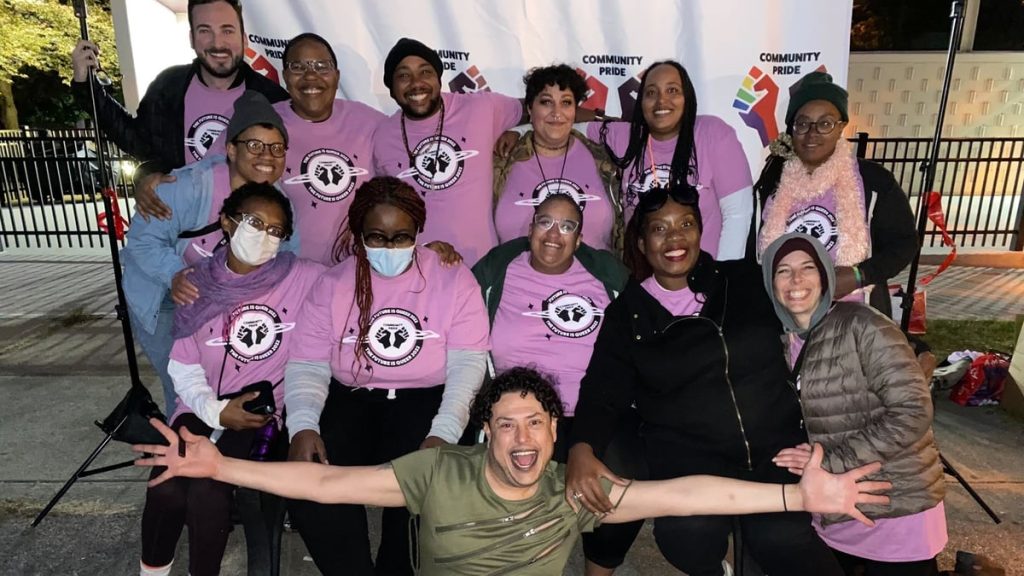
Each year, Community Pride develops around a new theme, with this year’s event centering on the term “Queer (R)Evolution,” which has come to mean different things to different organizers.
In an early October interview, Dr. Kynetta Sugar McFarlane said that, for her, the concept speaks to the importance of ongoing learning, to the preservation of history, and to the need to foster a greater sense of understanding within the larger LGBTQ+ community.
“A lot of communities didn’t have the space to talk about themselves, to be able to express themselves. And so, for me, part of queer revolution and evolution is that we’re continuing to rise … and we’re continuing to say this is our space and our place, and we’re always going to be here,” said McFarlane, a member of BQIC (Black, Queer, and Intersectional Collective), the grassroots organization that since 2018 has spearheaded Community Pride, which takes place this year at Mayme Moore Park from noon to 7 p.m. on Saturday, Oct. 10. “And at the same time, we’re also learning and taking in feedback. … I’m not a trans person, so I need to be open and understand the trans experience from another trans person. And I feel like part of that ‘evolution’ is always being open to further education.”
A donation powers the future of local, independent news in Columbus.
Support Matter News
This educational element is of particular importance in this political moment, with the Trump administration advancing segregationist policies under the guise of dismantling corporatized DEI while simultaneously moving to erase the historical contributions of people of color and queer and trans people. In February 2025, for one, officials stripped references to transgender people from the National Park Service website detailing the importance of the Stonewall Uprising – this despite the fact that trans activists such as Marsha P. Johnson and Sylvia Rivera played key roles in the struggle.
“And, yes, we definitely see that, and that’s why I feel the education aspect is so important, and it’s why you see this movement in a number of communities to make sure they have copies of their books, to make sure they’re preserving their histories,” said McFarlane, who stressed the importance of passing down not only stories of national struggle but local ones as well, pointing as one example to Columbus’ Black Pride 4, who interrupted the 2017 Stonewall Pride Parade as a means to draw attention to the violence being perpetrated against Black and Brown queer people, and whose subsequent arrest led to the creation of Community Pride. “And learning that history … I was like, okay, I’m even happier to be here now.”
In the five years that McFarlane has been a part of Community Pride, she’s seen the pendulum swing against the queer community, with the Trump administration pursuing a policy of trans erasure and Supreme Court Justice Samuel Alito describing same-sex marriage as “perhaps the decisive point in our nation’s turn against religious liberty” in a 2022 speech recently surfaced in a new book.
“I do think that Community Pride feels more urgent now, because of the hate that is coming toward the community, but most specifically the trans community,” McFarlane said. “And that comes with a higher level of stress, and with a higher level of needing support in terms of dealing with the challenges of society. And while that has always been there, it’s something we can specifically see increasing, where the trans community is being used as a target to turn people away from issues that are actually oppressing, from issues that are actually affecting society.
“As a queer person, and as a person who works with the queer and trans community, the negative things that people are saying have nothing to do with your everyday life. It has nothing to do with how much money you have to put food on the table for your family. It has nothing to do with the quality or type of healthcare you get, or how much your healthcare costs. And so, the trans community is just being used and weaponized to get you to not pay attention to the things that are important.”
From its inception, Community Pride has never wavered from its concrete allyship, building a resilient network from those who exist within society’s most vulnerable populations.
“It’s part of the reason why we’re having Pride. It’s to stand up and say our voice is not being heard. You need to hear our voice. We should be in those rooms. You should be reaching out to minority communities within this minority,” McFarlane said. “Pride came out of the fact that the community needs to be seen. And each year, it seems like Pride is needed more so, because that need isn’t decreasing. I feel like it’s increasing.”
Author

Related Articles
Two Dollar Radio HQ reopens with an expanded ownership group and a similarly expanded vision for the future
‘I think a big part from opening was to give authorship of the space to people with good ideas, to open the doors to people to try different things.’
An Ohio school needs funds. It voted to cut Anduril’s tax bill, anyway
How a factory for AI-powered weapons, a data center, and a needy public school collided in rural Ohio.
Flock is on pause. What about all that other surveillance tech we use?
Columbus has had a contract with Shotspotter, an AI-powered gunshot detection microphone system, since 2018.