
Henry Hess says goodbye to his longtime Chromedge studio
Faced with a rent increase of more than 30 percent, the Hess family opted to move on from the artist’s creative home of the last eight years. And while the next steps remain uncertain, they stressed that Henry would maintain a presence in Franklinton. ‘We’re not going anywhere,’ Sophia Hess said.
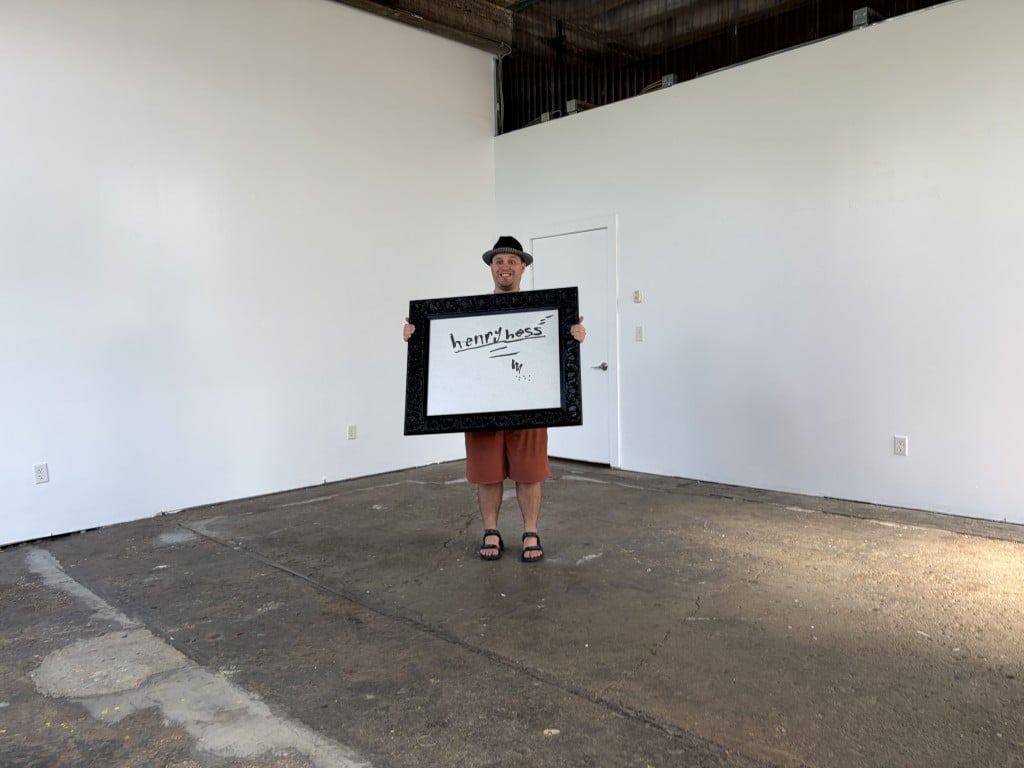
In recent weeks, Henry Hess has assisted in packing up his studio at Chromedge, a process that has involved the artist touching each drawing as it gets put in a bin, and then sometimes reopening the bin and repeating the process, as if to assure himself that everything is still there and still safe.
“It’s really been these last two weeks as we’ve taken stuff out, but he struggles, he really struggles,” said Henry’s dad, Tom Hess. “Even just now when we were at Kroger, he kept saying, ‘Big studio, big studio.’ He comes in and sees that it’s different, he sees that it’s changing. And we try to keep it positive, but it’s going to be tough.”
For a dozen years, Franklinton has been Henry’s art home, the last eight spent in the same Chromedge studio – a large, airy space with massive windows that bathe the room in warm, natural light. In mid-September, even following multiple moving trips, the studio still looked operable as Hess prepared for his final Franklinton Friday as part of 400 Square. The walls were covered nearly floor to ceiling in Henry’s instantly recognizable drawings featuring characters from “The Wizard of Oz,” “Chitty Chitty Bang Bang,” and “Harry Potter,” and there were multiple desks and tables covered in baskets filled with more of the same.
A donation powers the future of local, independent news in Columbus.
Support Matter News
The amount of art then still present at the studio is a testament to the consistency of Hess’ daily practice, which his mom, Amy Hess, said hadn’t slowed even as the family navigated the turmoil of these last couple of months, when a proposed rent increase of more than 30 percent led them to weigh their future options. Front of mind in that process is a deep awareness of the importance of community for Henry, with his parents attributing aspects of the person he has become the support system he discovered and fostered in Franklinton.
“When you have autism as a young adult, you can be super isolated, so the fact that he’s like 180 from the norm is unbelievable,” Amy said. “And so, while we rarely talk about the autism perspective for him … it is part of the story. He’s been in 60 shows, and he’s had 25 of his own solo shows. He’s been on a billboard … and he’s been in magazines. He donates his art for other people to raise money on a regular basis. So, he not only gets so much from the community, but he gives back to the community.”
The Hess’ decision to move on from the studios at 400 Square continues an artistic churn that has been a prominent part of the Franklinton story in recent years, with neighborhood developments pricing out a number of the artists who had called the area home for more than a decade, in many cases. “I live on a pretty tight budget, and there’s no room for an increase like that,” artist Michael Halliday said in March 2023 of a proposed 400 West Rich rent hike that led to his departure from the studios. “It felt like a slap in the face after more than 12 years here, that they weren’t willing to work with me, and that they didn’t seem interested in me being a part of their community. … I felt like Rodney Dangerfield, not getting any respect.”
While wanting to remain positive, the Hess’ raised similar points, noting the improvements they’d funded to the space, which included repairing the windows, painting, and laying gravel outside to tamp down the construction dust, as well as their investments into community, embracing the studio as a place of gathering with a fully stocked kitchenette and bar where artists could gather together. The family also opened the room to the larger community, playing host to the local Alcoholics Anonymous meeting in the years since the closure of the Vanderelli Room forced it from that space.
“Art is not the highest paying endeavor, right? And when you throw a 30 percent increase into a business model, you’re really just telling people to leave,” Tom said. “There’s also been no justification for [the increase]. It’s like, why are you doing this? Are we doing this to get air conditioning? Or maybe new, level floors? Or are we going to seal the windows? And it’s no reason. You’re going to pay this because we said.”
In a statement, a spokesperson for 400 Rich wrote that the Hess’ lease had been “well below market value for years,” remaining static even as operational costs for the property climbed and rents increased on the property’s other artist tenants. “Continuing to carry one lease at a rate far below everyone else’s was no longer sustainable, and it was not fair to the tenants who were paying the standard rate,” the spokesperson continued, adding that the landlord’s offer to assist the Hess’ in finding another, more affordable studio on the campus stood. “At 400 Square, we understand a rent adjustment is a significant change for any tenant, and we value the artists and creative businesses who make the Chromedge building what it is.”
In October 2023, in the days before a retrospective show in the now-defunct art gallery Project Unicorn, Hess’ parents discussed how his drawings offered for them some window into his internal world. “It doesn’t give us so much insight into how he sees the world, but more that he sees it differently,” Tom said at the time. “When I look at what he creates, it’s still magic to me. I don’t know how he can look at something three-dimensional and draw the schematic without any training or support. I don’t see how he does that, but I see that it’s different, and it’s something that I don’t see when I look at things.”
The skill was encouraged and amplified by the people Henry worked alongside in those earlier teenage years after he discovered 400 West Rich, many of whom, including the artist and curator AJ Vanderelli, remain close family friends. Vanderelli, who was present in the studio for the mid-September interview, even recently turned the garage of her home into a transitional space for Henry, outfitting it with bins of his artwork and a rug and futon from Chromedge in order to create a temporary haven as the family works through its options.
“And yesterday, I was like, ‘Hey, bud. Let’s pop over to my garage. I’ve got something to show you,’” Vanderelli said. “And he sat down a few times and was like, ‘Oh, okay.’”
Questions remain as to where this setup might move next. In recent months, the Hess’ have been researching other studios throughout the city, while also weighing the idea of purchasing a building they could then convert into their own artist space – a process Tom said they began in earnest a few years ago, focused on warehouses and former churches.
“The artists who were once here [at 400 Square], they’re still in town, but they’re scattered,” Tom said. “And whenever we find a place, it’ll be like, ‘Hey, let me come look with you.’ And we’d be interested in investing in that, but we haven’t found the right opportunity yet.”
Regardless, the Hess’ are hoping to have something resolved in a matter of months, prioritizing community over everything else in determining what might be next for Henry. To that end, the family stressed that while the artist might be leaving the 400 Square complex, he would remain an integral part of the Franklinton community, with plans to stage guerilla Franklinton Friday shows in rented U-Hauls, to paint at October’s Scrawl, and to maintain the neighborhood ties that have been forged over the course of more than a decade.
“We’re not going anywhere,” said Henry’s sister, Sophia Hess, who also lives in Franklinton. “They’re stuck with us.”
Author
Related Articles
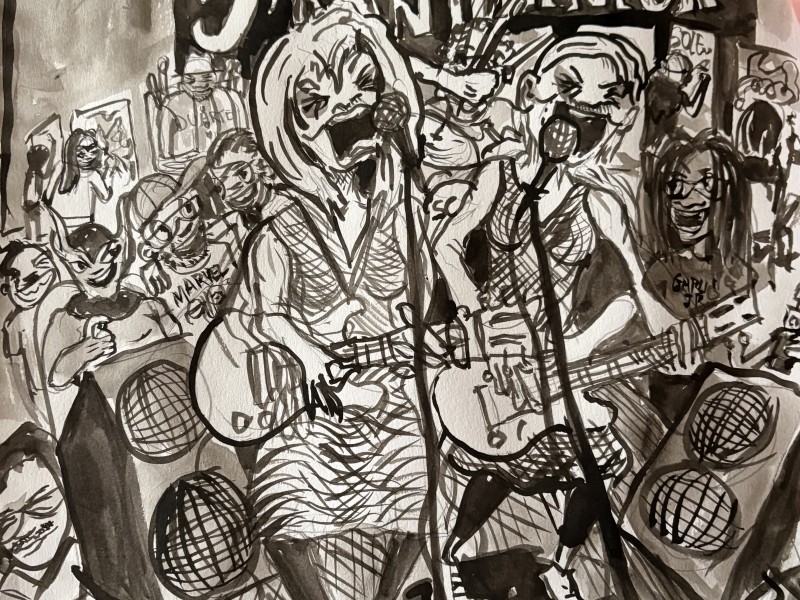
Scrawl meets Scrawl
Marcy Mays and Sue Harshe recently joined pioneering Urban Scrawl artist Dan Gerdeman for a conversation ahead of the band’s performance at the Franklinton art event that has been a longtime source of confusion for some of their fans.
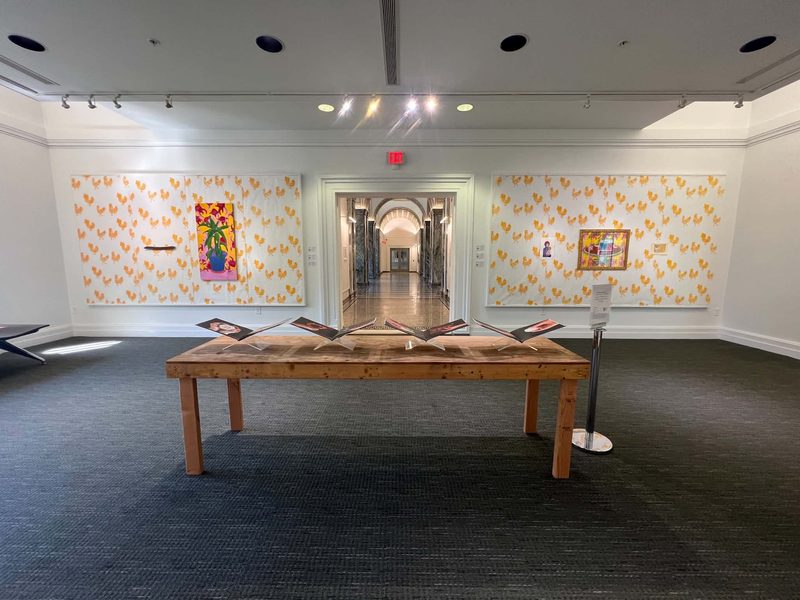
‘Immigration: A Journey of Belonging’ seeks deeper understanding
The new group exhibition, open now at the Losinski Gallery at the Main Library, will host a reception from 2-4 p.m. on Saturday, Oct. 3.
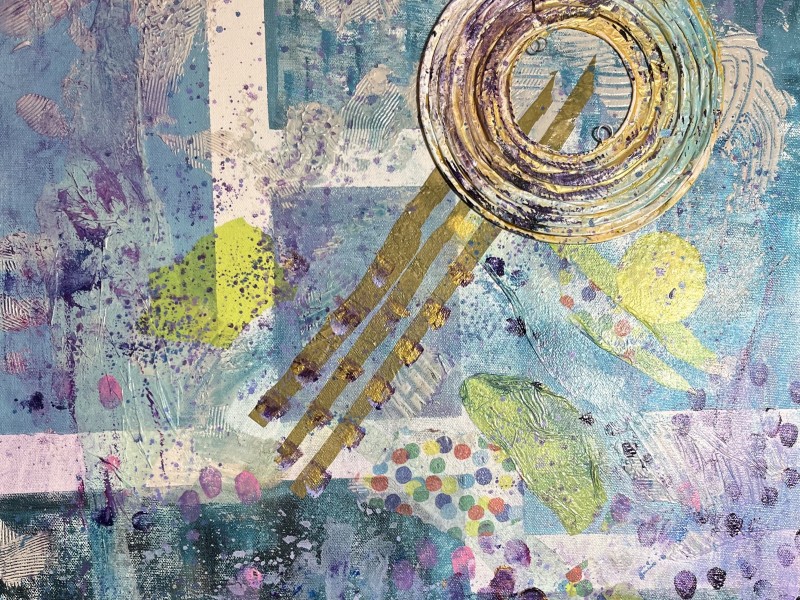
Deep conversations pave the way to ‘Chasing the Light’
A couple of years ago, Loren Bucek invited a group of artist friends to her Clintonville home. The gathering soon evolved into regular meetups that shaped the creation of a new exhibition opening this week at McConnell Arts Center.