
The Worker’s View: Dough Mama temporarily closes after half the staff quits
‘This was obviously a big wake-up call that something needed to change,’
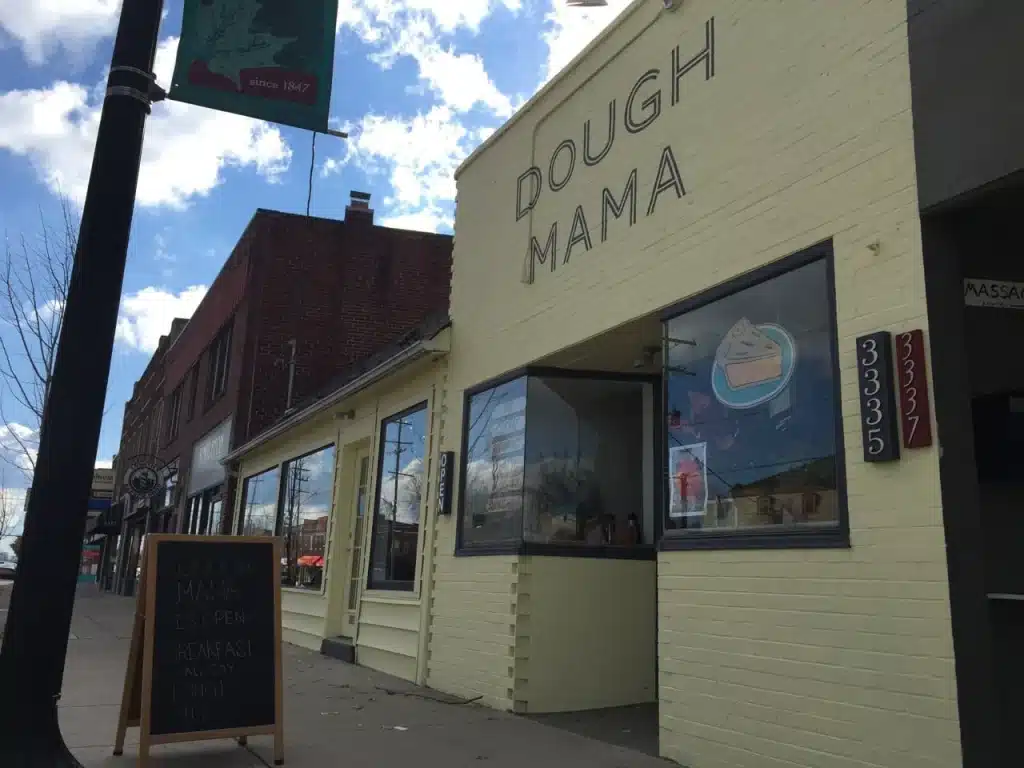
Three weeks ago, Dough Mama, a popular Clintonville bakery, temporarily closed its doors after half of its eight-member staff quit.
In a popular Reddit thread, rumors circulated about what prompted the closure. And on Instagram, owner Perrie Wilkof wrote that Dough Mama would remain closed through October to address turnover and the unpredictable nature of the restaurant industry.
Two former Dough Mama employees, Kieran Duhl and Keara Mayton, told Matter News that they were not surprised to learn several of their former colleagues had walked out, recalling firsthand how Wilkof created an unsustainable, dysfunctional work environment. (Wilkof said two of the four employees who left were in discussion to purchase Dough Mama from her but quit after negotiations broke down.)
A donation powers the future of local, independent news in Columbus.
Support Matter News
The alleged clash between Dough Mama’s owner and employees is the latest in a series of labor disputes across Columbus’ hospitality industry — from a flagging unionization effort at Stauf’s Coffee Roasters to the closure of Parable Coffee.
Courtlyn Roser-Jones, who specializes in labor, employment and constitutional law as an associate professor at Ohio State University, said balancing profit margins and workers’ compensation can often feel like dueling priorities in the service industry.
“But everyone loses when the place goes out of business,” Roser-Jones said. “The workers and the employers.”
A toxic environment?
Duhl started at Dough Mama in May 2025, working weekends as a means to tide them over until starting graduate school at Ohio State. Around that time, the 27-year-old said Wilkof began managing day-to-day operations at Dough Mama after the bakery’s former general manager left.
“Perrie held us to a standard that she didn’t even hold herself to,” Duhl said. “She was very moody. You never know what kind of state she’s going to be in when you come to work.”
Even then, Duhl said, turnover was high, fueled in part by constant scheduling problems and employees being discouraged from taking breaks during their shift. On one occasion, Duhl and three other employees requested the same day off, but Wilkof said one of them had to be there. When Duhl did not show up for their shift because they were at a wedding, Wilkof sent Duhl a text thanking them for their work but informing them that missing the shift had triggered an automatic resignation.
Wilkof wrote that she has always strived to be a compassionate and respectful leader and disagreed that Dough Mama was ever a toxic workplace. She did say that when she took over daily operations in 2025, she was not prepared for how busy the bakery was.
“I have been spread much too thin and let things slip and did not have nearly enough bandwidth to be running a business, working on a graduate degree and everything else in my life both personal and professional,” she wrote.
Roser-Jones said jobs within the service industry are transient, and many employers cannot afford to provide significant benefits, which leads again to more turnover. Certain cities and states throughout the country have adopted “clopening” legislation, meaning workers are required to have 10 to 11 hours of rest in between shifts, she said. However, regulation does not always resolve underlying issues.
“One of the challenges with labor and all these laws is… you can’t regulate anyone out of business,” Roser-Jones said. “When you’ve got this tough economy you’re always trying to walk this tough line about making life better for workers, but not trying to regulate to the point of taking a job away”
From home kitchen to brick and mortar
Wilkof said she started Dough Mama baking at home with her 24-inch oven before opening her physical storefront about 11 years ago.
“Whether you have a manager or not, it all comes back to you, the pressure is very intense,” she wrote. “Pricing is a huge concern for everyone these days; so much in our lives has gone up in price and our customers then feel that from us, too.”
Former employees such as Mayton said that no matter how stressful these financial pressures can be, it is no excuse for treating your employees poorly. The 33-year-old said they witnessed Wilkof give employees the silent treatment, send overly critical texts, and express disapproval of bathroom or lunch breaks.
“You could work an eight-hour shift, but there were no scheduled breaks or time to make yourself a meal,” said Mayton, who worked at Dough Mama for six months between July 2025 and January 2026. “If Perrie was there, you had to keep going or else she would not be pleased.”
In response to Matter’s questions, Wilkof wrote that there is a massive disconnect in experiences between the four employees who stayed and the four who quit. That said, she decided the temporary closure would give her an opportunity to reevaluate the bakery’s priorities.
“This was obviously a big wake-up call that something needed to change, so I decided it would be best to close for a month to assess what was working and what was not,” Wilkof wrote. “I have taken the feedback very seriously and it has been instrumental in how I plan to restructure things.”
What’s next?
Wilkof said that the closure has given her the space to reconsider how to train staff, how to hold employees accountable, and how to reorganize the bakery’s leadership team.
“Dough Mama may not seem that different from the outside when we reopen, but on the inside, in the kitchen, which is our heart, it will be beating stronger and more efficiently than ever,” she wrote.
Duhl said Dough Mama’s recent closure only reinforces how vital workers are to maintaining a successful business. “Just because it’s a small business doesn’t mean it’s an ethical business,” they said, “if such a thing exists.”
Related Articles

The Crew comes up just short in electrifying U.S. Open Cup final
Columbus nearly delivered a highlight in what has been a challenging season, playing St. Louis City SC to a dead heat for 120 minutes on Wednesday before falling in penalty kicks.

‘Pitchfork Populism’ Over Data Centers Rattles Ohio’s U.S. Senate Race
The issue, which barely registered with candidates last year, looms large in a race that could determine control of Congress.
The rapid origination of Andy’s Law
Tensions between guards and the incarcerated at Ross Correctional Institution went from bad to worse following the 2024 murder of corrections officer Andy Lansing. Now, the prison could serve as a restrictive model of what’s to come under consequential House Bill 338.