
Weekend Wanderlust: Atonement in the Champion City
Ignore the false narratives peddled by right-wing influencers and Republican politicians and take in the many good things happening in nearby Springfield, Ohio.
To preface, I can’t speak from the perspective of someone who has lived or currently lives in Springfield, Ohio. All I can report is my surface observations from recent brief visits – or from my past, when by all reasonable metrics, Springfield was a place to avoid; a decaying Rust Belt city, not unlike Detroit or Cleveland, but in miniature. Peaking in the 1960s with about 80,000 residents, the slow decline eventually brought abandonment, drugs, crime, and little hope for what had been.
Much like Detroit and Cleveland (and nearby Dayton), there has been change in more recent years. It’s as if a city can hit rock bottom, which can then become ground zero for a rebirth. On my frequent drives to my hometown in the Miami Valley, I would usually continue along I-70 and bypass Springfield. Now I make a detour to cruise through the “Champion City” via Route 40, aka the National Road, admiring the bright spots of this revival: a reputable brewery, a hidden arcade, great public art and murals, food you won’t find in Columbus, restored architectural treasures, and a core that feels more occupied than empty.
Of course, it’s not all wine and roses (Springfield once grew and shipped more roses than any other city in the country), but in the last decade people are making Springfield home instead of leaving, and there are tangible results extending from these decisions to stay.
A donation powers the future of local, independent news in Columbus.
Support Matter News
Not to belabor the headline here, but just as this rebound was becoming a feel-good story, the 2024 election put Springfield and its adopted Haitian population under a microscope, with right-wing influencers and Republican politicians turning the city into the scapegoat for an immigration “crisis.” New Vice President JD Vance spouted ugly falsehoods, which were then amplified and repeated. In reality, the Haitians in Springfield have been here legally, starting businesses, increasing property values, paying city and state taxes, buying up blighted properties to restore, and helping to forge a community.
Still, you can go and watch any of the hundreds of hours of Springfield City Council meetings posted online in the last year and witness the vitriol and the brain rot that exists in a post-truth world. Or better yet, pay attention to the humanity of those neighbors who spoke up in defense, aware the rise of the city in the last decade wouldn’t have happened without migrants.
Alas, this is a travel column, so the day after the disastrous 2024 election, I made the less-than-45-minute trip to Springfield to survey the scene. I needed a solo respite, a change of scenery, bucolic faith, and a sense that the scar just left by the reality of this harsh new administration would still bring travelers to see just what the city has to offer. Which is a lot.
I started with lunch at the Haitian-owned Rose Goute Creole restaurant – my first experience with Haitian cuisine – and it was a feast of griot (roasted pork shoulder), black rice, and a handmade meat patty on the side. The Port-au-Prince staple, Robust, a syrupy malt drink, is the beverage of choice. On this day, the eatery was bustling with customers and the strip-mall where it sits was buzzing like a real city.
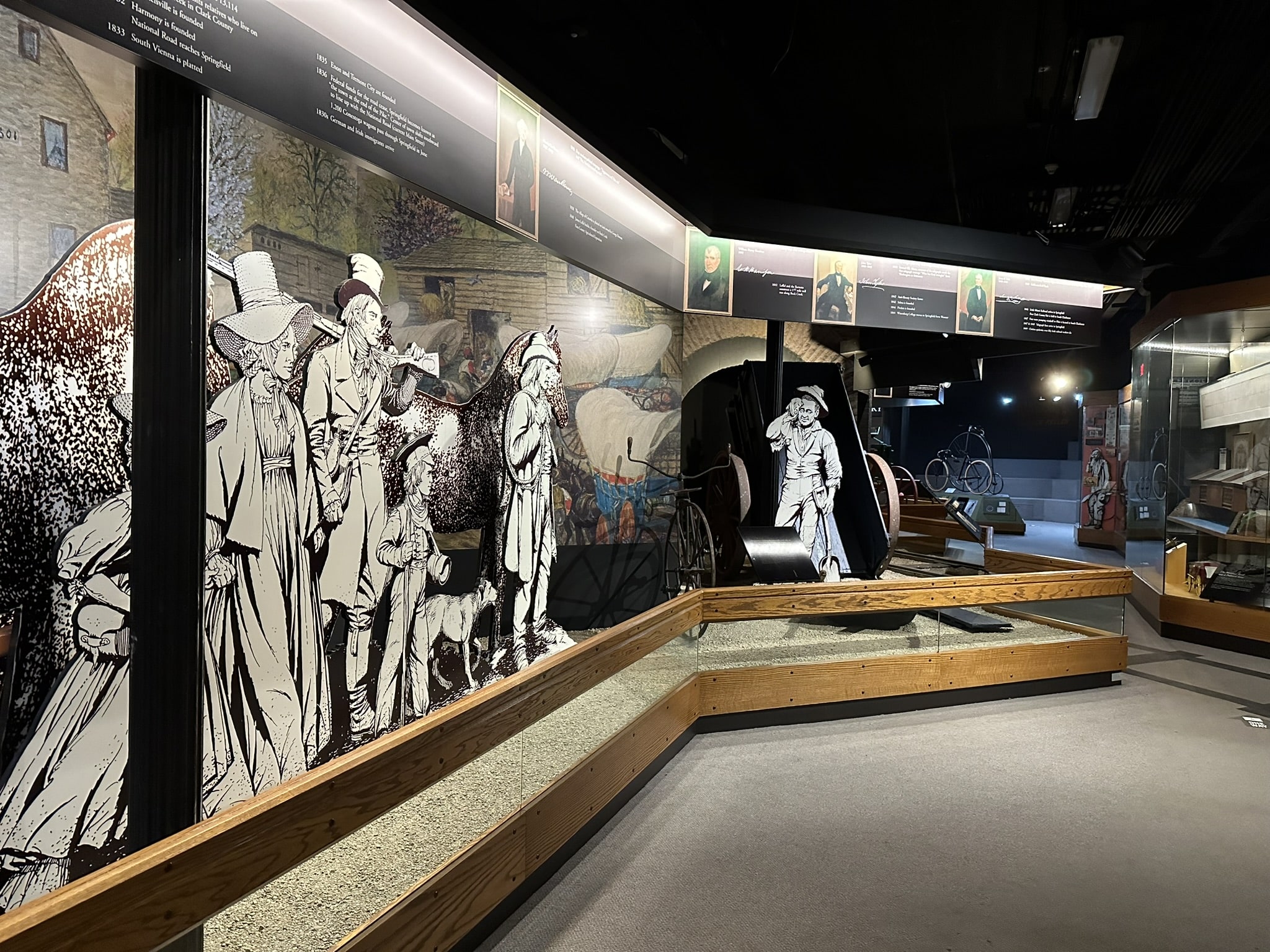
Any initial visit to Springfield and Clark County should first be spent at the city’s most spectacular building: the Heritage Center (once City Hall), where the idea of history museum maximalism is on full tilt. Springfield exists because of the National Road, and there’s an expansive exhibit showing that timeline, where in turn, Springfield became a beacon for a large swath of immigrants and industry. The aforementioned roses, Champion farm equipment (which became the agricultural giant International Harvester), and various car manufacturers are all on display here. Every corner is packed with the stories that made Springfield the city it is today, from the founding of 4-H by A.B. Graham to the election of Robert C. Henry, one of the country’s first Black mayors. Set aside at least an hour to explore.
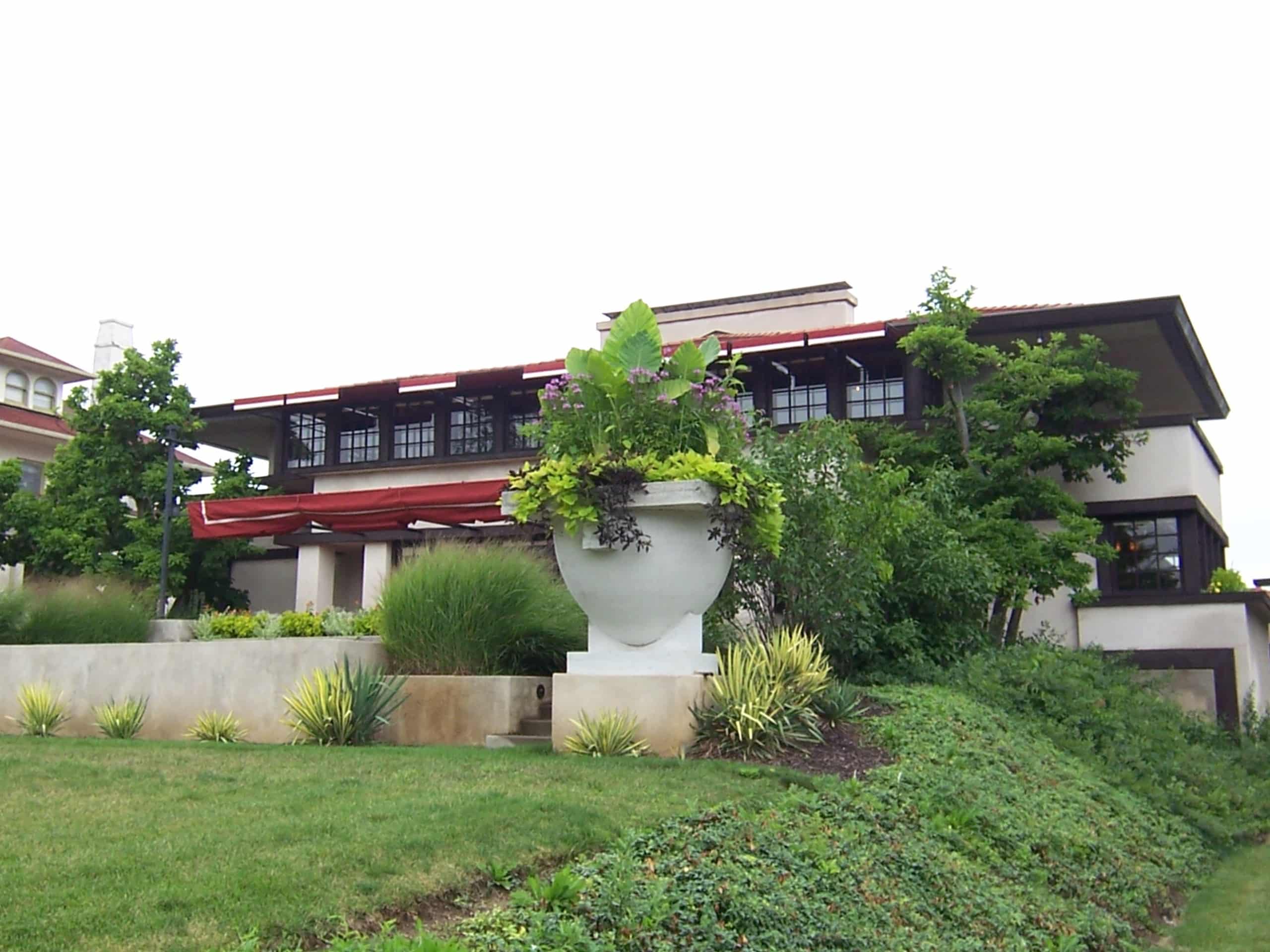
Afterwards, drive east on High Street to see the spoils of that industry and history on “Millionaire’s Row,” where the barons built their mansions. Twenty years ago, it was falling apart, but now a majority of the homes are being given new life. Not the least of these is Westcott House, designed by Frank Lloyd Wright and built in 1908 for Burton Westcott. Westcott House is emblematic of Springfield’s reinvention. Over the years, the mansion eventually became apartments, which then fell into disrepair. But in 2000, the home was purchased by the Wright Foundation and completely restored. It’s a shining example of Wright’s “prairie style,” and tours frequently sell-out, so plan in advance.
With a downtown boasting new businesses and increased infrastructure, there is no shortage of places to grab lunch or dinner. Try Hi-Hat Social for live music and an eclectic menu featuring craft cocktails, rainbow trout banh-mi, and hamachi kama. Or Charlo’s Provisions, where American classics are given a Southern twist. Mother Stewart’s Brewery, with its take on German-style ales, is quickly becoming one of my favorites in the state. Finally, Salato Deli and Le Torte Dolci, share a space offering Italian fare and fresh baked goods. And as a pizza connoisseur, I’d be remiss not to inform you that the closest Cassano’s Pizza (a Southwestern Ohio legend) to Columbus is located right off of I-70.
Of course, the optimal time to visit Springfield is during the summer or fall. Along Buck Creek, you’ll find both Snyder and Veteran’s Park, which are the city’s most scenic spots. Starting in early June through the end of July, the Summer Arts Festival boasts an array of noteworthy concerts at the park’s amphitheater on most Fridays and Saturdays. Though small, the Springfield Museum of Art is free and worth your time. Springfield even has a baseball team now, the Champion City Kings of the Prospect League, which plays its home games at Carleton Davidson Stadium.
My favorite Springfield tradition though, is the annual Woeber’s Mustard Fest. Woeber’s has been making mustard in Springfield since 1905 (the company is most famous for its spicy Mr. Mustard variety), and in late September the company sponsors a weekend full of pretzels, polka bands, and weiner dog races. Plus, free hot dogs and all the mustard you can stomach. Last year even featured Joey Chestnut competing in a mustard-eating contest.
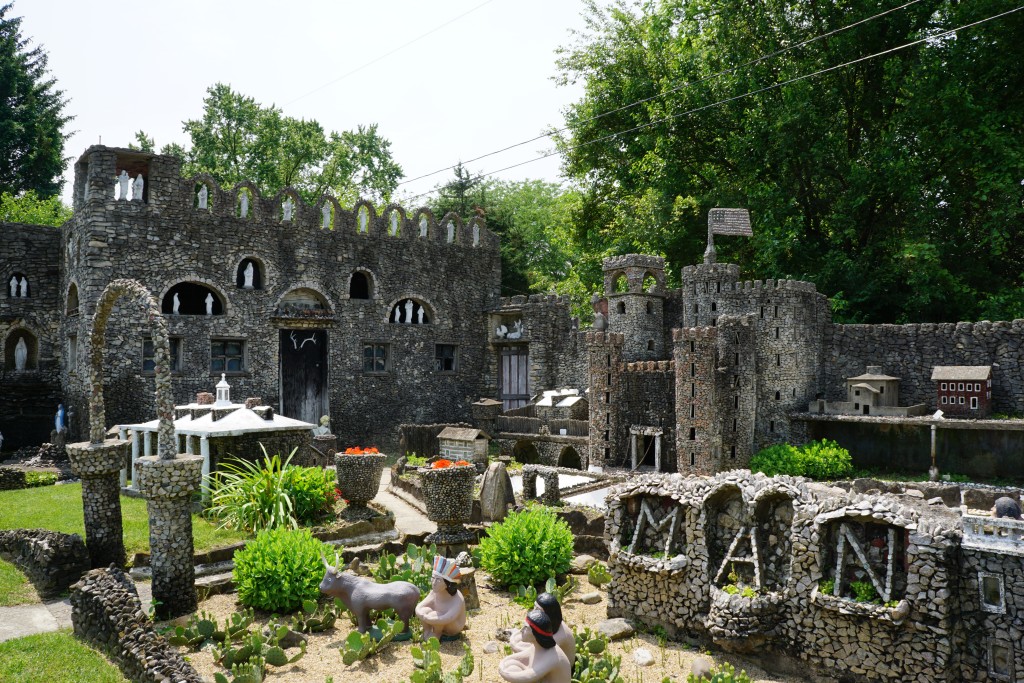
But if you only have time for one thing in Springfield, make it a stop at the Hartman Rock Garden. During the Great Depression, unemployed laborer Ben Hartman constructed a labyrinth of Midwestern hokum out of stone, shells, and concrete in the backyard of his home in a sleepy, nondescript neighborhood. Now 80 years later, the Hartman Rock Garden has become a landmark of American folk-art. You can take it all in at once or slowly marvel at the detail included in the more than 50 structures, including historical landmarks, religious icons, patriotic tributes, and scenes from American history.
It’s a monument to resilience and ingenuity, symbolic of the rise and fall that Springfield has seemingly faced several times since its founding in 1801. And while it may sound like hyperbole, if we abandoned the immigrants who have made Springfield home, the small businesses that have blossomed, and the art and history that have shaped the culture, places like Springfield are going to start disappearing.
Related Articles
Local Politics: The small-time data center resistance
A petition to ban data centers statewide won’t be going to the ballot this year. So organizers are working locally instead.

Activists push Columbus to join other Ohio cities in cutting ties with Flock
While Cleveland and Dayton have recently taken steps to distance themselves from Flock Safety cameras, Columbus officials continue to adopt more of a wait and see approach.
The Worker’s View: The Parable Coffee debacle comes full circle with Palomino
Are pop-ups the future of Columbus’ service industry? Former Parable employees think so.