
Take a leisurely stroll through the woods with Seanie Barron
The Irish artist’s new exhibition of hand-carved walking sticks kicks off at No Place Gallery with an opening reception today (Friday, Oct. 16).
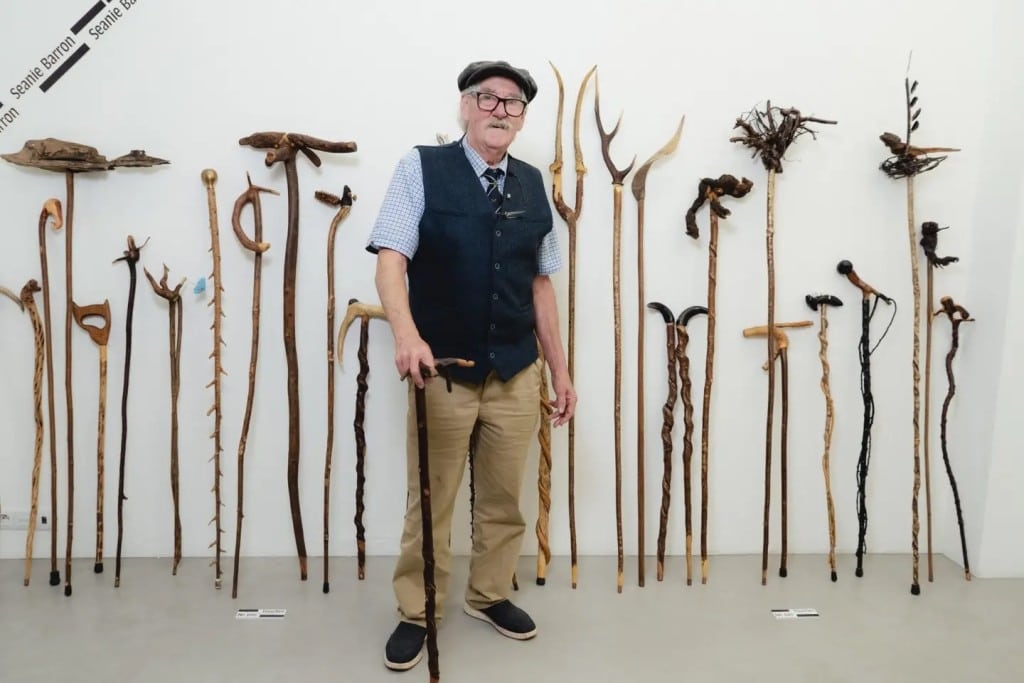
Artist Seanie Barron’s practice centers foremost on patience.
This is true not just of the creative act, with the cleaning, shaping, carving, drying, and finishing of each walking stick taking upwards of a year or more to complete, but also in the selection process, with Barron traversing the woods around his home in Askeaton, Ireland on a near daily basis, accepting that the raw materials available to him will evolve as the forests grow and change over the months and years.
“I’ll go to the forests and areas I like to go to, and … then maybe I won’t go back to that place for six months or seven months, and the stuff that I saw seven months ago will now be very strong, and there will be lovely timber that will be rightly matured for picking or cutting,” Barron said by phone in early October from his home in Ireland. “And that’s the beauty of going to places. Sometimes you go skipping for a year, and there will be two or three pieces new that you never saw out there growing, and they’ll be lovely.”
A donation powers the future of local, independent news in Columbus.
Support Matter News
This woodland foraging helped to inspire the title of Barron’s new exhibition at No Place Gallery, “Sa Choill,” which translates from Irish as “in the woods,” or “in the forest,” and which kicks off with an opening reception from 6-9 p.m. tonight (Friday, Oct. 16). In addition to dozens of sticks hand-carved by Barron from hazel, gorse, briar, holly, ash, horse chestnut, elm, and blackthorn – the latter of which need to be handled with care when the autumn sap is flowing owing to the severe infection possible if pricked – the gallery will also be looping the short film “Only in Askeaton,” which takes viewers through Barron’s day-to-day, including an inside view of the shop where he plies his trade daily.
“It’s so full [of sticks] that there’s only a small corridor for people to walk,” said Askeaon Contemporary Arts curator Michele Horrigan, who joined Barron for the call.
In seeking out sticks, Barron said he’s instinctively drawn toward native Irish woods, describing the beauty inherent in a swatch of hazel wrapped with vines that “swirl around it and make a lovely sort of spring,” as he explained it. Once selected, he’ll bring the raw materials back to his shop, where he’ll begin by cleaning each stick and then hanging it for six to seven months. Following that, he’ll often shape the stick – a time intensive process that could involve heating it slowly near a fire and then rolling it over his knee, gradually working out bends and kinks. “Then I also have little places I can hang a stick and put weights off it where the sunshine will heat it and pull it down nice and gradually to a kind of nice, straighter figurine,” he said.
Barron will then shape and carve the stick and handle using relatively simple tools – primarily knives, a saw, and a small, battery-powered drill if he’s making a “whistle stick,” one in which the handle doubles as a whistle should a walker find themselves lost in the woods – often to dramatic effect. He’ll then sand and polish the piece and finish it by attaching a piece of copper to the bottom to keep the wood from cracking.
In addition to more traditional shapes, Barron has myriad handles carved into animal forms, including one made to look like a weasel and another a nesting bird – creatures that tend to spring to life naturally, with the artist generally allowing the stick to dictate its finished form. “If there’s something nice on the stick itself, like it looks like something, I won’t touch it, and I’ll just leave the look on the stick,” he said. “The stick tells you what’s on itself. … I have a stick outside now that looks like a fish, and I just put an eye on the fish to make it look more [like one].”
Barron began carving sticks around 2014, describing the practice as inherently linked to a fondness for nature that he traced back to boyhood. The artist recalled how as a youngster he would watch his mother and grandmother walk barefoot outside of the house in the morning, the elders telling him how the practice helped to ward off stiff limbs.
“When you walk the grass barefoot in the morning, that will keep your legs,” said Barron, who has had more time to dedicate to his own wilderness meanderings since retiring from his day job as a building laborer. “And, oh, do I love it! I love the nature. You go into the wood there, and you look around and you get a lovely tree there that’s older than yourself. And you go and hug the tree, and you get the vibrations of the tree, and, you know, you feel young again. … You go out into the woods, and you get lost for two hours, and you come out in the open again and you feel fresh for days.”
Author

Related Articles
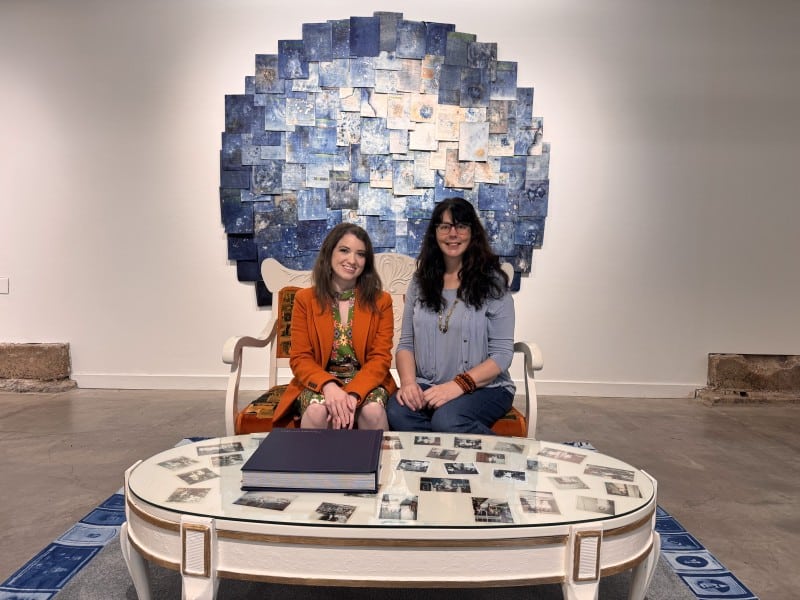
New Urban Arts Space exhibition opens up a conversation about death
‘Spirit & Dust,’ co-curated by Diane Callahan and Michelle Burdine, explores grief, loss, and the weight of mortality from a wealth of perspectives.
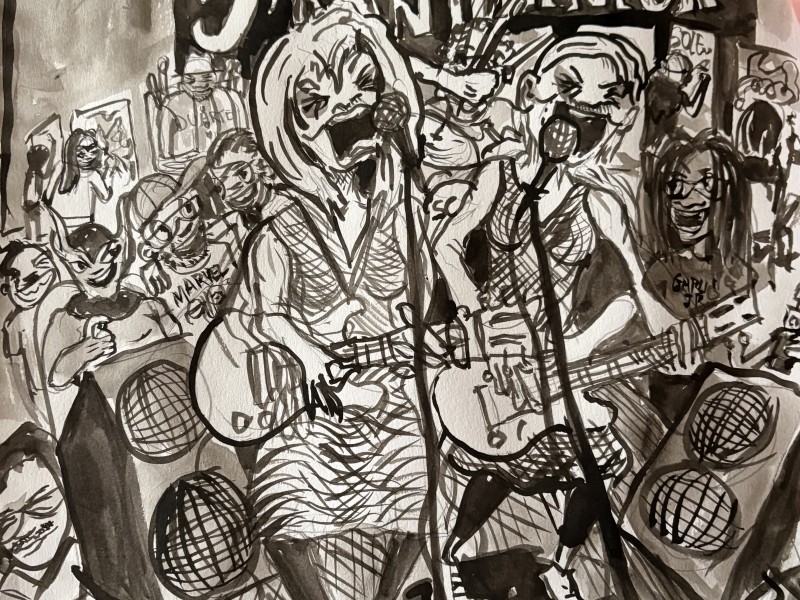
Scrawl meets Scrawl
Marcy Mays and Sue Harshe recently joined pioneering Urban Scrawl artist Dan Gerdeman for a conversation ahead of the band’s performance at the Franklinton art event that has been a longtime source of confusion for some of their fans.
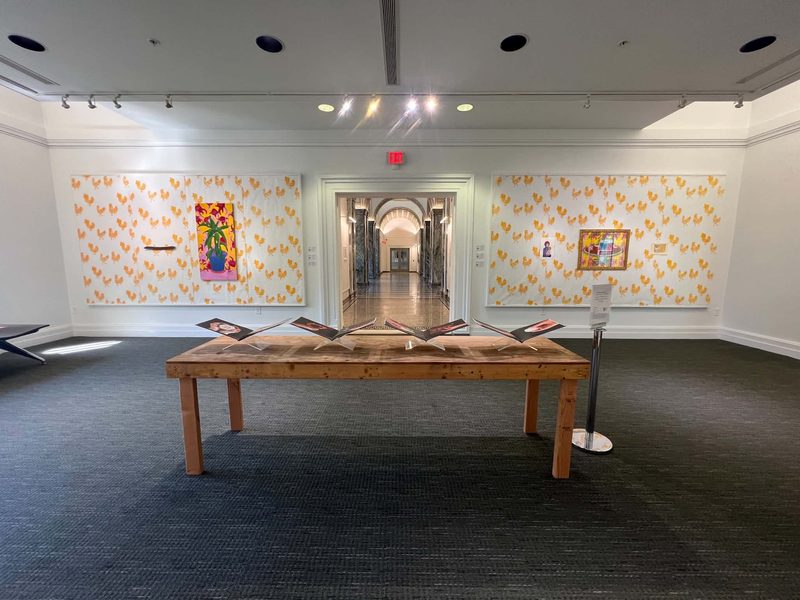
‘Immigration: A Journey of Belonging’ seeks deeper understanding
The new group exhibition, open now at the Losinski Gallery at the Main Library, will host a reception from 2-4 p.m. on Saturday, Oct. 3.