
Lydia Loveless is ready for the ‘Accolades’
The Columbus singer and songwriter’s excellent new EP, which releases via Bloodshot Records on Friday, Oct. 30, interrogates the mental toll of navigating a rapidly corroding world plagued by rising costs and inescapable violence.
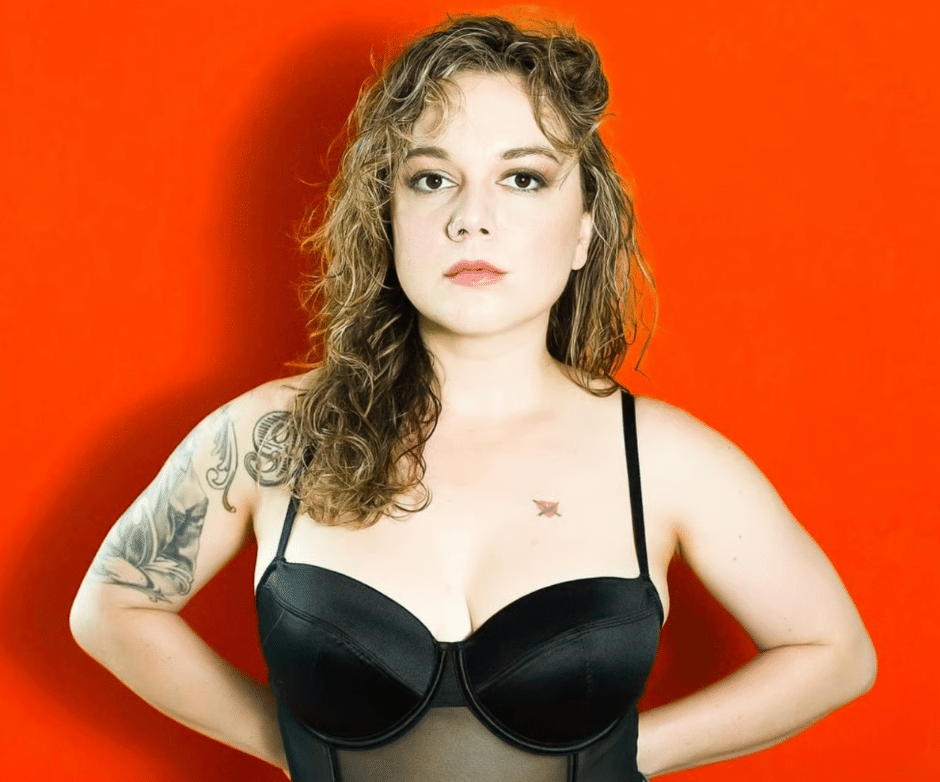
In April of last year, Lydia Loveless decamped with their band to Southern Grooves in Memphis for three days of recording, describing the cozy, dimly lit studio as an ideal place of escape.
“You feel like you’re very encased in making a record,” Loveless said of the sessions that yielded new EP Accolades, out via Bloodshot Records on Friday, Oct. 30. “You’re almost like, ‘What? There’s a world out there?’ which I kind of liked.”
This cocooned feel extends into the recording – at least musically – the Columbus singer and songwriter joining with their band to craft a lush sonic environment colored in tender piano, rich Farfisa organ, and breezy soul horns. “I want to make art that feels like going to a place for a while,” Loveless said in a late October interview at Two Dollar Radio Headquarters.
A donation powers the future of local, independent news in Columbus.
Support Matter News
Lyrically, however, the musician’s latest proves to be a far knottier affair, their songs confronting fears of career stagnation, the increasingly harsh economic realities that can make day-to-day existence feel impossible, those cracked traits we inherit from our parents even against our wills, and, on the title track, concerns related to the pervasive death and violence to which all of us are now constantly exposed, whether seen on the news or served up uninvited by social media algorithms.
“There’s gotta be more than a world of shit,” Loveless sings, “with blown off limbs and chances missed.”
“And that [line is] not only about Gaza but also the things we’ve seen for my entire life,” Loveless said. “We’ve always been bombing somebody or at war. And now with social media you can literally open your screen and watch a makeup tutorial, and then scroll and see a blown up person … or watch Charlie Kirk get shot. And you’re not looking for it, not wanting to see it, but you open your phone and it’s there. … And me, as someone in their 30s, I can look at that and be like, maybe I shouldn’t watch this, and maybe I should walk away and process that I just saw someone die. But if you’re a kid and you’re scrolling through, and all you’ve ever known is a world where people are shot, I don’t know how you process that. I really don’t.”
It didn’t help, of course, that at the time of writing Loveless was living in a Franklinton rental colorfully known as “the Murder House” owing a combination of factors that included its overall dilapidated state, the “decent amount of blood” splattered on one bedroom wall, and the fact that the door to said room was outfitted with an external lock. “It was really just not a good vibe in there,” the musician said, and laughed. “And I think that took me to a more internal place, because I just did not want to be there, and that sent me more into my mind.”
This inward turn reveals itself on songs such as “What We Learned,” where Loveless processes sex and relationships and the ways our approaches to each can be shaped by the people who raised us. Then there’s the fractured ballad “Avoiding Highways,” which unpacks the ennui that can surface in reconciling youthful dreams with adult realities. “Round here I am all washed up/Songs don’t seem to count for much,” they sing, later adding a line about living as “a townie who once had a dream that never came to be.”
“There’s definitely a degree in [that song] about the music biz, which I’ve always tried really hard not to write about, because it’s so navel gazing to be a musician writing about being a musician,” Loveless said. “But in this case, I think the last 10 years have changed music so much, not only in how it’s made but in how long people pay attention to it and in how you promote it. … When I was younger, I definitely wanted to be famous. And now I just want to be in a place where I’m always making art and living a life that facilitates that, which gets hard to do when you’re broke. … But I never want to give up on that side of myself.”
In spite of the financial challenges involved, Loveless said they continue to treasure the ability to tour the country in this pursuit, in addition to the myriad relationships they’ve cultivated in navigating this space alongside likeminded travelers such as frequent tourmates the Drive-By Truckers, with whom they hope to one day record an album. (The musician initially intended “What We Learned” for this collaboration before opting to include it on Accolades.)
While the songwriting on Loveless’ latest resonates as deeply intimate, it also pushes outward in a way that expands the EP far beyond their corner of the world, interrogating the unease of this social and political moment and the greater disillusionment it has surfaced in people – even if the musician had different hopes for the project coming in to the process.
“I know we’re supposed to reflect the times as artists, but I don’t always want everything to be like, ‘Working so hard for nothing.’ I want to hear Dua Lipa talking about her boyfriend’s dick. I want to have fun, too,” Loveless said. “But I couldn’t really, and there was nothing to capture but what I was seeing at the time, which … was this disappearance of joy. And this is getting really dark, sorry, but … it feels like everything is either terrible news or some influencer selling us something. … And at the same time, you don’t want to just be sad about things. You want to have control over your own mind and experiences. You want to find a way to be a good influence. You want to find a way to be a light to the world, or at least to yourself.”
Author
Related Articles
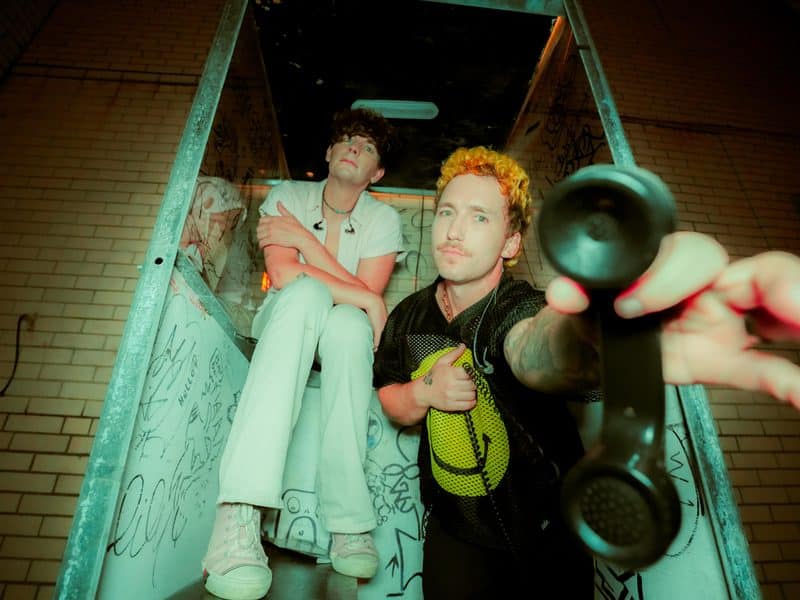
The Orphan the Poet the Block Party
The Columbus band will join pals Joey Aich and Liteweight Champion for an outdoor concert on Walnut Street this weekend.
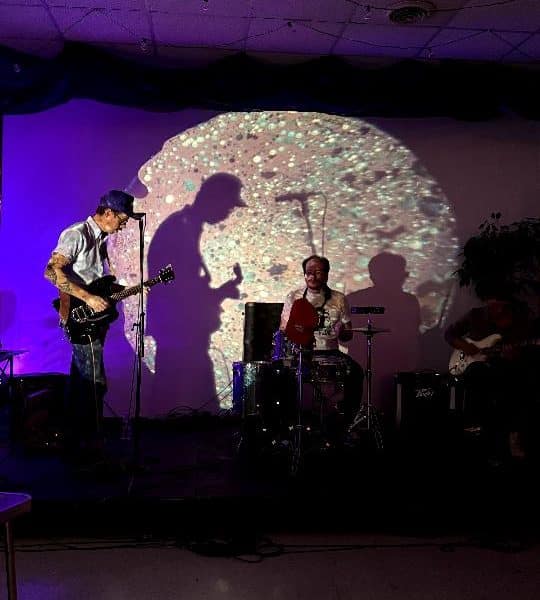
Chlorine’s Joseph Mangum lets his memories bleed through the page
The Kentucky band joins a stacked lineup at Rambling House on Thursday, Oct. 15, performing alongside the Dolphins, Son of Dribble, and Calico Boy.
Villagerrr’s Mark Scott would gladly hop off the industry ‘Carousel’
“I was getting a little frustrated with feeling responsible for promoting the album, because putting yourself out there, it’s not the most comfortable thing for a lot of people, and it definitely wasn’t for me.”