
Contraceptives attempts to break the cycle with ‘Almostbetter’
Released digitally in early April, the new album from the southern Ohio musician Jim Vest finds him wrangling with a seemingly endless cycle of depression, generational trauma, and chemical dependency.
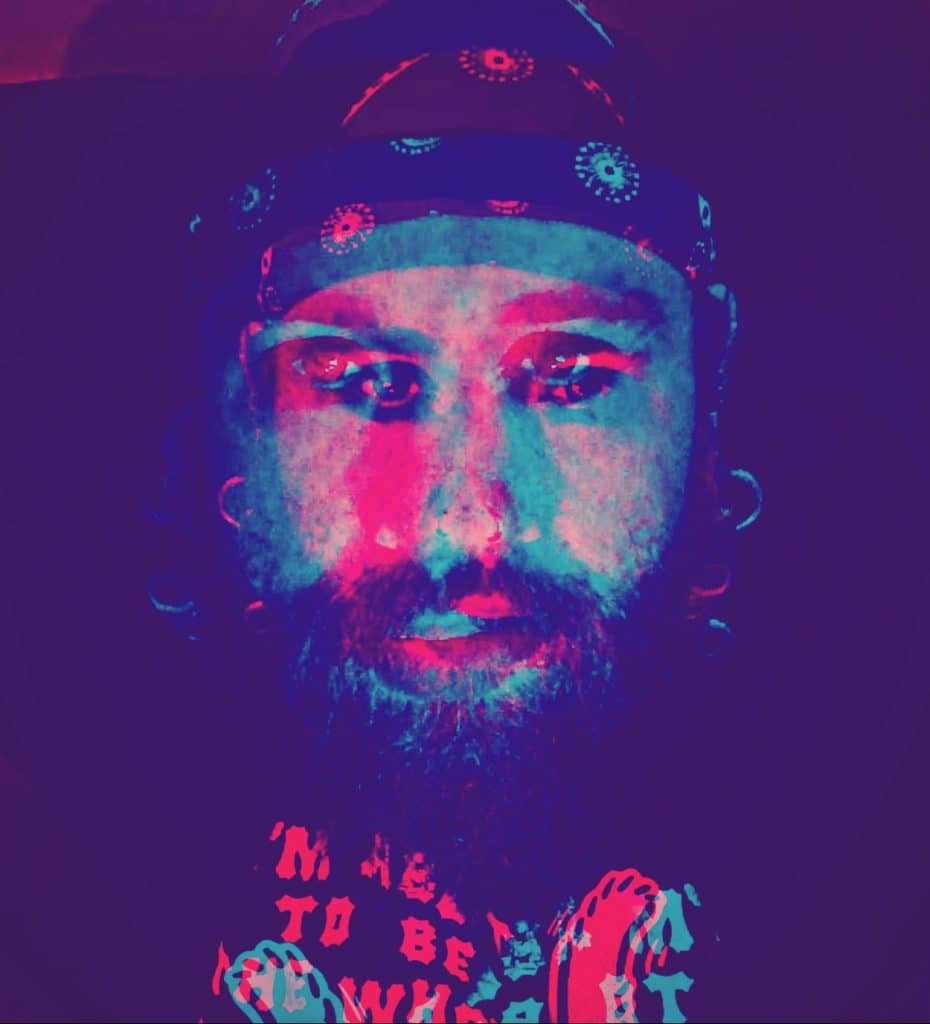
“Almostbetter,” the title track and album-closing song on the new full-length from Contraceptives, released in early April, plays as something of a break in the weather in the wake of a long, tumultuous storm. “Awake but I’m dreaming again,” singer and songwriter Jim Vest sings atop a languid, shimmering bed of guitar, “of a past where I’m good and you love me.”
This slight upward turn stands in deep contrast to “Shot,” which kicks off the release and finds Vest down on his hands and knees, scrubbing at the carpet in a half-hearted attempt to disappear the vomit stains left from the night before. Things only grow more desperate from there, with the musician navigating depression (“I’m dying to forget that I’m dying all alone,” he offers on “Wraith”), generational trauma (the shattered and shattering “DNR”), and his ongoing struggles with addiction (“Ohbyeoh”).
“Collectively, the whole album represents the cycle of BPD (borderline personality disorder),” Vest said in early April from his father’s home in the Appalachian foothills of southern Ohio. “It represents feeling like you need something else to make you whole. … And ‘DNR’ is the collapse, ‘Chemotherapy’ is the acceptance, and ‘Almostbetter’ is the point where maybe I’m finally starting to get somewhere. But then you go back to the beginning and start again with the substance abuse, and the cycle continues.”
A donation powers the future of local, independent news in Columbus.
Support Matter News
The musician said he began work on the songs that would become Almostbetter about five years ago, fresh off of the one-two punch of a chaotic romantic split and the breakup of his previous band, What If When We Die, We Scatter? In the midst of this downturn, Vest traveled to Oregon where he lived for a time with his friend, Cody Richards, immersing himself in songwriting as a means of regaining a sense of footing, cognizant of the therapeutic role music had served in his life since he first picked up a guitar early in his teenage years.
Growing up, Vest said he learned at the heels of his grandfather, a country and bluegrass musician who would allow the youngster to tag along to shows in various southern Ohio dives. So when Vest’s grandfather died unexpectedly when he was 13 years old, he immediately picked up the guitar not only to keep the elder close but as a means to process his grief at the loss.
Within a couple of years, Vest joined some high school friends in forming his first band, a punk crew that specialized in ferocious, Nirvana-indebted rippers largely shaped by a visceral rage that Vest said he harbored for years and that for a time threatened to consume him. “I was an angry kid,” he said, “and [the band] became my outlet to get rid of that.”
The music has trended in a quieter direction in the years since, with Vest jettisoning his first band not long after he discovered Elliott Smith, drawn in by the late folkie’s hushed sound and the way he so willingly engaged his demons. (“Early on, I tended to become obsessed with certain artists and try to sound exactly like them,” Vest said.) This musical discovery coincided with a point in time when Vest opened up to his mother about his struggles with IV drug use. Unsure of how to navigate this confession, she sent the youngster to live with an uncle in a rural area of Texas outside of Dallas, hoping a change in scenery might aid his recovery.
“It legit looked like one of the towns you would see in a Western,” said Vest, who noticed a subtle but seismic shift in his writing during the months he lived in Texas. “A lot of the stuff I was writing before that, I kind of kept it more open-ended. But I was going through a lot, and I needed help, and it felt more natural to start writing more personal songs.”
It’s an achingly confessional approach that has remained a hallmark of Vest’s music in the years since, and the songs on Almostbetter routinely cut to the bone as a result. On “DNR,” for one, the musician details his struggles with alcoholism, the various ways in which his parents’ past shortcomings continue to reverberate in his present, and the gnawing concern that he has become an emotional burden to those closest to him owing to this accumulated baggage. “I know you’re all sick of my shit,” he sings.
“Window,” in contrast, offers a glimpse into Vest’s comparatively tight-lipped early years, with the musician unraveling the “story of a man who’s far too good at hiding his scars.”
Looking back, Vest said that particular line now serves to remind him of one of the last times he spoke with friend and drummer Kelson Copas, who played on Almostbetter and died in January 2024. “One of the last conversations I had with Kelson, he told me how much of a 180 I had done since the beginning of our relationship in terms of actually being able to talk about the things that were going on,” Vest said. “When I used to just hold them in to where it would end in an explosion.”
Vest completed the initial tracking for Almostbetter four or five years ago and then shelved the album amid a string of challenges that included the 2021 passing of Bart Wiseman, who played lead guitar on “Shot”; Copas’ 2024 death; and Vest’s confinement to a psychiatric hospital, which ended in January of this year. Following his release, the musician said he was overcome by a sense of urgency to create something, which led him to revisit the tracks he’d recorded years earlier.
“And I really don’t relate to that person I was in the same way,” Vest said of the scar tissue that has developed in the years since the initial sessions. “I mean, I relate in some ways, like I still have some of the same childish fears and the same imperfections, even if I’ve learned to better control them. But the main reason I wanted to put it out is because Kelson was my best friend, man, and that’s the last music I got to make with him.”
Vest describes the music on Almostbetter as “Appalachian emo,” which serves as a shorthand way of saying the album draws on the myriad sounds to which he’s been exposed throughout his life, his songs incorporating introspective folk, knee-slapping bluegrass, gospel flourishes, anthemic rock, and even space-bending saxophone solos. It’s an anything goes approach the musician said has carried into the new songs he’s currently writing, which walk a comparatively outward-path compared with the inward-focused Almostbetter.
“I’m writing more about the struggles of others, and I think that comes from releasing what was [inside me] and making room for it,” said Vest, who still hasn’t pinned down what form these songs could take musically, though he sounded enamored with the existent sense of possibility. “It can be whatever the fuck I want it to be, honestly. And really, how great is that?”
Author

Related Articles
Friko expands on its sound, delivers ‘Something Worth Waiting For’
The rising Chicago rock band headlines a show at A&R Bar on Saturday, Oct. 31.

Sadie Dupuis and Dylan Baldi bring horrors real and fantastical to Two Dollar Radio HQ
The musicians visit the recently reopened Parsons Avenue shop for a 7 p.m. concert on Saturday, Oct. 31,

Lydia Loveless is ready for the ‘Accolades’
The Columbus singer and songwriter’s excellent new EP, which releases via Bloodshot Records on Friday, Oct. 30, interrogates the mental toll of navigating a rapidly corroding world plagued by rising costs and inescapable violence.