
Did’ja shakes off Covid isolation with shapeshifting ‘Weird Feathers’
The Columbus band will celebrate the release of its restless new record in concert at Rumba Cafe on Friday, Sept. 12.
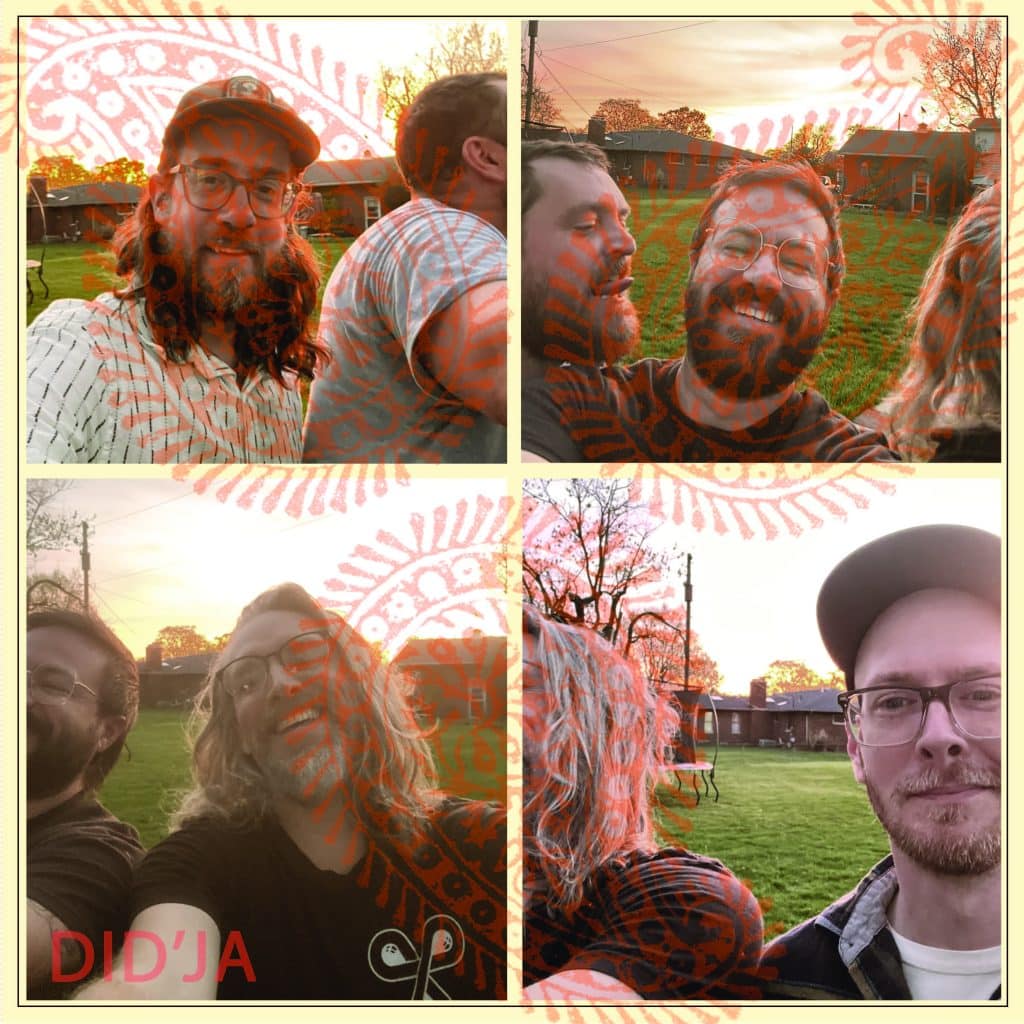
Weird Feathers, the debut album from Columbus rock band Did’ja, could fairly be described as having emerged from a series of reinventions.
For singer, songwriter and guitarist Tim Ramage, these have encompassed everything from spiritual evolutions (he recently converted to Catholicism and the bulk of the record’s lyrics are touched by aspects of faith) to musical ones, with the frontman adapting everything from his approach to the guitar to the way that he sings – the latter a byproduct of his 2012 death from electrocution.
“I was dead for almost 10 minutes, and as part of that experience the electricity kind of shot through my throat, which coupled with being in punk and rock bands my whole life where I was just screaming, left my voice kind of destroyed and gravelly,” said Ramage, who joined Did’ja bassist Casey Cooper for an interview ahead of the band’s record release show at Rumba Cafe on Friday, Sept. 12. “So, I was trying all of these different vocal things, trying to reinvent my voice.”
A donation powers the future of local, independent news in Columbus.
Support Matter News
In the immediate wake of the electrocution, Ramage said he spent a handful of days unconscious in the ICU, a stretch in which doctors cautioned friends and family that recovery might be unlikely, and that his brain had likely sustained permanent damage. And yet, the musician miraculously emerged absent injury, save for the altered voice and a handful of broken ribs from the chest compressions used to sustain him in the minutes his heart stopped beating. While an experience such as this might lead many to move closer to God, Ramage said it initally inspired the opposite in his case, sending him on a prolonged bender.
It wasn’t until nearly a decade later, as Covid began to loosen its early grip, that the musician began to grapple with an awareness that he had “hardened [his] heart to a lot of life.”
Did’ja, then, exists as a place of softening, its shapeshifting music rooted in the instrumental conversation developed between the players in the time since they started jamming together a couple of summers back, and its lyrics informed by Ramage’s spiritual rebirth.
“I’m happy for the lyrics to remain mysterious, and they don’t necessarily have to be read this way, but a fair amount of them are loosely guided by faith and my response to it, I suppose, like my response to Blessed Mother Mary and the saints, or asking … what it means to mortify and kill your ego,” said Ramage, who picked up the guitar again a couple years back following a five-year stretch in which he created solely with modular synthesizers, the return to the instrument he began playing as a teenager coinciding with a creative outpouring that he attributed to the divine. “I had never invited God into my writing, and I know this sounds contrived, but as soon as I did, it was like there was something else going on. I mean, I always had that capacity to work quickly, but this was something bonkers … where every time I sat down, the floodgates would open. … And it just felt like the source, or God, would be funneling stuff into me in a way where the song would almost write itself.”
In Did’ja’s hands, these tunes grew to traverse a wide sonic ground, stretching from driving psych-rock (the album opening “Neon Lights”) to spacious, darkly propulsive burners that fold in spiky electro freakouts (“Mexico”). “The way some music is made today, in my opinion, is very cold and clinical, so there are fewer hesitation marks, less of that human touch,” said Ramage, who pressed the players to accept early takes of songs and to preserve some of those off notes or the occasional flub – an approach that Cooper said initially caused him stress, given his more meticulous nature.
“I would say that was a challenge for everyone else in the band except for Tim,” Cooper said. “He would show up with a new song, and we’d be listening to it and sort of tinkering on our instruments, and he would be like, ‘Hey, I like the way that sounds. Let’s track it.’ And I’d be like, ‘Dude, I don’t even know the structure of the song. I don’t know what’s next. I don’t know if this is the right thing.’ … So, stepping into that was a little bit scary, but also super fun and really liberating, in a way. … There are a lot of happy mistakes and cool little gems in the music that make it feel more organic and honest and genuine, which is what you would hear in a live room.”
The liberated way in which the music moves – dig the title track’s punkish, new wave swagger – could also be a byproduct of the musicians collectively shaking off the stillness and isolation of those early Covid years, embracing the thrill and potential present when musicians gather together in a physical space.
“I hadn’t thought of that, but it’s fair, because I don’t think we’ve asked the right questions about what was happening then,” said Ramage. “I think there’s a fair bit of trauma from that time that we’re all holding, including me. And I think there’s still a lot of space where people need to heal. And rather than throwing out factoids, we might just want to ask each other: How did we experience this? Where are we still deficient? And how do we move on? And for us, maybe the music helped.”
Author

Related Articles
Columbus jazz drummer Wally Mitchel takes reluctant center stage in new documentary
“Wally!” will premiere in a sold-out Studio 35 screening on Wednesday, April 15.
Unchipped screams into the void on ‘3D’
The pulverizing Columbus quartet will celebrate the release of its new EP in concert at Cafe Bourbon Street on Friday, April 10.
Tim Rutili continues to mine connection in Califone
Still on the hunt for answers to unknowable questions, the musician will join his bandmates in concert at Rumba Cafe on Saturday, April 11.