
Mourn the dead but hold space for the living
The work of harm reduction is only sustainable when you take time to notice those places where the light breaches the dark.
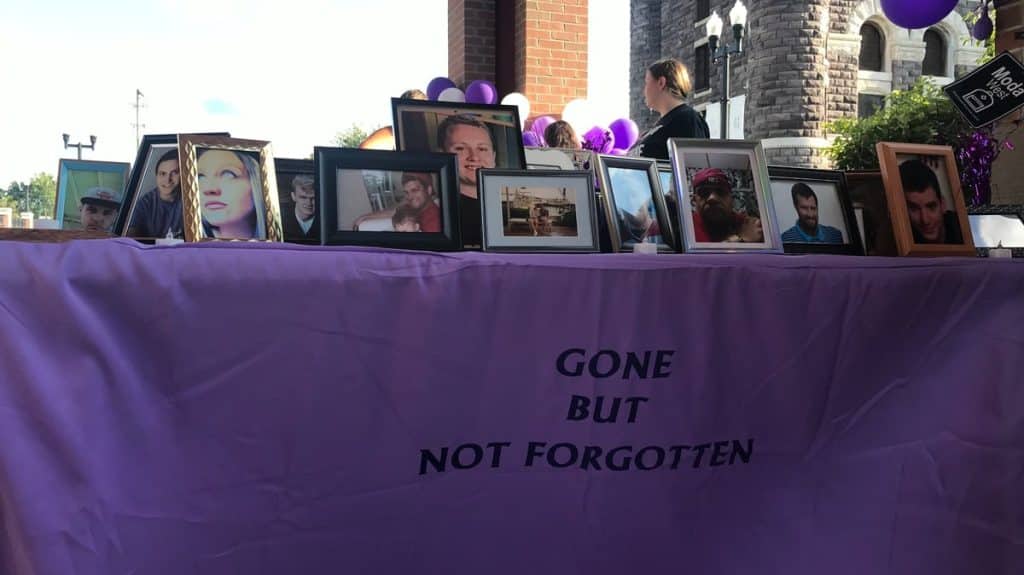
Billy Golden said he thinks about them a lot – the people who used to come to the syringe exchange he worked at a decade ago in Cincinnati.
It was anonymous, so he didn’t know everyone’s name. But he knew their faces, heard their stories. Now he often wonders if they made it, if they survived. He said when he’s in the city, he looks for their faces, looks for people he might remember.
“I know there’s a lot of people that I knew that have died,” he said. “And I didn’t even know their name. And then the people who I have known, it’s still terrible.”
A donation powers the future of local, independent news in Columbus.
Support Matter News
There are many voices crowding opinion pages right now with explanations for the drop in overdoses, each claiming victory, though it’s a pyrrhic one. (And still more than 70,000 died needlessly in 2024.) All of these explanations don’t account for the dead, or for the living who are still grieving.
Every August there’s an overdose awareness event in Newark, Ohio. The first year it was held, organizers set up a table with photos of loved ones lost. Then there were two tables. And then three.
When I wake up in the middle of the night, they come back to me. I think of the people I’ve reported on who are still alive but struggling. I think of the people I’ve reported on who died. I think of the people who have whispered the names of those they have lost to me. I think of the people in the photos on those tables, and I don’t want them to be forgotten.
Nor should we forget the work of harm reduction workers such as Billy Golden. Over the past decade, these people have experienced trauma after trauma – both first and secondhand – all while working on the front lines to save lives and change the narrative around substance use. This work has required many hands.
And things have changed.
The conversation around naloxone is more nuanced, Golden said, and there’s more talk about rescue breathing, and more drug checking. Because of harm reduction messaging, we’re seeing safer choices.
“Harm reduction has been attacked, but the idea of overdose prevention has not,” Golden said. It’s almost mainstream, regardless of a person’s political or religious beliefs. “It’s more palatable. You know? Which is something.”
And the truth is, he said, most people have been affected by an overdose death. Even if it’s not a loved one, you know somebody. “It’s just trickled down. Everywhere.”
Golden was working in harm reduction around Cincinnati when carfentanil entered the illicit drug supply. Overdose deaths soared. In some parts of the state, coroners rented refrigerated trucks as the bodies accumulated.
A decade later, the supply is even more unstable. The number of deaths may have dropped, but novel substances are popping up and creating new harms.
Golden said that we can’t forget the other losses caused by the war on drugs – not just overdose deaths and unstable drug markets, but also the communities disrupted, people incarcerated on drug charges, and those whose past convictions continue to impact housing and employment.
“If you look at it as a reduction, that’s great. But when you talk to people that are on the ground, people are burnt out, people are grieving,” Golden said. “It’s not just program participants, but staff, like, staff are really dealing with grief. We’re celebrating that win, but what about all those deaths?”
I wonder, too, what we do with them? How do we make room for them as a nation? It’s not something we’ve done. Mourning requires patience – something the United States lacks.
But there are transformations, and Golden has seen them.
A few months ago he was walking with a friend in Cincinnati and saw a man he remembered from the syringe exchange from years ago. He was hanging out in his yard, laughing. “I don’t know if he remembered my face, but I was like, he’s alive. I was ecstatic,” he said. “That was the best part of my day. It was so cool.”
As we get older, death accumulates around us. But I’d like to think that our immune system develops, too, our creative way-making, our ability to endure and process when dust goes to dust.
Like Lazarus, we lose our stone faces and look directly at the sorrow, and, somehow, we’re no longer anchored by anger or grief.
Author
Related Articles
Opinion: Trifectas are only good for racing and the lottery
The legacy of Ohio’s Republican Party is corruption, scandal, and culture wars. Our votes could put an end to their occupation of state government.
If you start from a place of love, you can’t go wrong
A vigil for an unhoused community member who recently died in Newark served as a call to not look away.

On Development: Rapid-transit is moving slowly. Maybe we need a new model
Our policies suggest a willingness to spend any amount to add lanes and bigger (towering!) interchanges for major highways, while transit spending is too often regarded as frivolous.