
Long Odds find magic in ‘The Dry Land’
The Columbus rock band will celebrate the release of its new record in concert at Rumba Cafe tonight (Friday, July 24).
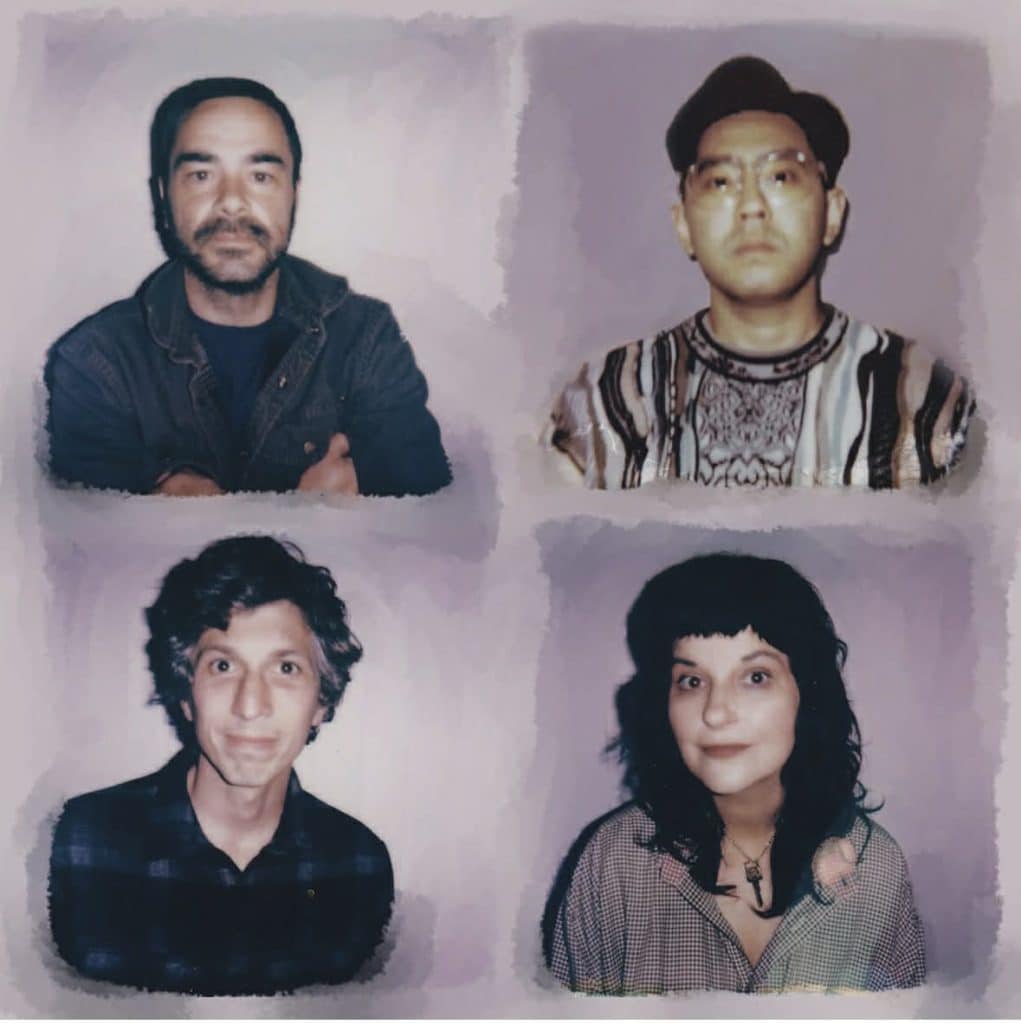
Throughout The Dry Land (Clean Demon), the excellent new LP from the Columbus rock band Long Odds, there exist reminders of life’s temporary nature, which surface in everything from the lyrics (“It’s rolling paper thin,” singer and songwriter Adam Elliott offers on the album-opening “Perfect Day”) to the way the record cuts off abruptly just when it feels like closing song “Here” is settling into a groove.
“Adam and Joe [Camerlengo] thought about that, just cut it, and that’s the end,” guitarist (and former Matter News board member) Philip Kim said at One Line Coffee in Franklinton earlier this week. “And it’s kind of like death, right? You’re alive and then it’s over.”
And yet, The Dry Land doesn’t resonate as dire, shot through with moments of beauty (“New Dawn,” written in part about Elliott’s daughter) and rippling with an urgency that suggests those final moments rest somewhere decades down the line, lord willing. “Not moving, but still not settled down,” Elliott sings on “Before Here,” a line he said arose from an awareness he had “settled into his garden” but had not yet calcified, and which surfaced as he looked out at the towering oak tree that dominates his backyard.
A donation powers the future of local, independent news in Columbus.
Support Matter News
“And that tree’s not moving, but it’s never settled, and it’s always growing,” said Elliott, who will join his Long Odds bandmates in a record release concert at Rumba Cafe tonight (Friday, July 24), alongside Big Fat Head, Xenia Eloise, and Brian Damage. “Like a lot of people, I’m not moving right now, but I’m not settled down, because I’m not sure you’re ever settled. You’re always looking for something, questioning things.”
Like most of Elliott’s lyrics, the line is one that can take on countless connotations depending on the person, their experiences, and the stage of life in which they sit, with Kim relating it to how he began to view being in a band as he aged into his 40s. “In the past, that youthful drive was to make it big and play big shows and get the record out to a ton of people,” he said. “And that pressure is gone, in a way, which frees us up to enjoy making music. And that’s the new motivation, being free to have fun and create something together.”
For Elliott, music has always served a transportive role, with certain lyrics, melodies, and songs having the effect of whisking him back to very specific moments in time. “Faorah,” which plays as a treatise on the ills of experiencing life through the computer screen, has lines that take the musician back to the early pandemic months when his then preschool-aged daughter and her classmates were adjusting to online learning. “For me, I can hear a line here and a line here, and I can remember the walk and what I thought of as I was staring at something,” he said.
It’s also not a static thing, and the associations Elliott makes to certain songs tend to multiply as he accrues life experiences, meaning a single track might dredge up memories from events separated by decades in a way that can collapse time. As one example, the musician pointed to the song “Royal Raceway,” which he recorded in the early 2000s with his first band, the Offending Instruments.
Elliott wrote the song for his then-girlfriend about the Mario Kart level Royal Raceway, which she loved. “And at the time, one of our friend’s, his father was dying, and that song made [my friend] happy, and he always remembered it,” Elliott said. “And it’s horrible, but eventually my friend who wrote the song and my [former] girlfriend, they both passed away. And now when I think about that song, I think about them. And I think about the friend who used the song to get through his father’s death. … It’s like I can see it all at once, like [Doctor Manhattan] from ‘The Watchmen.’”
An earlier version of Long Odds formed more than a decade ago, Kim said, though the project really took root with the 2021 additions of Camerlengo and his partner, the musician and artist Courtney L. Hall. In the band’s earlier days, the word “dystopia” got tossed around a lot, with the members initially desiring to create music akin to the kind of thing “you might overhear playing through a radio intercom in some dystopian desert,” as Kim explained it — an idea that has somewhat dissipated in the years since.
“And it’s interesting, because clearly Adam’s biggest project, Times New Viking, has a certain ethos,” Kim said. “And it’s not like we intentionally tried to not be lo-fi, but because the music is more delicate … we wanted to make sure the lyrics did shine through.”
Coming into Long Odds, Elliott knew he wanted to adhere to a sense of minimalism. “One of the things we talked about was making it so the song could exist with a cardboard box and a voice, you know what I mean?” he said. “It was breaking down the song to its most basic [form], to where you can do it anywhere, so it can be eternal. … I want it to be like anyone can play them. We’re not getting into prog-rock.”
This streamlined approach extended on The Dry Land to the way Camerlengo recorded Elliott’s vocals, which the singer described as “the most raw and bare” his voice has ever been presented, sitting comparatively up front in the mix following decades in which his vocals were routinely buried beneath corroded layers of sonic fuzz. “I think I finally just realized other guys can’t [sing] either,” Elliott said, and laughed. “All these years I’ve been so worried about it, where I’d play a show and be like, ‘I’m so sorry you guys had to see that.’ … I don’t know. I guess I finally got comfortable with my voice.”
“I think what we want … is for people to slow down and pay attention to the details,” Kim said. “The songs have very simple parts – the drum rhythms, bass lines, and my guitar parts are all very simple. The lyrics are very simple too, in a sense, though they’re profound, and there are details that force you to stop and think. … It’s a very philosophical record, to me, that thinks a lot about what it means to be human and to interact with the natural world around us.”
As the record unfolds, Elliott and Co. wrangle with the memories of those departed (“Dead Friends”), the inevitability of death (“Here”), and the way the frontman’s love for his daughter has a way of deflecting this surrounding darkness, with “New Dawn” ushering in the “pink clouds after the storm.”
“I try to always write from an omniscient view, where it’s not about me personally, and I don’t even use pronouns much,” Elliott said. “But with that one … I was having a bad day, and I picked my daughter up from her babysitter up on Olentangy River Road. And I was driving home and I looked behind me in the mirror, and it was like, oh, man. There’s my happiness.”
In recent years, this bliss has spread elsewhere into Elliott’s life – “I’m a little bit better at knowing how to get joy and to give joy,” he said – evolving everything down to how he approaches the act of creation.
“I’ve always had an enthusiasm for [music], and I appreciate the craft of it, but with this one, I don’t know,” Elliott said. “I’m clear in the head to be able to create some beauty and some magic, and it makes me feel good.”
Author

Related Articles

‘Southern Oracles’ shines a light on Columbus’ South Side
For his latest show, which takes place free at Ohio State’s Weigel Hall on Tuesday, Sept. 1, Scott Woods brings together musicians, dancers, rappers, and more to explore a side of town that he said holds the city’s ‘truth.’
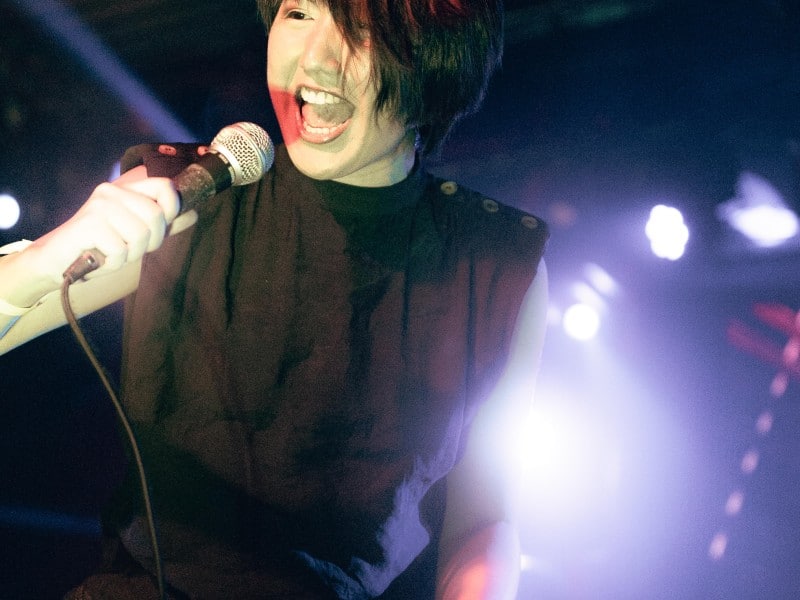
Nerdcore Summer Camp prepares to make its debut in Columbus
Performers whose songs touch on everything from computers to the everyday realities of life as a stepdad will take over the stage at Spacebar on Saturday, Aug. 29.
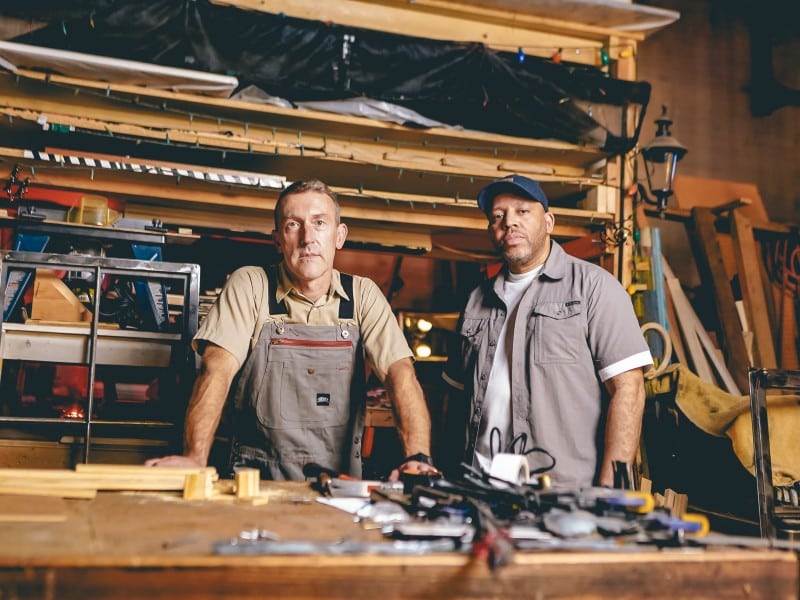
RJD2 and Supastition push each other to new heights on ‘According To…’
The Columbus producer will team with the North Carolina rapper to headline a reborn 2×2 Hip-Hop Festival at Land-Grant on Saturday, Aug. 29.