Salif Sarr finds a second home in Ohio
The Columbus-based Fulani singer will perform as part of ‘Ohio Is My Second Country,’ taking place at Arts Fest on Saturday, June 13.
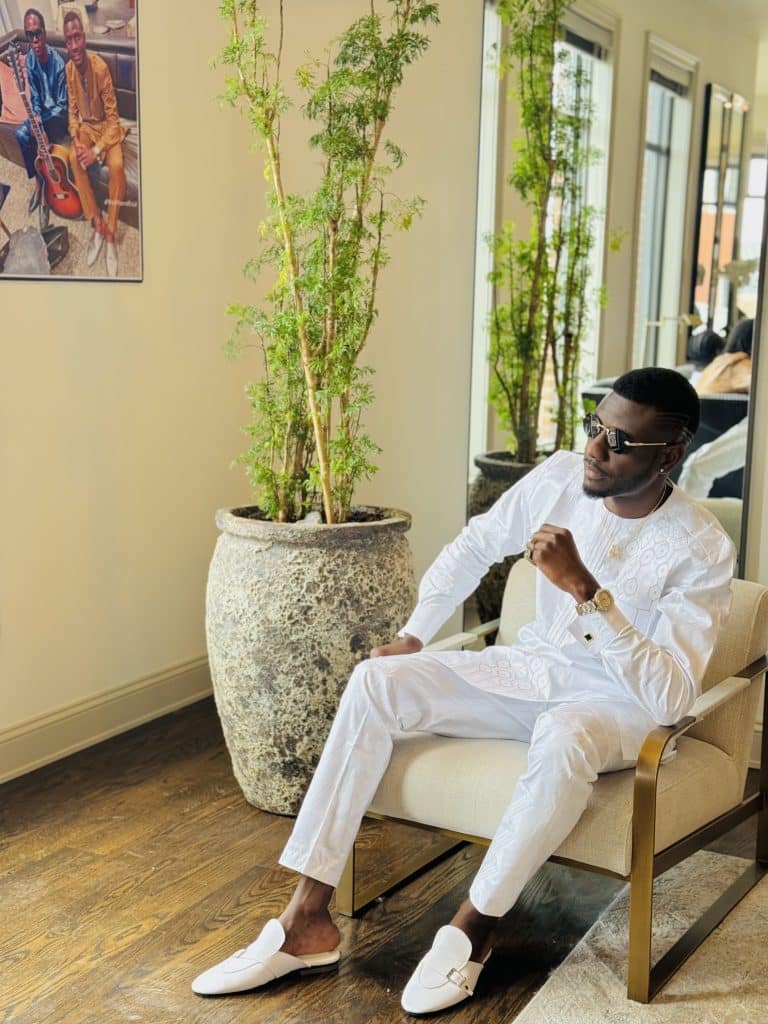
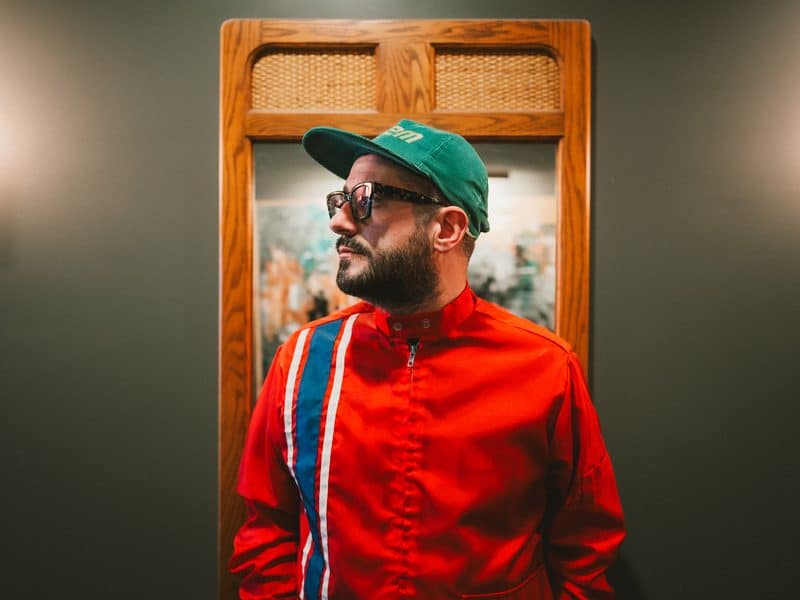
Salif Sarr sings in Fulani, an African language common in the region just south of the Sahara Desert. Born in Mauritania, Sarr has lived in Columbus since 2007, when he was a teenager. He plays zouk and Afropop, fun and up-tempo genres, the kind of music you can dance to without knowing what the singer is saying.
But for Sarr, his role as an artist requires more. Even though he swears by the inexpressible power of music, he is also aware that wielding it comes with responsibilities. “For me, singing, it makes me live,” Sarr said, “I don’t make the music live. It makes me live. So when I’m singing, all these problems, I feel like they’ve gone away. I’m just flying.”
Sarr understands the ways people engage with music, particularly music as vibrant and danceable as his. They want to have a good time and forget about their troubles, just as Sarr does. But the musician also understands the importance of having something to say. “I try to wake some of my people up with the little experience and knowledge that I have in me,” he said. “And sometimes I do some songs to make people understand [that] it’s time to wake up and look for changes.”
A donation powers the future of local, independent news in Columbus.
Support Matter News
Sarr’s political and artistic ambitions come together perfectly for an event taking place during the Columbus Arts Festival. Dubbed “Ohio Is My Second Country” and set to take place at the Cultural Arts Center at 3 p.m. on Saturday, June 13, the event is being mounted by the Ohio Immigrant Alliance to celebrate the diverse, multinational population of the city. In addition to Sarr’s music, there will be a reading by Demba Ndiath, whose forthcoming book From Welcome to Deportation exposes the cruel, contradictory, and outmoded paradigms of contemporary U.S. immigration policy. The occasion will also serve as the launch of a coloring book by Shema Asifiwe that shares its name with the event. “Ohio Is My Second Country” functions as a teaching tool for educators of any stripe.
During the first Trump administration’s wave of deportations, a Black Mauritanian named Birane Wane saw the writing on the wall. Despite having lived in Ohio for more than two decades, he knew what his status as a non-citizen would lead to, so he decided to move to Senegal to avoid being sent back to a country rife with apartheid and slavery. “Almost 22 years living all set in one place,” Wane told a reporter at the Ohio Newsroom. “Almost half of your life. I miss a lot of things. Ohio is my second country.”
“That line always stuck with me,” said Lynn Tramonte, executive director of the Ohio Immigrant Alliance, who will also emcee the event. “Because it means so much, you know? People really identify with the country in which they were born. And then they have this second home when they come to Ohio. It becomes their everything. It becomes a place where they choose to live, not where they were accidentally born. They make a choice to live in Ohio out of anywhere in the United States.” Tramonte finds this way of putting it “very moving” because “it means they want to live in Ohio, not just the United States.”
This is exactly how Sarr feels about Columbus, describing the city as “home for me.” It’s where his family still lives. It’s the place where he began performing music, first rapping and then singing. “In 2016, that’s when I started singing,” he said. “Really, really, really started singing. That’s when I started my career.”
Growing up in Mauritania, Sarr knew he had a love for music, but he didn’t seriously consider dedicating himself to it until he moved to the United States. “When I was back home, sometimes I [would] just sit by myself and sing,” he said. “Or repeating some of our musicians over there, like the older musicians – what they sing, I would sing.” His birth nation wasn’t exactly an ideal environment for fostering artistic aspirations, though. “There’s a lot of troubles and a lot of problems,” Sarr said of Mauritania. “Especially the villages we live in.”
Over the past few decades, Black Mauritanians have suffered great injustice at the hands of the government. In 1989, 75,000 Black Mauritanians were stripped of their citizenship and deported either to nearby Senegal (where Birane Wane went) or Mali. Although that initial order was rescinded in the 1990s, there was no undoing the damage.
“I see myself still as an immigrant,” said Sarr, who views the weekend’s performance as both a celebration and also as a clarion call for the sad and cruel state of things. “I love that I am a U.S. citizen. But I also see a lot of people as immigrants getting deported and losing their hope.”
Sarr sings in Fulani, as that is the language spoken where he came from, but like most artists, he also seeks a deeper sense of understanding. “I wish everybody can understand what I’m singing,” Sarr said, and then added, “It really means something.”
Related Articles
Scrawl meets Scrawl
Marcy Mays and Sue Harshe recently joined pioneering Urban Scrawl artist Dan Gerdeman for a conversation ahead of the band’s performance at the Franklinton art event that has been a longtime source of confusion for some of their fans.
Cordyceps Corpse keeps it brutal with ‘Perverse Craving for Rotting Corpses’
Columbus multi-instrumentalist Nani Porter is a growing force in the world of slam metal.
Evan Weiss learns to loosen up
The Into It. Over It. frontman will perform solo at Secret Studio on Saturday, Oct. 3, supported by openers JG Shadid and Lydia Loveless.