
Isaac Fitzgerald finds himself on the trail of Johnny Appleseed
The author will discuss his new book, ‘American Rambler: Walking the Trail of Johnny Appleseed,’ in conversation with the poet Maggie Smith at WOSU Ross Community Studio on Tuesday, May 19.
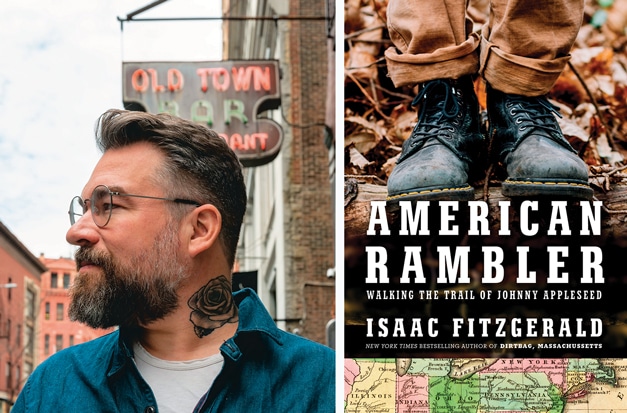
Isaac Fitzgerald opens his new book, American Rambler: Walking the Trail of Johnny Appleseed, by recounting the childhood hikes he took with his father, who in the course of their treks would tell long, imaginative stories that pulled elements from fiction, history, and fable, each narrative twist designed to compel the youngster forward.
“Moonlight gleams off the sword of the red knight as he raises his weapon high above his head, the sharp blade whistling through the air as he brings it down with crushing force upon the green knight’s great helm.”
“Oh no!”
A donation powers the future of local, independent news in Columbus.
Support Matter News
“Oh yes! And do you know what happened next?”
“No! Tell Me!”
“Well, if you follow me to that next bend in the trail – do you see it? That one right up there. If we get past that curve, then I can tell you the fate of our hero, the gallant green knight.”
Fitzgerald adopts a similar approach within American Rambler, a memoir that finds him loosely following in the footsteps of Johnny Appleseed, real name John Chapman, goading readers onward with a deeply engaging narrative that blends thoroughly researched histories, folk tales, childhood remembrances, and warts-and-all accounts that detail the year the author traversed many of the same “seasonal circles” once walked by Chapman. For the author, this approach might mean occasionally straying from the trail to spend a couple pages with someone such as Joseph Palmer, a 19th-century Transcendentalist and abolitionist persecuted for wearing a beard.
“And it’ll be like, ‘Hey, I’m going to do a few pages on this because it’s a long walk,’” said Fitzgerald, who will appear in conversation with the Columbus poet Maggie Smith at WOSU Ross Community Studio on Tuesday, May 19. “I remember my dad having these moments of, ‘Oh, we can’t get to the end of the story too quickly, so what else can we find in here to really sit in? And is there something to be found by exploring this minute detail?’ And often there is.”
Early in the memoir, Fitzgerald draws a number of parallels between himself and Chapman, seeing in the folk icon a similar sense of wanderlust that can make him hesitant to establish roots. The author notes, for instance, that he has somehow lived an existence that has never required him to ink his name to a lease.
“Every living situation I’ve ever been in has been a friend of a friend who knows a guy paying some guy who then forwards it to someone else. And of course, a lot of that is based on the fact that I grew up unhoused in my younger years in Boston,” said Fitzgerald, who documented his coming of age in his debut memoir, Dirtbag, Massachusetts, from 2022. “And I think part of my obsession with living that way is almost walking up to that fear that life can take me back in that direction. But I also think there’s a real romanticism to it. And that’s something I see in the people I read, the books that I love – Wild by Cheryl Strayed, Bill Bryson, Jack Kerouac, even The Fellowship of the Rings, which is a lot of things, but is also a long walk.”
As the narrative progresses, though, Fitzgerald begins to draw at least one key distinction between himself and the man who would come to be known as Johnny Appleseed. “I want to live my life wild and free,” he writes, “but I don’t want to die on someone else’s floor like Chapman did.”
“I think I’ve had a fear of stability, and I’ve had an inability to admit to myself that I want stability. And let’s start there, but if we want to go one step deeper, to admit to myself that I deserve it,” Fitzgerald said. “And that was definitely one of those thoughts that came to me when I was working on this book, which was very much admitting to myself, ‘Hey, I might be more interested in a healthier, more stable way of living.’ And not just interested in it, but I can maybe admit to myself that I think I deserve it.”
While this revelation might have struck Fitzgerald more recently, the path towards it started with the first steps he took in adopting walking as a daily practice early in the pandemic. At the time, the author said his health was suffering, and he was looking for new ways to engage with his then-home in New York City. And so, he began setting out on sometimes twice-daily walks, aiming for 20,000 steps by sundown, eventually expanding this activity into a Substack he dubbed “Walk It Off,” in which he documented his conversation-filled strolls with the likes of Saeed Jones, Susan Choi, and Josh Gondelman, among others.
Beyond the health benefits, Fitzgerald said the practice helped him to improve as a writer, awakening in him the awareness that he’s better with a pen when he’s “out in the world,” as he explained it.
“I’ve loved books from childhood, and I’ve always been trying to figure out how to write. And like so many people, you turn to other writers, and you go, ‘This person writes 500 words a day. Maybe that’s the way to do it.’ And then it’s like, ‘Well, this person works from 4 to 6 every morning. Maybe that’s the way to do it,’” he said. “And in walking, I learned I’m better on the move. … This book was written either on bar napkins or in this little black notebook I took with me when I went to bars in Ohio, or when I was at restaurants in Fort Wayne, Indiana, or in a sleeping bag out under the stars. … And so, the process of writing became much more alive for me because I was out walking. And it’s definitely changed the way I think about things, and it’s definitely changed my cadence. … Moving through the world at a human pace has allowed me to slow down and become a more observational and, I believe, I hope, knock on wood, a better writer.”
It helps, of course, that Fitzgerald is at his core an exceedingly thoughtful writer, documenting how Chapman walked “seasonal circles” that allowed him to revisit the orchards he helped plant and then embracing a similar structure for his book, which sees the author returning over the course of a year to locations where strangers become acquaintances who become friends.
The memoir is also constructed in a way that it both opens and closes with the author walking alongside his father, first in conversation-filled hikes as a child and later in silence, the two muted by grief from the passing of Fitzgerald’s mom, who died by suicide in 2024.
Years ago, when I accompanied Fitzgerald on a walk through Bexley, he spoke about the development of “Walk It Off,” and the necessity of at some point completing one with his father as a way to make some peace with the tumultuous history the two share. “I’m sure we’ll talk about some difficult things, but also some wonderful and lovely things,” the author said at the time.
Asked in mid-May if the hushed walk from a couple years back had somehow closed the loop on that idea, Fitzgerald paused.
“My man, that is a good memory,” he said, and laughed. “I have never done a ‘Walk It Off’ with my father, and just to be real, I don’t know if it would take the form of a ‘Walk It Off.’ … Maybe this is too early to talk about it, but we’re talking, so I’m just going to say it. Each of these books – Dirtbag, Massachusetts and American Rambler – they’re standalone books, but they complement each other very well. … And things change, and you never know where life is going to take you, but I’m thinking of my next book as basically being the end of a trilogy. And all three of the books are about unpacking and exploring my life and my family and my relationship with my parents. … And I can’t talk too much about my ideas for the next one, but I do know that I have a new relationship with my father, and that’s going to be very interesting to explore. And the ways in which he and I are now communicating and navigating life are definitely going to be braided through the next book the same way my family is braided through this book.”
Author

Related Articles
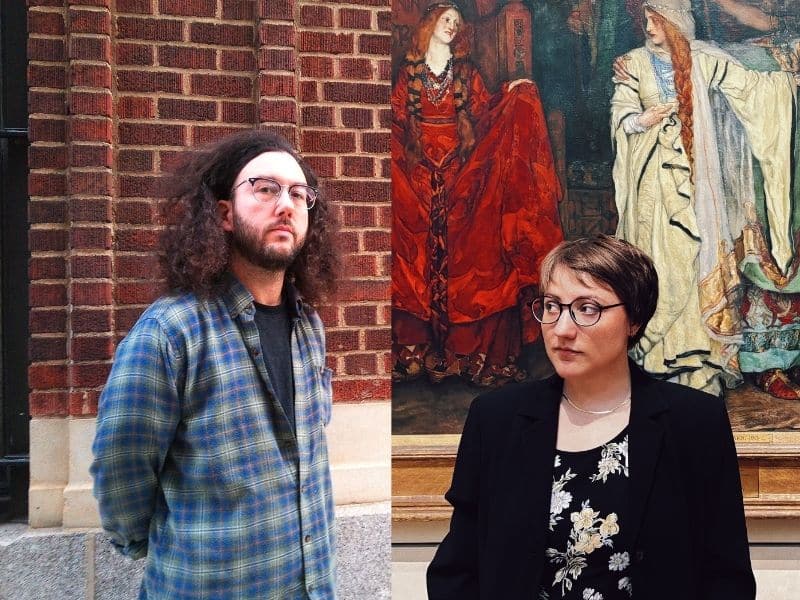
A decade later, Matthew Erman and Lisa Sterle revisit ‘Long Lost’
First released in 2016, the husband-wife duo’s first collaborative series was recently reissued as a graphic novel by Vault Comics. To celebrate, the couple will appear in-person at the Book Loft on Wednesday, Oct. 28.
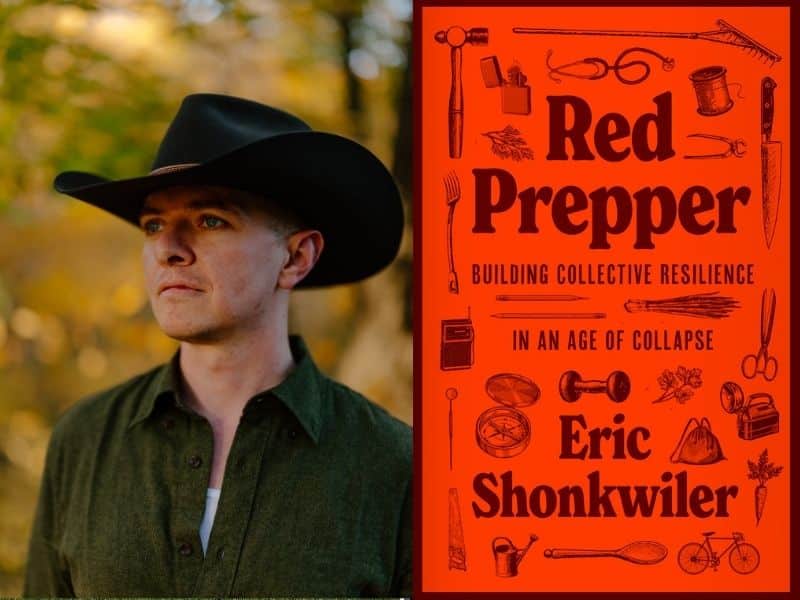
Eric Shonkwiler wants to help you survive societal collapse
The Columbus author will celebrate the release of ‘Red Prepper: Building Collective Resilience in an Age of Collapse’ with an event at Prologue Bookshop on Thursday, Oct. 22.
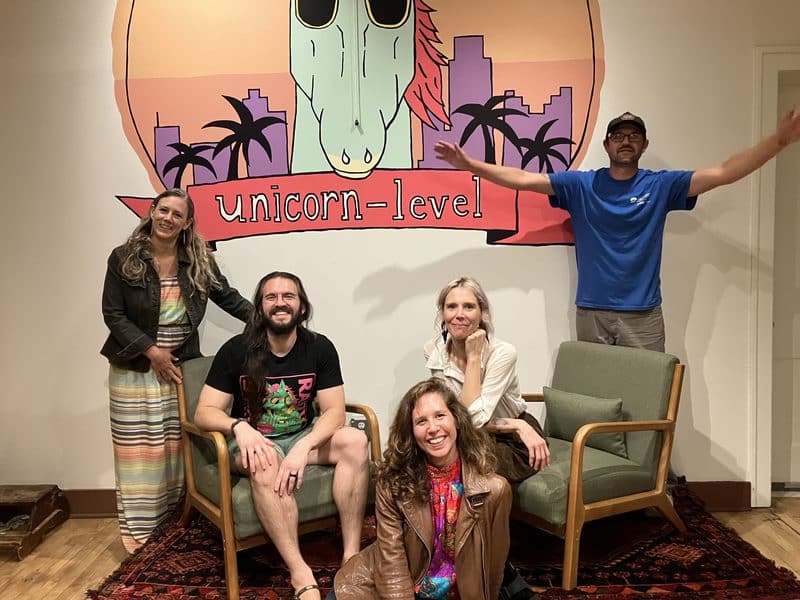
Two Dollar Radio HQ reopens with an expanded ownership group and a similarly expanded vision for the future
‘I think a big part from opening was to give authorship of the space to people with good ideas, to open the doors to people to try different things.’