
Akhim Yuseff Cabey unpacks the human collateral of racism in ‘Get Funky, Get Swoll’
The Columbus poet will celebrate the release of his debut collection in conversation with Marcus Jackson at Prologue Bookshop on Friday, May 8.
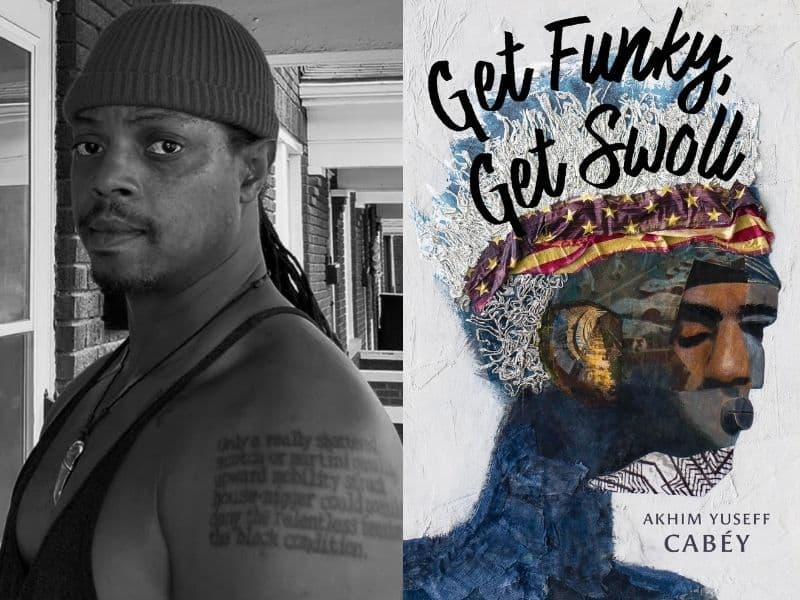
Akhim Yuseff Cabey described himself as long resistant to poetry, having grown up embracing essay and nonfiction as a way to process his internal and external worlds. But roughly a decade ago, in the midst of a personal crisis, the Bronx-raised, Columbus-based writer found salvation in the poetic form.
“Writing poetry saved my life,” Cabey said in an early May interview, going on to recount the life-altering reckoning that took place when he was confronted with racism not on a systemic level, but rather on a more deeply personal scope. “And by that, I mean it wasn’t the kind of racism that is institutionalized, where it’s about inequity in schools or at the workplace. … It was on that intimate friendship and sexual level and based on my involvement with white people as friends and lovers.”
Cabey’s debut poetry collection, Get Funky, Get Swoll, out now, began to take form amid this tumult, its earliest entries growing from the fractures in these relationships and exploring the various ways the writer said he had been “brainwashed to believe that white was pure and beautiful and holy and great.”
A donation powers the future of local, independent news in Columbus.
Support Matter News
“And as I began to study and read about racism, and I began to talk to the enclaves I was friends with, I lost a lot of relationships, and so I felt stranded in the world,” said Cabey, who will celebrate the release of Get Funky, Get Swoll in conversation with Marcus Jackson at Prologue Bookshop on Friday, May 8. “And I had to begin to reorder my mind in order to survive that reality. … And the book took shape out of me wanting to navigate and reconcile these experiences so that I wouldn’t continue down the rabbit hole of self-hate.”
A prose writer by trade, Cabey said the form felt ill-suited to that particular moment, describing how these relational fractures created so many individual emotional shards that filtering them all required something more condensed, more agile. “By physically compressing the form of the thing … I could process and write more,” he said. “If you’re going to write about a woman who broke your heart in essay form, for instance, you’ve really got to build a house, right? And with poetry, I could write about a sliver of an emotion … and the process of that was not the intellectual marathon of writing 10,000 words and revising and revising to where it’s like, ‘Oh, my God. I spent two months on this essay.’ In two months, I could write 10 poems, and I was able to deal with these emotions and what was happening to me in a more immediate way.”
Compiled over nearly 10 years, Get Funky, Get Swoll captures a range of evolutions, both in terms of Cabey’s craft – “I could pinpoint a poem written in 2020 versus one written in 2025,” he said – and in the person he has become, which he sees reflected in the way he now approaches writing about racial politics and how these realities impact him as a human being.
“And because I’m a different person, I can manage the subject matter with a lot more control and a lot more direct purpose. So, part of this book was like, man, I know how to write a poem, now let me play around in the laboratory. Let’s cut some of the fat and really hone the idea. … And I don’t want to suggest the poems I’m writing now are better, because I don’t think that’s accurate. But I do think I’m more in control of my voice.”
Cabey attributed aspects of this to being introduced to the book Hurdy-Gurdy, by the poet Tim Seibles, which utilized a more plain-spoken language, and one Cabey said he had never before encountered in poetry. Prior to that discovery, Cabey said he at times fell prey to the more flowery, high-minded aspects he long associated with the form, shoehorning in the odd “million-dollar word” out of a belief that poetry had to be “super sophisticated and superintellectual in its presentation, like chess,” he explained.
The poems in Get Funky, Get Swoll ably traverse both poles, Cabey deftly incorporating bluntly written verses (“My mother poisons me in the Bronx at thirteen/with the daydream that her crack-pipe is a fife,” he writes in “Savior”) and comparatively dense, lyrically evocative couplets that betray a lifelong love for language and a fascination with the luxurious feel syllables can make when tumbling about in one’s mouth. “Above the fold in today’s New York Times, it reads Cassini, like the way breath abandons soaked lungs, will after twenty years in space proudly plummet into Saturn’s gaseous face,” he writes in “Cassini Drowning.” “The probe will die bellyful with those first images of viscous geyser ice erupting from claw marks on Enceladus’ ass.”
Within poetry, Cabey said he also discovered the power of brevity – a revelation for an essayist most comfortable allowing his writings to bloom to 10, 15, 20 pages. It’s a skill that reaches its apex in “My Name Is Edward,” a five-line, 35-word poem that hits like a rabbit punch to the ribs, articulating the pains to which a young Cabey would subsume parts of himself in order to assuage mass media-shaped white fears.
Though diverse in subject and approach, the poems all share strains of this DNA, threaded through with lines in which Cabey unpacks the impact navigating predominantly white spaces can have on the Black psyche – a reality he found himself ensconced within as he progressed in academia, and which leveled him when it broached his bedroom door.
“And I was just trying to simply say, ‘Well, if I just love, love will come back to me.’ But unfortunately, racism impacts love on a human level,” said Cabey, who recalled the pains associated with a two-year romantic relationship that ended because the woman’s white, liberal parents expressed that they didn’t want Black grandchildren. “So, the damage of the heart is real. The damage of the soul is real. … And that’s the real tragedy of it. There’s no such thing as a white person. There’s no such thing as a Black person. So, these hats that we wear, and the pain we cause each other because of these identities, that’s the real tragedy of racism. … That’s the human collateral.”
Author
Related Articles
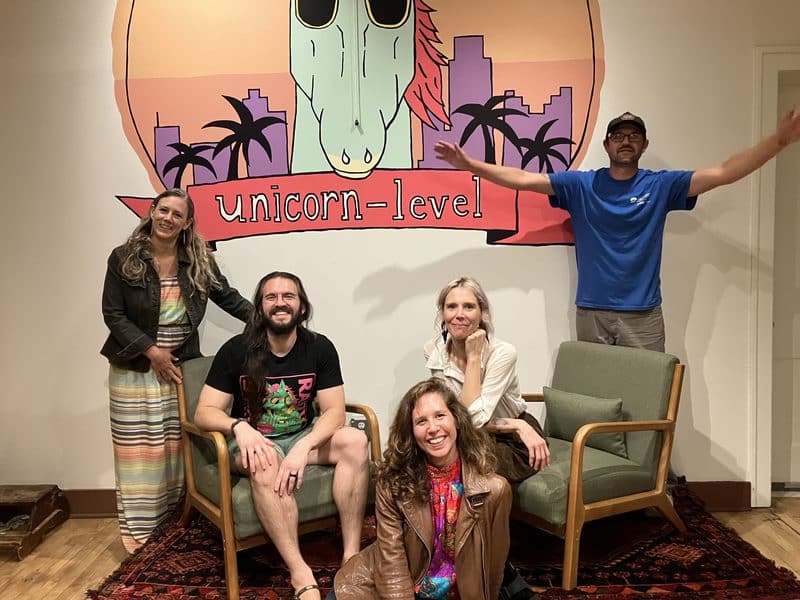
Two Dollar Radio HQ reopens with an expanded ownership group and a similarly expanded vision for the future
‘I think a big part from opening was to give authorship of the space to people with good ideas, to open the doors to people to try different things.’
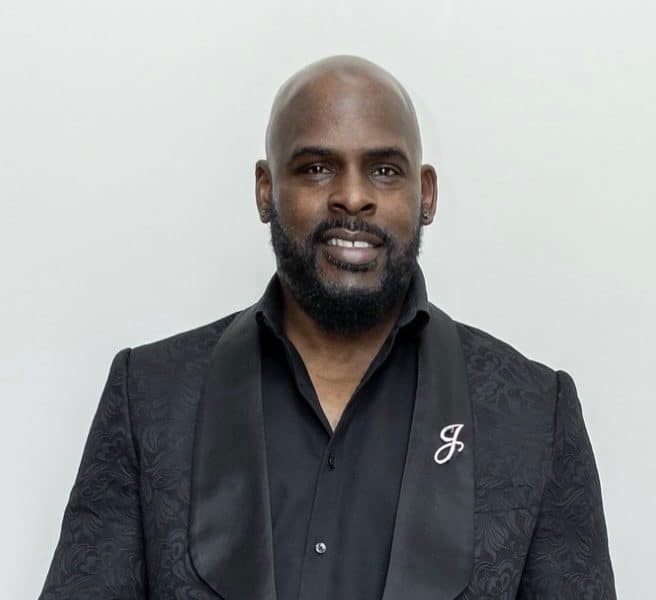
Edward Julian Sr. embraces poetry as a means to release and reflect
Ohio’s poet laureate features at Urban Arts Space tonight (Thursday, Sept. 24), appearing as part of the Poetry Festival, which continues through the weekend at Thurber House and the Grange Insurance Audubon Center.
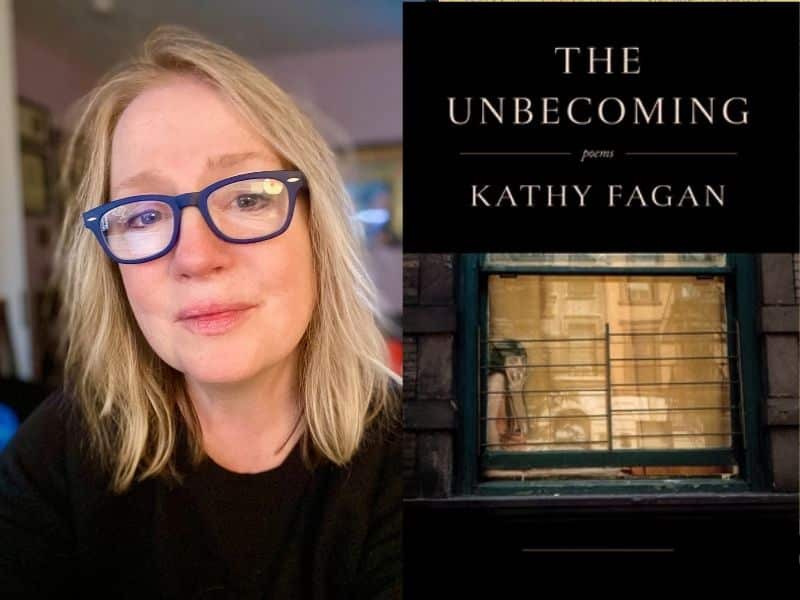
Kathy Fagan takes stock with ‘The Unbecoming’
The poet will celebrate the release of her new collection with a reading at Gramercy Books on Thursday, Sept. 24.