
Trans Experimental Action set to combine protest and performance art in Statehouse rally
Drag performers, trans activists, and their allies will join forces in protesting the anti-drag bill HB 249 outside of the Ohio Statehouse on Tuesday, May 12.
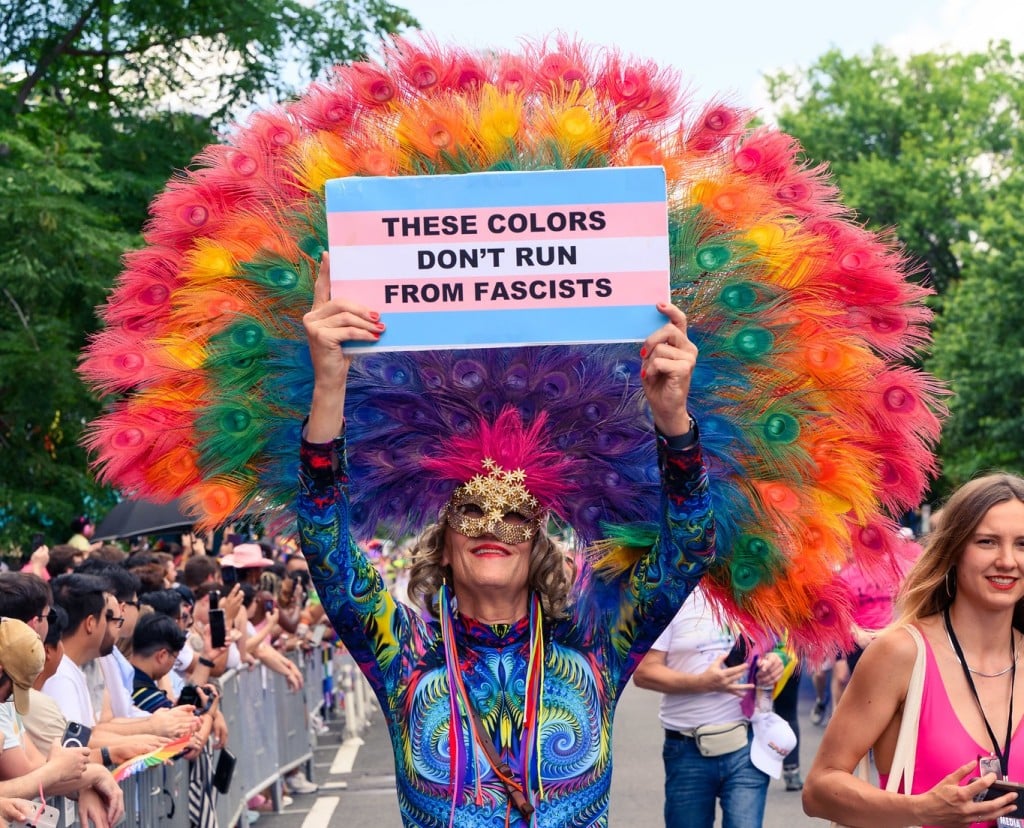
Cye said she started to become disenchanted with the current state of protests after traveling to Chicago for the 2024 Democratic National Convention, where a mass march and a series of demonstrations barely caused a ripple.
“More than a year went into the organizing … and we saw nothing come of it,” said Cye, a pseudonym. “We saw, instead, on the first day a mass arrest of nearly 100 people, including multiple [journalists], and stagnation within the movement. And people who tried to get closer and tried to disrupt things were getting shunned by the people around them, and it started to leave a sour taste in my mouth. There could have been so much done here, but instead we keep repeating the same formula.”
And so, starting a year ago, Cye and others in Trans Experimental Action (TEA) began to brainstorm possible new approaches to organizing political pushback, taking inspiration from the grassroots AIDS activists in ACT UP and student anti-war protestors in Japan.
A donation powers the future of local, independent news in Columbus.
Support Matter News
“I think in today’s political sphere, there’s a lack of willingness to take more risk and to experiment with political action,” said Cye, who lamented how protests have become increasingly “sanitized” to create as little disruption as possible, recalling that many of the 2024 DNC demonstrations took place in so-called “free speech zones” located at considerable remove from convention events. “And as things went on, eventually even that ‘free speech zone’ was cleared by riot cops. And I think that’s an incredible mirror for what is currently happening in politics, especially for trans people. They’re saying, ‘Okay, we’re removing your ability to do this. But don’t worry, because we’re still giving you these spaces for you to have political action or to express yourself.’ … And then even those spaces the state says they’re going to give us, they end up pushing us out and pushing us even more to the margins.”
This expelling is taking place legislatively in Ohio, with bills targeted at marginalized communities becoming increasingly broad in scope. Witness, for example, House Bill 249, which would criminalize drag shows deemed obscene or harmful to children, restricting the performances to bars, nightclubs, and other adult entertainment facilities. The legislation expands on the right-wing attacks against drag story hours that began to surge a few years back, championed by Nazi groups such as Blood Tribe, placing further restrictions on the art form so loosely defined that Dan Kobil, a professor of constitutional law at Capital University, wrote a Columbus Dispatch op-ed in which he posited that the bill could be used to target women who wear sports bras in public.
Cye made similar observations, describing HB 249 as “so broadly written” that it could be further weaponized against the trans community, calling particular attention to its ban on entertainers who “exhibit a gender identity that is different from [their] biological sex.”
“And the way the legislation is written, these definitions would be up to the Republican court system … and to police, and it’s going to be interpreted with the maximum looseness to criminalize trans [people] and expressions of transness in public,” said Cye, who will join TEA in staging a rally at the Ohio Statehouse at 4 p.m. on Tuesday, May 12 – a protest that will incorporate an unspecified number of drag artists engaged in public performance. “With the student demonstrations in Japan, one thing that really stuck with me was the meeting of performance art and protest. And one of the things they would do is have these guerilla performances of these plays that were harsh political critiques. And they would stage them in these major centers, not only as a way of educating and raising awareness, but as a disruption. And I think we’re at a time in the United States where there is so much great political art being made … that I would love to see that become a thing.”
Under the Trump Administration, trans Americans have been repeatedly targeted with legislation restricting their access to health care and the right to use public bathrooms that align with their gender identity. Furthermore, a recent report by the Williams Institute at the UCLA School of Law compiled 25 years of research on hate crimes against trans people in the United States and tracked an increase in both the total number of reported hate crimes and the share motivated by gender identity bias. Collectively, this has created a climate of fear within the trans community, Cye said, describing an environment in which trans people are increasingly hesitant to even dress as they desire in public.
Despite these concerns, Cye has continued to stay engaged and out front as an organizer, saying that she doesn’t know any other way “to keep sane other than trying to fight it.”
“I’m still filled with an incredible amount of fear, and while organizing helps, it doesn’t take that away,” she said. “It’s not something you can easily get past, so you can either organize or let yourself become placated, which is something we see so often in the United States, specifically, where it’s like, ‘Okay, this is all so overwhelming and uncomfortable that I’m just going to retreat into my little bubble.’ … And that ability to disengage comes with a tremendous amount of privilege.”
In November 2024, the artist and trans activist Felicia DeRosa spoke of the need for trans allies to become more active in their defense of the community, decrying passive allyship and stressing the importance of becoming more visibly engaged. “If somebody has lost their job because of their identity, make yourself available,” DeRosa said. “If somebody needs to get out of the state, help them. And if somebody needs access to medications, and you live in a state where you can still access them, send them over. This is crunch time. What are you going to do to help people?”
Cye echoed these calls. “The way that our political system works, to be passive is to support it,” she said. “And that kind of allyship should have been dead a long time ago, but it’s becoming more and more harmful as things continue to get worse.”
Author

Related Articles
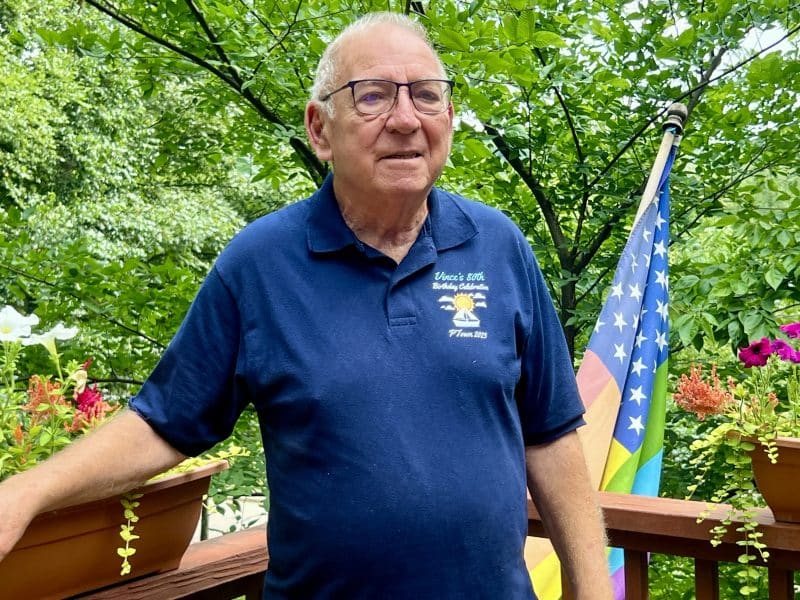
Care is a verb: Lessons in building supportive community from lifelong advocate Vince Engel
Times of uncertainty and fear can foster societies of care.
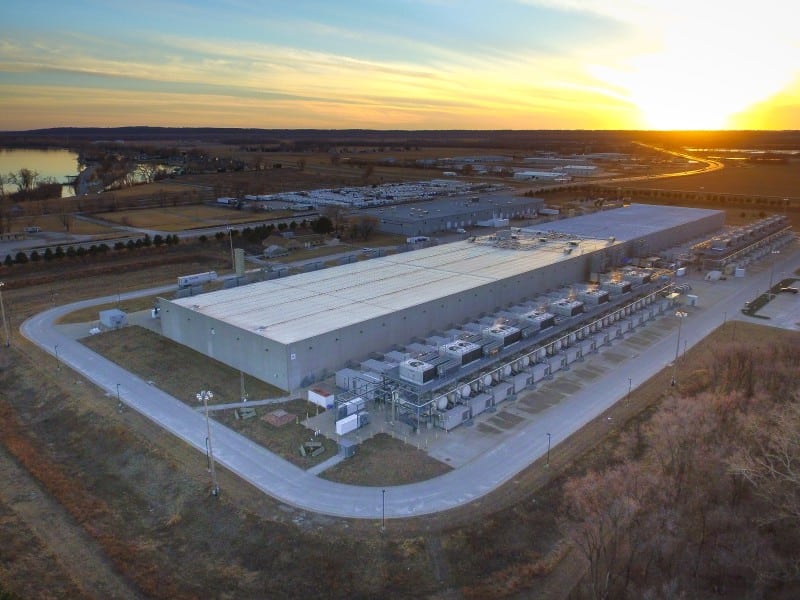
Opinion: To meet climate goals, Columbus leaders must address data centers
With the City Council presenting its draft proposal for municipal data center policy this week, residents must seize the moment to demand meaningful safeguards that will actually minimize the climate impacts of data centers.

Notes on a cross-country Amtrak
With Ohio considering expanding train access, our columnist reports on a summer spent riding the rails.