
Paul Tremblay seeks out a human connection
The author, who will be in town this weekend for the Columbus Book Festival, finds inspiration in the insidiousness of Big Tech for his latest novel, ‘Dead but Dreaming of Electric Sheep.’
Paul Tremblay earned a degree in mathematics at Providence College in 1993 and a master’s degree in the same subject a couple of years later from the University of Vermont. Then, he taught math at a high school outside of Boston for 30 years.
He had no interest in writing.
“From about five to 23,” Tremblay said, “how I knew story was solely through film and television.”
Yet, he has somehow become one of the most acclaimed and bestselling novelists in America. Tremblay is one of the featured authors appearing at the Columbus Book Festival, which runs Saturday and Sunday, July 11 and 12, at the Main Library downtown. Other featured authors include: Kimberlé Williams Crenshaw (Backtalker), TJ Klune (We Burned So Bright), Lisa See (Daughters of the Sun and Moon), and Laura Dave (The First Time I Saw Him).
A donation powers the future of local, independent news in Columbus.
Support Matter News
Since the publication of his fourth novel, A Head Full of Ghosts, from 2015, Tremblay has written books such as A Cabin at the End of the World, which won the Bram Stoker Award for Best Novel and was adapted by M. Night Shyamalan into the 2023 film “Knock at the Cabin,” and Horror Movie, a New York Times bestseller also nominated for the Bram Stoker Award. His most recent novel, Dead but Dreaming of Electric Sheep, is his most ambitious and his best, a kinetic blend of Philip K. Dick-esque sci-fi dystopia and noir-tinged pop culture amalgama. “It’s a big stew of influences,” is how Tremblay described it. It’s also brilliant.
But until his mid-20s, he was more likely to read a math proof than literary fiction. “I didn’t fall in love with reading until grad school,” he said. Once he did, however, it was deep and inspiring. He began writing stories in his free time for fun and publishing them in the nascent days of the internet. By the end of the 2000s, his side hobby became something more with the publication of his first novel, The Little Sleep, in 2009.
“I think it’s helped me,” he said of his unusual, MFA-less route to authorship. “Not having been taught how I was supposed to write, I think there’s a freedom in that.”
However unlikely a career trajectory it’s been, Tremblay’s background as a film- and TV-watching math teacher does explain many of the plots of his novels. The family members at the center of A Head Full of Ghosts become reality TV stars. Horror Movie, as its title suggests, focuses on a cursed ultra-indie film from the ’90s that Hollywood hopes to reboot.
And now, Julia Flang, the wonderfully realized protagonist of Dead but Dreaming of Electric Sheep, is a “Big Lebowski”-quoting gamer tasked with remote controlling a corpse across the country. Julia refers to this dead body as Bernie, a reference to that old chestnut from the late ’80s about two hapless dipshits cosplaying that their murdered boss is actually still alive in order to thwart some mobsters. (An employee for the company who hires Julia has never seen “Weekend at Bernie’s” and doesn’t get the reference. “I did see ‘Swiss Army Man,’” he says. “It wasn’t my cup of tea.”)
Although those movies obviously served as reference points for the story, the original influence was a much more grounded text: Mary Roach’s Stiff, a delightfully perverse examination of, as its subtitle puts it, The Curious Lives of Human Cadavers.
“There was one part about transporting a body across the country in airplanes,” Tremblay said of reading Roach’s book a decade ago, “and it struck me as a goofy premise.”
But as time went on and Silicon Valley lurched its cable-like tentacles into our lives, the idea of a tech company developing ways to reanimate dead bodies for some nefarious purpose began to sound less and less silly.
In addition to the fleshed-out characters, what makes Dead but Dreaming of Electric Sheep so effective is its satirical exactitude. The corpse in question is not exactly dead. Rather, he is in an extreme vegetative state, and in alternating chapters throughout the novel, we get “Bernie’s” perspective as he slowly comes to terms with his technologically salvaged consciousness. The tech industry, in Tremblay’s world as in ours, is out for our bodies and our minds.
Tremblay, for his part, is fighting the good fight against AI’s insidious proliferation. He was one of the first authors to file suit against OpenAI for copyright infringement in 2024. “It’s stealing,” he said of LLM “training.” “There’s no ethical consideration about anything else. It’s theft.”
An event like the Columbus Book Festival is a joy for Tremblay because when he’s alone at his desk, writing his twisted tales, he sometimes wonders to himself, “Who the hell is reading these?”
“At a festival,” he said, “you see the size of the reading community. There’s a lot of talk about the decline in literacy – which is happening – but seeing all these people who love books, it’s encouraging.”
Tremblay hopes, too, that this community will actively work against the unethical overreach and aesthetic moribundity he satirizes in Dead but Dreaming. “It’s up to us,” he said. “I hope that readers will just say, ‘No. We will not support the slop. We want human art.’ The whole point of it is the connection. There’s a recognition there even if it’s unspoken. That will never be there with something AI-generated.”
Related Articles
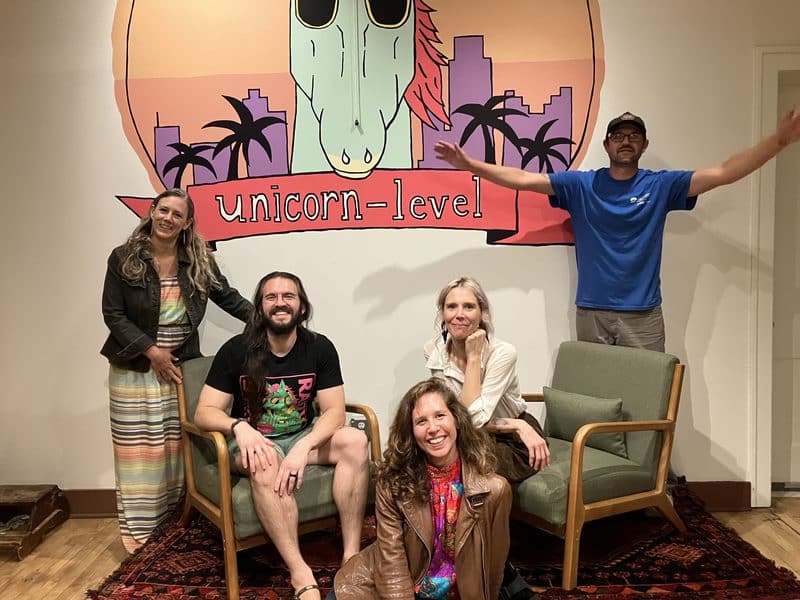
Two Dollar Radio HQ reopens with an expanded ownership group and a similarly expanded vision for the future
‘I think a big part from opening was to give authorship of the space to people with good ideas, to open the doors to people to try different things.’
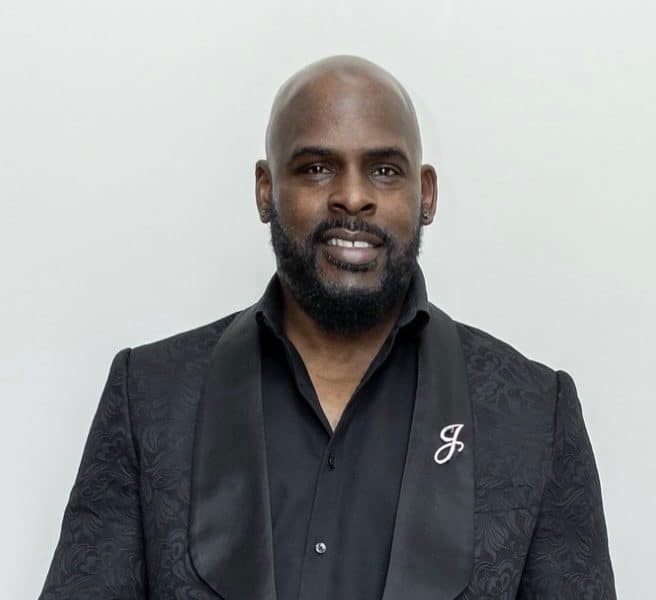
Edward Julian Sr. embraces poetry as a means to release and reflect
Ohio’s poet laureate features at Urban Arts Space tonight (Thursday, Sept. 24), appearing as part of the Poetry Festival, which continues through the weekend at Thurber House and the Grange Insurance Audubon Center.
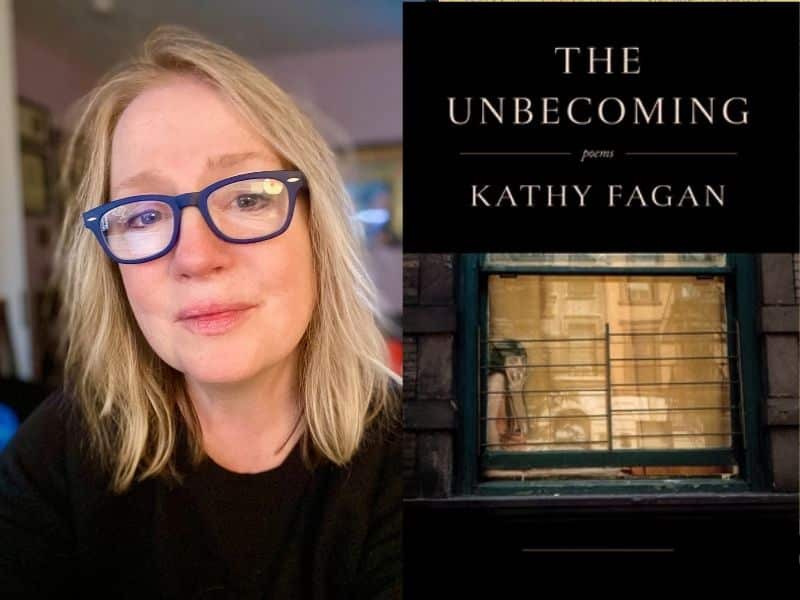
Kathy Fagan takes stock with ‘The Unbecoming’
The poet will celebrate the release of her new collection with a reading at Gramercy Books on Thursday, Sept. 24.