
Dana Lynn Harper finds clarity through obfuscation with ‘Imagined Paradise’
The Columbus artist’s deeply personal new exhibition kicks off with an opening reception at Brandt Gallery on Friday, Aug. 7.
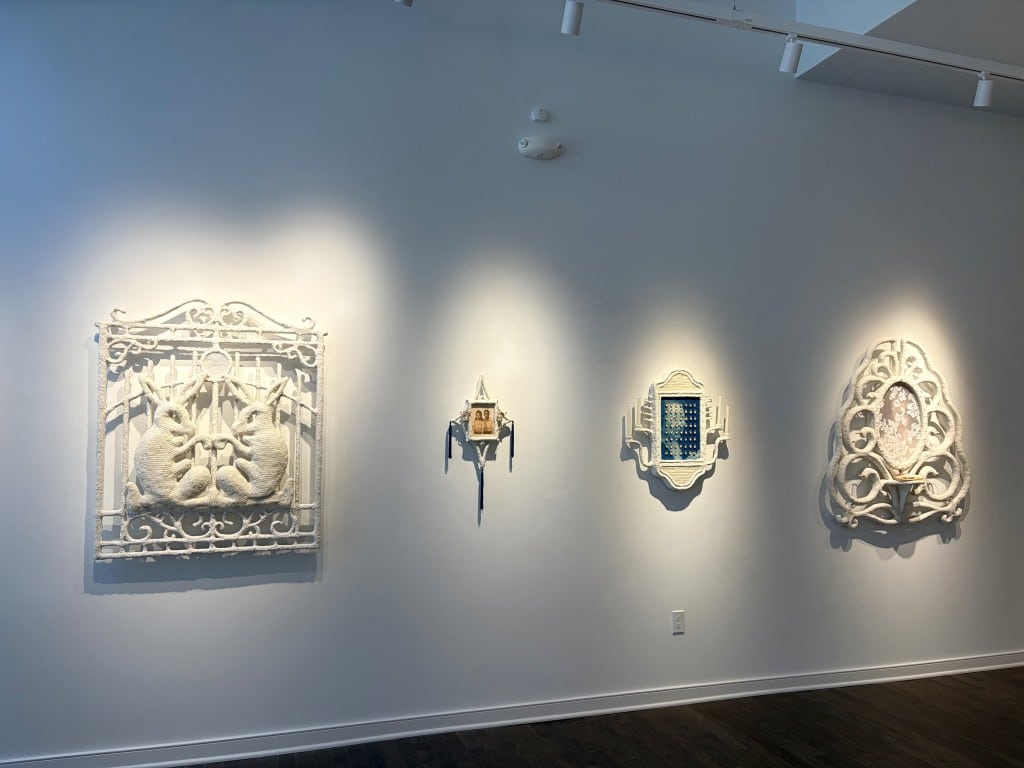
The last four years have served as a time of reinvention for Dana Lynn Harper, the Columbus artist progressing from colorful installations that doubled as points of escape to more muted, deeply personal works that explore concepts of identity, family lineage, and cultural heritage.
“I get more fear sharing this new work than I ever did my old work, because it feels so tied to me in such a deeper way,” Harper said at Brandt Gallery, where her new exhibition, “Imagined Paradise: Bridging the Celestial and the Earthbound,” kicks off with an opening reception from 5-7:30 p.m. on Friday, Aug. 7. “When I was young, I was like, ‘Why would you make work about your family?’ I wanted to make things that were ethereal and would give people a sense of escapism, or a place to go. And now the work is asking, ‘What is beautiful here? If we don’t capture this now, is it gone forever? And what’s worth capturing? What’s worth celebrating?’”
The arrival of these questions coincided with a change in materials, the artist abandoning the more toxic Apoxie Sculpt that granted her earlier sculptures a smoother, more refined texture in favor of paper clay, which presents a rougher, less manicured finish. “And so, now I look at the [sculptures] more as architecture, like stones or concrete, which aren’t perfect either,” Harper said. “And allowing myself to use the paper clay and not sand it or make it perfectly smooth has become a lesson in accepting imperfection and understanding beauty can still exist in those things.”
A donation powers the future of local, independent news in Columbus.
Support Matter News
Within “Imagined Paradise,” Harper deploys this paper clay in a series of pieces that read either as altars or elaborate wrought-iron gates, the likes of which populated the Upper Arlington neighborhood in which the artist grew up. “The gate became representative not only of this exclusion I felt in the community I was raised in, but also in the way I feel excluded from a lot of my own history, because I’m not in the lands from which my family comes,” Harper told me last year.
More recent works have expanded beyond this idea, including a stunning, gate-like structure adorned with two large rabbits – an animal Harper linked with a favorite childhood stuffed toy, and which conjures in her a feeling of “wild innocence” unique to that time. “Children are free in their play, and there’s no sense of greed or claiming things, because the ego hasn’t fully taken over yet,” said Harper, who sees reflected in the work the sense of protection she feels for the younger generation she now instructs at CCAD. “And I do feel protective of my students as they enter the art world, but also as people, because they’re young.”
Other pieces incorporate vintage family photos, including images of Harper’s mother, her grandparents, and her great grandmother, the latter of whom features in an altar-like sculpture that will be ringed with Peruvian lilies for the opening and includes a small shelf filled with gilded peanut shells – a nod to a treasured moment from Harper’s childhood that doubles as an invitation. “When me and my sister were little, my mom would get whole peanuts … and spread them out on top of newspaper, and we would watch movies and eat peanuts,” Harper said. “And I only met my great grandmother one time, and she didn’t speak English, so it’s almost like inviting her into the ritual that my family had when I was little.”
In constructing the works on view, Harper would first create a skeleton with thin pieces of wood, which offered more structure and stability than the wire she used in her earliest attempts. She then covers the wood in aluminum foil to grant it more heft before wrapping everything in plaster gauze and finishing the piece with the paper clay. The artist described the cumulative effect as akin to crafting “the ghost of a gate,” each individual element capable of being bent or broken but combining into something that reads as impenetrable.
This ghostly aspect bleeds into the treatment of the photographs, which are covered with pistachio shells and otherwise masked or veiled – a decision Harper traced to the initial discomfort her mom expressed at the use of her likeness. “This is one of the first ones that I made, and when I asked my mother for her picture, she said, ‘Don’t leave me so exposed,’” the artist said. “So, I was like, okay, I’ll put something over the top, and I started to make sure you could still see the faces but they’re slightly obscured.”
While initially intended to provide a degree of anonymity, the decision quickly took on deeper conceptual meaning for Harper, who saw in the obfuscation a connection with the unknowns that can come from being raised a child of immigrants. Growing up, for example, Harper said she always told people that she was half Indonesian and half white, while a later DNA test informed her that she was primarily Vietnamese, Han Chinese, and Japanese.
“And when you think about your own narrative, it’s like people can tell you all of these stories, but it’s never like the full truth,” she said. “And learning your family’s history is actually really important, especially if you’re … a non-white person. In the ’90s, when I was growing up, I felt like people thwarted it, or it was more like, ‘Assimilate into these things and don’t draw any attention to yourself.’ And now I’m learning how to reclaim those things, and it bleeds into my life. … After I created this body of work, I put chopsticks in my hair to hold my hair up, and that’s something that I would never have done before. So, it has become a self-acceptance, a self-celebration. Because if I’m celebrating my family, then I in turn have to celebrate myself. … So, through the love of them, I’ve found more love for myself.”
Author
Related Articles
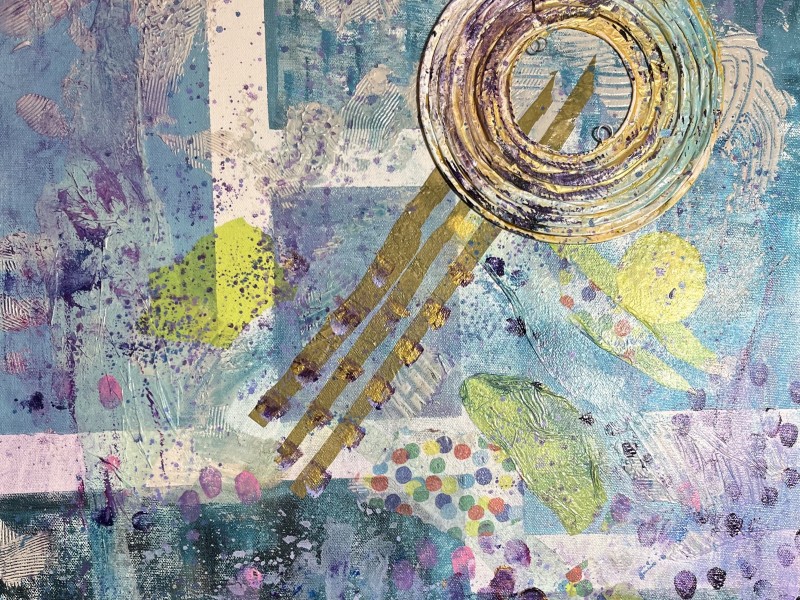
Deep conversations pave the way to ‘Chasing the Light’
A couple of years ago, Loren Bucek invited a group of artist friends to her Clintonville home. The gathering soon evolved into regular meetups that shaped the creation of a new exhibition opening this week at McConnell Arts Center.
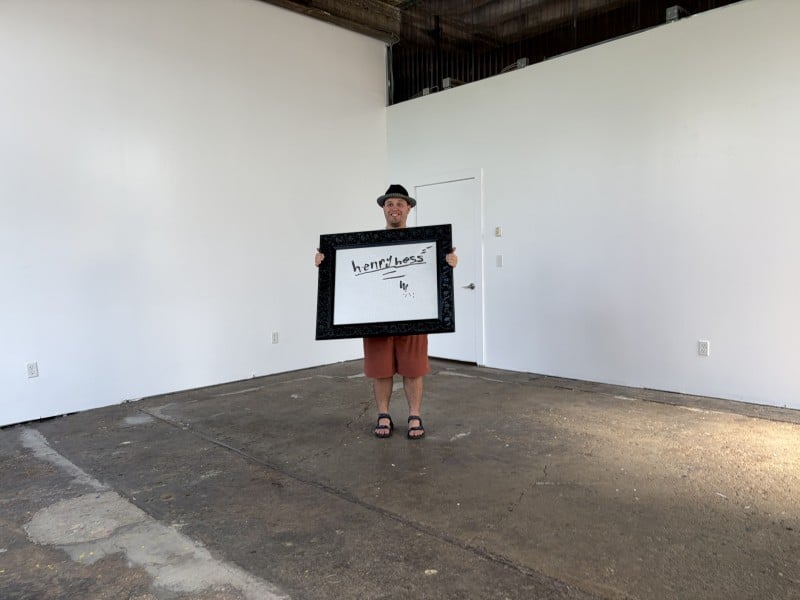
Henry Hess says goodbye to his longtime Chromedge studio
Faced with a rent increase of more than 30 percent, the Hess family opted to move on from the artist’s creative home of the last eight years. And while the next steps remain uncertain, they stressed that Henry would maintain a presence in Franklinton. ‘We’re not going anywhere,’ Sophia Hess said.

Nick Stull adopts a quieter approach
With his latest collection, on view at Sarah Gormley Gallery beginning today (Friday, Sept. 11), the Columbus artist hopes to entice viewers to linger a little longer in his world.