
Dorian Ham names the monsters in the room with ‘In 250 Degrees I Revolve’
The Columbus poet’s new chapbook uses the anniversary of American independence to explore the repetitive nature of history, the politics of fear, and the need to push back rather than accepting ‘the badness of a thing.’
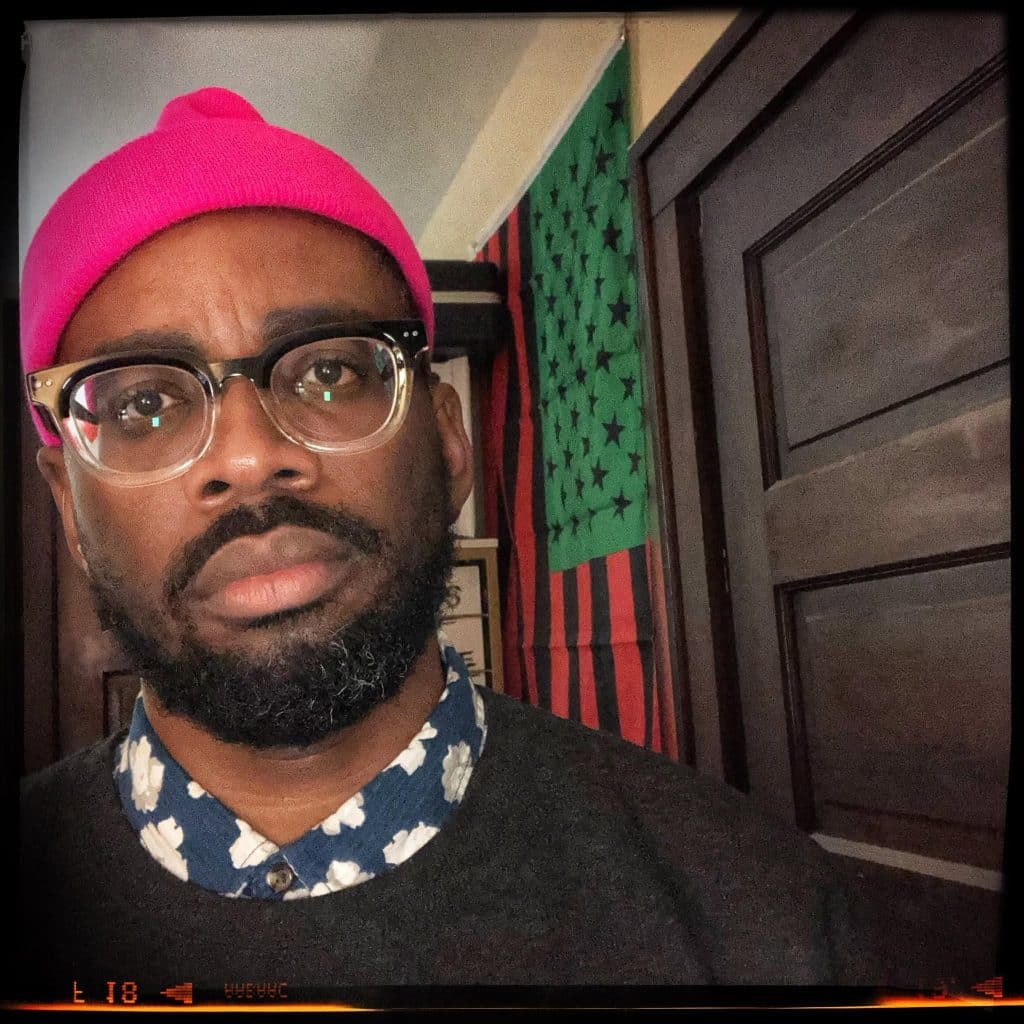
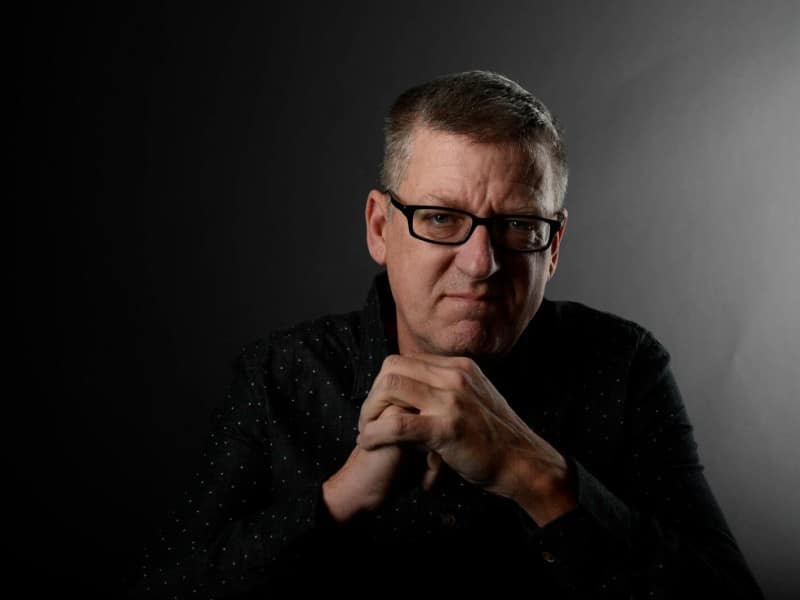
In compiling the poems for his new chapbook, In 250 Degrees I Revolve, a collection of works rooted in the 250th anniversary of American independence, Dorian Ham said he was reminded that history has a way of repeating itself.
“It’s depressingly always the same, to where you can watch something like [the 1970s sitcom] ‘Barney Miller’ and be like, oh, wait, that’s a political joke that’s still very relevant,” Ham said in early July. “And I’m not the first person at all to say this. I’m just the person saying it now.”
And so, while many pundits continue to describe this current social and political era as “unprecedented,” the poems contained in 250 Degrees suggest that these times very much have precedence. “It’s all happened before and it will all happen again,” Ham writes in “250,” later adding, “It stands to reason every franchise will be rebooted.” Similar ideas surface in “Re(a)d All Over,” in which the poet compares America to a drunk at a bar “whose stories loop upon themselves.”
A donation powers the future of local, independent news in Columbus.
Support Matter News
This idea was reinforced for the poet as he researched Spiro Agnew, Richard Nixon’s vice president, who was investigated on suspicion of bribery, extortion and tax fraud, and whose easy relationship with corruption is mirrored in a Trump administration currently enriching itself on crypto while accepting kickbacks for political pardons. “If you read the Rachel Maddow book Bag Man, it’s like, oh, [Agnew] was taking cash bribes in the White House, and he was like the innovator of corruption,” Ham said. “And then he would be like, ‘I will attack the press for attacking me.’ … People will say, ‘History doesn’t repeat but it rhymes,’ and I’m like, yeah, but it also kind of repeats. And it may be a turbocharged version of the thing, but you can still find some version of it.”
The idea of repetition is also central to Ham’s writing, with the poet returning time and again to particular words or ideas – a practice he traced in part to his high school introduction to John Steinbeck’s The Grapes of Wrath. “And he talks about the dust, the dust, the dust throughout, to where you’re almost overwhelmed by the repetition of it,” said Ham, who saw this same literary device deployed in the lyrics Greg Dulli penned for the Afghan Whigs album Gentlemen, from 1993.
Within 250 Degrees, Ham revisits a handful of themes, including the repetitive nature of history, the malleability of this retelling and how it can be bent and shaped by whoever is given the platform, and the cruelty and manufacturing of grievances at the core of the modern MAGA movement. “You push and stab and slice/Finding enemies in every ounce of existence,” the poet writes in “…Like I’m Five.” “The agenda is pain.”
Rather than bowing to this reality, however, Ham fires back in the next poem, “Again? Great. America, Made,” pledging to treat these rancid forces “with the same respect you’ve given me. The same respect you’ve given to my community. The same respect you’ve given to my neighborhoods. My downtown. My businesses. My teachers. My schools. My friends. My family.”
The sense of defiance embedded deep within the DNA of 250 Degrees is perhaps best exemplified by “Seen It Once,” which opens with Ham admonishing the importance of naming “the monster in the room.”
“And I think that’s the most important thing, saying, here’s what’s bad and here’s why it’s bad, and let’s just say it plainly,” Ham said. “We all know what this is. We know ICE isn’t here to protect. And we know they’re just trying to get rid of all the Brown people. … And you know [the administration] is taking over the Smithsonian because they want it to only show white men. They’re not being subtle about these things, so let’s just say what it is.”
Within 250, not only does Ham consistently name these forces, but he offers constant pushback, leaning into poems such as “Non-Descript Accent” to decry the opportunistic fearmongering embraced by politicians to grow and maintain power.
“I’m from Springfield, so it was infuriating for me to watch that whole ‘[immigrants] are eating cats and dogs’ thing, because it wasn’t true in any shape or form – to the point where even the Republican mayor of Springfield was like, ‘Hey, not happening. Keep our name out of your mouth,” Ham said. “And it was like these people outside of [Springfield] were like, ‘You need to be scared of these people because they’re invading, and isn’t that the scariest thing?’”
One benefit of taking a been there, done that approach to history is that Ham can more clearly see the long game, acknowledging the terrible-ness of these times while also accepting that the slow swing back toward justice requires more than passive indifference.
“And not to sound like Kim Kardashian, but people don’t want to work,” Ham said, and laughed. “Any change that has ever happened in history has been because people were like, ‘Oh, I’m not cool with that. I’m going to speak up about it. Or I’m going to amplify the people who are already speaking up about it.’ Not everyone is built to be an activist; I’m not necessarily built for the activist life. But I’m always talking about it either in person or online, and I’m amplifying the people who are doing the work. And it’s very much the idea that not everyone can do the big, flashy thing. But everyone can do something. … Just don’t pre-acquiesce. Don’t assume that it’s bad and so it’s always going to be bad. If you look at history, it could be good. You don’t have to accept the badness of a thing.”
Author
Related Articles
Edward Julian Sr. embraces poetry as a means to release and reflect
Ohio’s poet laureate features at Urban Arts Space tonight (Thursday, Sept. 24), appearing as part of the Poetry Festival, which continues through the weekend at Thurber House and the Grange Insurance Audubon Center.
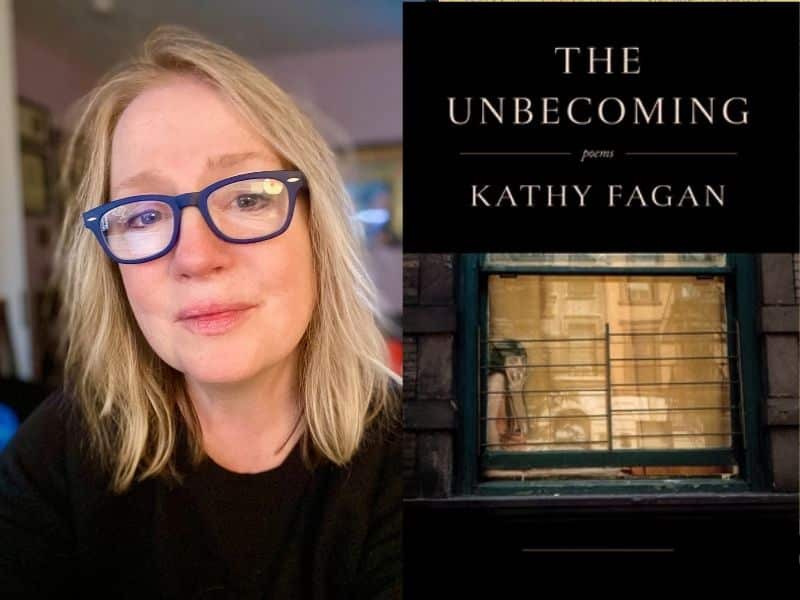
Kathy Fagan takes stock with ‘The Unbecoming’
The poet will celebrate the release of her new collection with a reading at Gramercy Books on Thursday, Sept. 24.
Derf Backderf delves into the past, finds lessons for the present with ‘The Dissidents’
The Cleveland cartoonist will celebrate the release of his sprawling, deeply engaging new book with an appearance at the Wexner Center for the Arts on Wednesday, Sept. 23.