
Eric Shonkwiler wants to help you survive societal collapse
The Columbus author will celebrate the release of ‘Red Prepper: Building Collective Resilience in an Age of Collapse’ with an event at Prologue Bookshop on Thursday, Oct. 22.
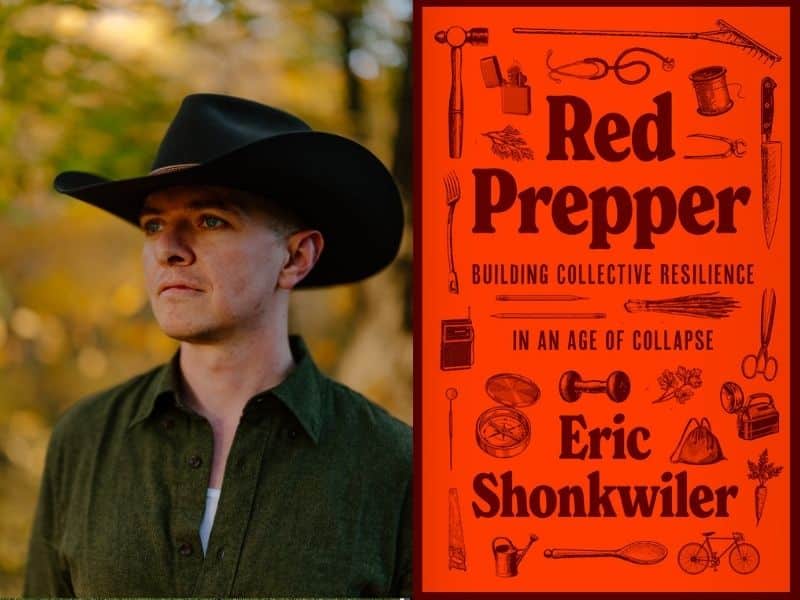
Within Red Prepper: Building Collective Resilience in an Age of Collapse (Pluto Press), Columbus author Eric Shonkwiler describes his social and political transformation not as the result of a single flashpoint but rather a series of radicalizing moments that include the 2000 election of President George W. Bush, the 2020 Covid pandemic, and the June 2022 power outage that affected lower-income Columbus neighborhoods at a significantly higher rate than wealthier areas.
“I’m very insulated from a lot of the immediate impacts of a lot of political machinations because I am a straight white man with a job and a house, and so a lot of things that have happened in this country in the last 15 years or so were very disconcerting but they were never a material threat to me,” said Shonkwiler, who will celebrate the release of Red Prepper with an author event at Prologue Bookshop on Thursday, Oct. 22. “And I think because I was insulated, and because of the fact I didn’t belong to any minority class, I’ve just been able to go about my days in the way that a lot of Americans do. But that series of radicalizing events made it clearer and clearer that … If I wanted to hold my head high, if I wanted to be a moral person and do good with my life, that can’t be how I operate. And those stages of radicalization pushed me and pushed me until I came to where I am today, which is someone that finds the idea of hierarchy and capitalism abhorrent, and who sees the amount of danger we’re in and wants to help people get out of danger as best he can.”
Red Prepper serves as a clear distillation of this idea, Shonkwiler centering the concepts of mutual aid and building community outside of the existing structures of power while simultaneously reclaiming the term “prepper” from the right-wing lexicon, where it has come to be associated almost exclusively with the image of lone-wolf survivalists isolated in bunkers as the world around them devours itself.
A donation powers the future of local, independent news in Columbus.
Support Matter News
“And if I have enough rice and flour and beans in my basement, it’s true to some extent that I can live until I die,” Shonkwiler said. “But you’re going to die of something else. And you’re going to die of something simple that having anybody around you with any kind of expertise could have prevented. And at least in the popular idea of what a prepper is, that’s their drawback. They have built up this castle around them, and they have forgotten to populate it with people, and in particular people who care about them. And that’s what a left-wing prepper starts with, is community. As soon as you start building out a little pantry for yourself as a leftist, you should be thinking about who gets to share that food with you when the chips are down.”
At its core, Red Prepper functions as a deeply researched how-to guide, presenting clear, organized steps to creating a pantry stocked with the essentials needed to survive the next crisis, be it power outages brought about by climate change fueled storm systems or more catastrophic infrastructure failures created by corporations that have failed to properly maintain and update essential systems because there is no profit motive for them to do so. But Shonkwiler also takes things a step further, presenting readers with a range of simple ways they can begin to push back against these corrosive forces, whether by starting community gardens or building up tool libraries accessible to neighbors who might be in need. The aim, Shonkwiler said, is to empower people to be proactive rather than solely reactive, while also helping to foster a sense of cooperation essential to any long-term survival.
The road to Red Prepper began during Covid when Shonkwiler, then working as director of security for a small hospital, launched his “When/If” newsletter, introducing and developing many of the concepts that appear within the book after the early protections put in place by state leaders were eradicated.
“I think everybody here in Ohio is able to look back to the early days of Covid and see we did fairly well in the beginning,” said Shonkwiler, who then noted how quickly Gov. Mike DeWine folded in the face of the so-called “Open Ohio” protests, returning the state to business as usual. “And at that point it became clear that … we have to throw people back into the meat grinder because … the lockdowns were slowing down the economy.”
Considering the subject matter, it would have been easy for Shonkwiler to slip into doomerism. Indeed, there are whole sections of text dedicated to the various ways civilization could end, be it Christo-fascist fueled Civil War, a new pandemic, or climate disaster. But the book maintains a sense of hope through its deep, unwavering focus on connection and community.
“If I had been writing this book purely as a doomer who thinks that we have no hope, I don’t know that I would have made it through the whole thing. … But I have people and dogs that I live for and love and want to take care of, and so I can’t be a doomer. And I genuinely believe that as bad as the world is … without our best efforts, tomorrow will be even worse,” said Shonkwiler, who traced aspects of his fascination with End Times scenarios to the “Left Behind” book series, which he read in his early former years as an evangelical Christian. “And those plotlines having to do with the end of the world captivated me. … And even now I’m still captivated by the idea, but I’m captivated in a more literal sense. We are living in the world I had been thinking about this whole time. And it doesn’t have all the flash that poor literature I read back then does, but it’s no less lethal.”
Author

Related Articles
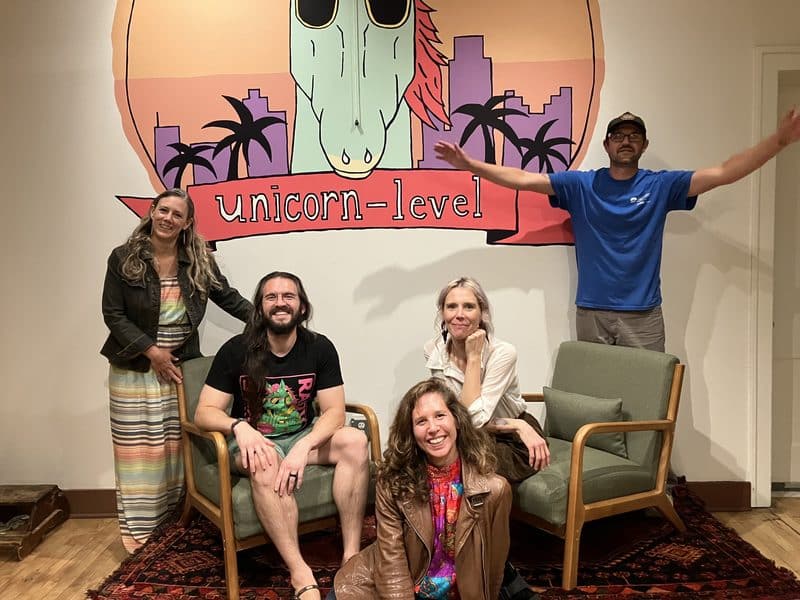
Two Dollar Radio HQ reopens with an expanded ownership group and a similarly expanded vision for the future
‘I think a big part from opening was to give authorship of the space to people with good ideas, to open the doors to people to try different things.’
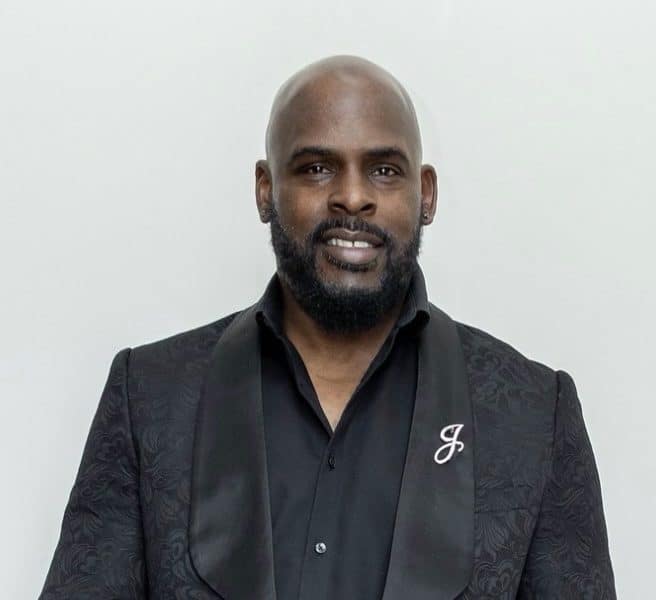
Edward Julian Sr. embraces poetry as a means to release and reflect
Ohio’s poet laureate features at Urban Arts Space tonight (Thursday, Sept. 24), appearing as part of the Poetry Festival, which continues through the weekend at Thurber House and the Grange Insurance Audubon Center.
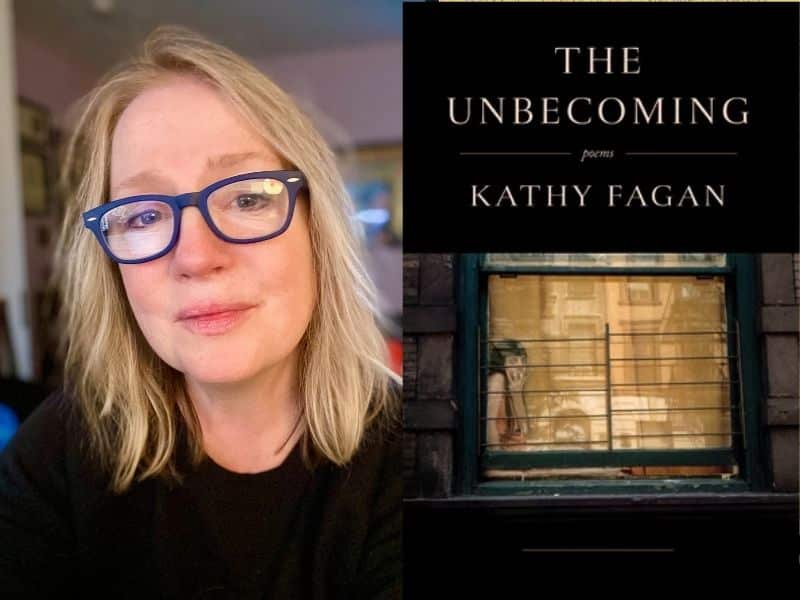
Kathy Fagan takes stock with ‘The Unbecoming’
The poet will celebrate the release of her new collection with a reading at Gramercy Books on Thursday, Sept. 24.