
Sarah Gormley finds joy in ‘The Order of Things’
In her debut memoir, due for release on September 10, the gallerist untangles the winding journey that has brought her to a more contended, more fulfilling place.
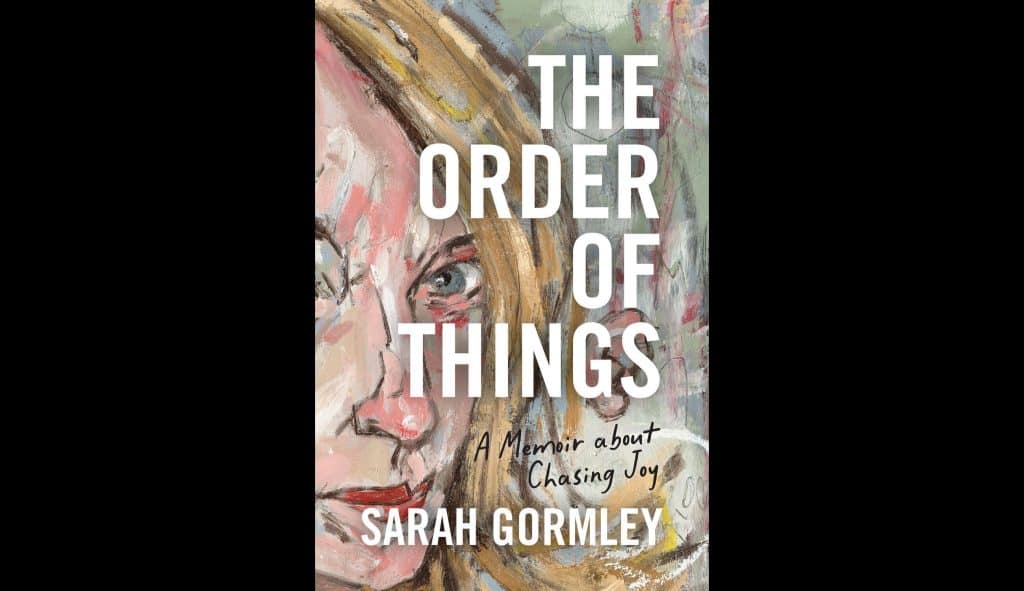
One day early in 2020, Sarah Gormley said she awoke struck by a series of revelations.
“I’m in Columbus, Ohio – a place I never thought I would live. I own an art gallery. And I’m madly in love with the greatest guy,” said Gormley, the owner of downtown’s Sarah Gormley Gallery. “And I really wanted to answer the question how the fuck did this happen?”
In a previous life, Gormley moved within corporate America, working jobs in marketing for companies such as IMAX, Martha Stewart and Adobe. And on that morning, basking in the glow of current circumstances, she felt a need to begin to untangle the winding journey that had led her to this more fulfilling place. So, she started writing, initially turning to the page solely as a means of figuring out things for herself and then steadily expanding on the idea as a larger narrative began to take root.
A donation powers the future of local, independent news in Columbus.
Support Matter News
“It was a story I wanted to write to see if I could write it. And then I realized it was something I wanted to share,” said Gormley, whose self-published debut, The Order of Things: A Memoir About Chasing Joy, is due out on Sept. 10. (Click here for a full schedule of release events, including an author conversation at CCAD’s Joseph V. Canzani Center on Monday, Sept. 9.)
The Order of Things is big-hearted, beautifully written and unflinchingly honest. In sifting through the past, Gormley gradually unpacks the unhappiness and malaise that began to settle within her as a child and remained a presence through adulthood, the weight of self-doubt exerting a backwards drag even as she moved successfully forward through life. “I didn’t think I was suffering from depression, and I didn’t think I needed to be medicated,” Gormley writes. “I just wanted to feel better and stop the running tape on a loop telling me that I was a failure.”
Though the subject matter can be heavy at times, particularly as Gormley recounts her teenage struggles with anorexia and the 2018 death of her mother to cancer, the writing never feels bogged down, buoyed at times by the author’s flair for sarcastic humor, which can inject welcome levity into otherwise dire scenes. Witness the moment when Gormley flies back to Ohio and the family farm in Zanesville in the wake of her mother’s cancer diagnosis and the two women greet each other not with hello but rather by trading an increasingly loud series of FUUUUUUUUUUCKs. (It’s a trait Gormley comes by honestly, writing of her mother’s penchant for lacing her insights with “fucks and goddamns that never sounded crass but punctuated the air and made everyone feel at ease no matter the gravity of the topic.”)
The formatting of the text serves as another pressure release valve, of sorts. Gormley included hard breaks between paragraphs rather than indentations, creating physical gaps in which readers can pause. And in the section that covers the days leading to her mother’s death, Gormley segments the passage into a series of brief but harrowing chapters. This decision creates purposeful space for exhalation – “I wanted people to be able to take a breath,” she said – but also has the effect of allowing the author’s mother to linger just a little bit longer on the page, with Gormley sharing that she dreaded writing about her mother’s death because of the sense of finality it introduced in her that the elder was actually gone.
The mother-daughter relationship is central to the text, the focus extending at least in part from the complexity of the dynamic shared between the two. Gormley said her relationship with her dad was easy, in contrast, so much of his presence is confined to a single list titled “Ten True Things About Dad.” (In a twist he certainly would have appreciated, the last point relays his practice of writing lists in a yellow legal pad, the pages from which Gormley and her siblings would find strewn all over the farmhouse.)
“I’ve sort of always known which characteristics from each of [my parents] that I contain, but the book is really more a love letter to my mom,” said Gormley, who will occasionally catch a glimpse of herself in the mirror or stumble across a photograph and see her mother reflected back in the image. “I am hers, but I’m not her.”
Other relationships are nearly as pivotal, including a blossoming romance with Camillus, a man Gormley reconnects with after she moves back to Ohio to tend to her sick mother, and whose initial overtures she almost dismisses owing to the tragic circumstances of her arrival in town. But while Camillus’ presence is felt, and Gormely gives enough detail so that readers can understand why she loves and appreciates him, she said there are aspects of the pair’s relationship that she held close “because that’s ours.”
“It’s a delicate thing,” Gormley said of the balance required in giving of yourself in the text and guarding those things you hold most dear. “And I think anyone who writes a memoir, you have to work that out for yourself.”
The Order of Things shares similarities with You Could Make This Place Beautiful, the 2023 memoir from the Columbus poet and essayist Maggie Smith. Both, in some sense, begin with a fracture. And each finds the respective author initially fumbling her way forward before again establishing more solid footing. In both instances, the authors are also unafraid to play with the structure and form readers have come to expect from memoir, whether it’s Smith chiding those who might wish sit in on the most intimate conversations she shared with her ex as their marriage eroded or Gormley breaking the fourth wall to address the challenges she faced in unraveling her story. “Those are the moments where I say I’m looking at the camera,” Gormley said, and laughed.
For Gormley, the turn toward joy that serves as the backbone of the book initiated with a decision to seek out therapy a second time. (Her first attempt, which she addresses in an early scene that is somehow both comic and traumatic, ended abruptly when the therapist looked her up and down upon meeting and said, “You’re thin and attractive. What could be bothering you?”)
“The catalyst to [again seeking out therapy] was pain. It was an inordinate amount of pain that I didn’t want to endure for another 40 years of my life,” said Gormley, who discovered her current therapist, David, 11 years after that first failed attempt. “And what I did find out is that you can change. And my life changed pretty radically. And for me, what I needed and what worked was therapy, … When you’ve spent most of your adult life feeling pretty shitty about yourself, it’s very strange when you start feeling better about yourself. And there are still days and moments, but now I have tools where I don’t let myself sit there in it.”
Part of the challenge in writing a memoir, however, involved allowing herself to stew in some of these earlier, more toxic headspaces – a process Gormley described as “incredibly hard,” and which left the writer feeling a deep, hard-won sense of empathy for those younger versions of herself.
“I don’t think until year seven or eight of therapy did I even grasp how much I was suffering,” she said. “And so, in the writing process, and going back into some of those scenes and thinking about different job experiences or even the different apartments I lived in, I’d see this younger version of myself, and I would just weep. … But then I would get to thinking about how interesting my life is and how I get to live in Columbus and it’s overwhelming. … And I feel so lucky, because I didn’t feel that way for a long time.”
Author

Related Articles
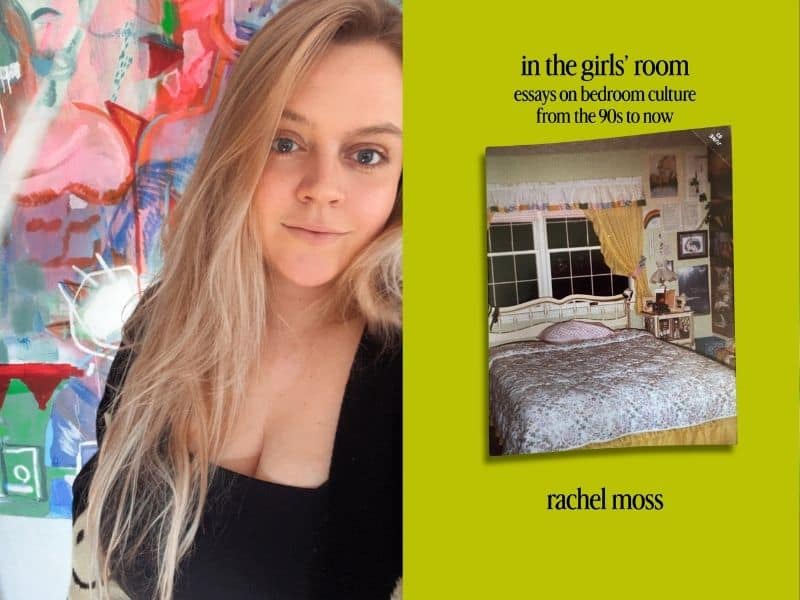
Rachel Moss finds deep cultural connection ‘In the Girls’ Room’
‘When I think of my bedroom now, it was almost this little incubator for what my life would become as a writer and researcher, getting to explore things I liked without anybody watching or commenting on it.’

‘The whole time we were chasing our dreams, we were actually living the dream’
Long-running Columbus power-pop band Watershed will celebrate the reissue of Joe Oestreich’s memoir ‘Hitless Wonder’ with a conversation at Used Kids Records and a sold-out concert at Natalie’s Grandview.
Read Rob Harvilla’s foreword to the 15th anniversary edition of ‘Hitless Wonder’
‘[This] is a book about how and why this wonderful and awe-inspiringly resilient band won’t ever stop.’