
Signe Damron begins to see things more clearly with ‘Sift Me Through’
The Columbus poet said her new collection, illustrated by artist Marcus Blackwell, arrived as she began ‘processing and coming into my own.’
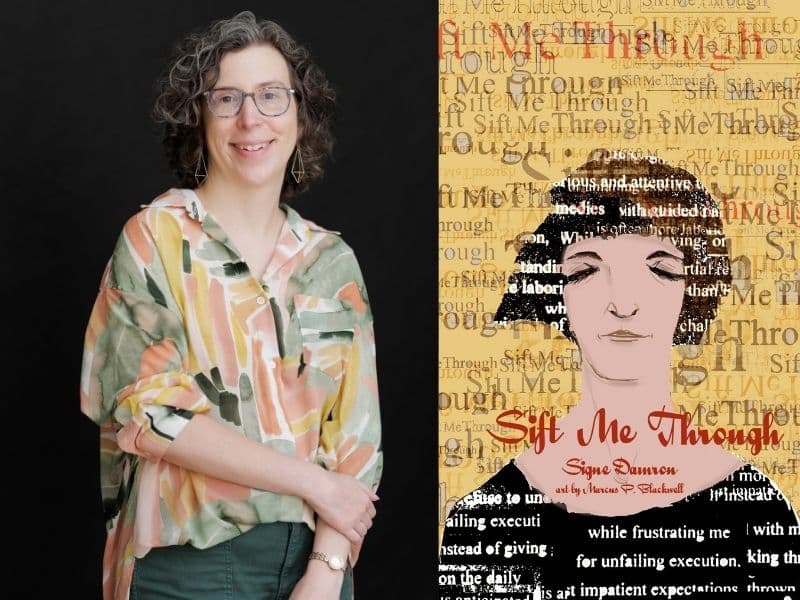
Signe Damron has always leaned into writing as a means to process her interior world, with her new poetry collection, Sift Me Through (Signe-ture Publishing), helping her to surface a new degree of lucidity as she approached her 40th birthday earlier this year.
“I spent the first half of my 30s wondering what was wrong with me, and I was also processing some of the decisions I made in that time period, when I was feeling a lot more pain,” said Damron, who gained comfort in being diagnosed with a second chronic illness as the result of traumatic brain injuries. “Sometimes when you get a new diagnosis, it can be defeating, but for me it was validating. … And I feel like when you heal from something, you’re healing from multiple things. And so, [the collection] is me really processing and coming into my own. … And that’s why the third section is called ‘Clarity,’ because it felt like I was finding my footing.”
While Damron said her writing has often been directed inward, circumstances of recent years intensified the gravity of this pull, including a pandemic that increased the time she spent in solitude and the weight of approaching a landmark birthday that led naturally to more intensive self-reflection. “I was getting closer and closer and closer to 40, and now that I’m here, it’s not a big deal. But as I was stepping towards it those couple years that I was writing, I was having moments of [asking], ‘Do I like where I’m at? Do I like who I am?’”
A donation powers the future of local, independent news in Columbus.
Support Matter News
It’s fitting then that Damron’s Sift Me Through is illustrated by Columbus artist Marcus Blackwell, who last year spoke of how he had also taken a step back to more acutely assess his interior. “I started thinking about, what’s going on in your head emotionally, physically, spiritually?” Blackwell said at the time. “How are you feeling about the world? How are you feeling about yourself in the world? How are you feeling about your children in the world? How are you feeling?”
These ideas are reflected both in Blackwell’s images and Damron’s verses, which find the poet assessing the path she has traveled – on “Into the New” she writes of having lived “37 mini lifetimes” – and coming to terms with where it has to this point led her. Witness “Relinquishing Control,” in which the poet abandons her pursuit of perfection and learns to “embrace mercy in ‘messy,’” as she writes.
“And I think that’s something that’s always been a hard lesson for me,” Damron said. “My mom is a gardener, and she’s always reminding me that nature is asymmetrical and there are imperfections everywhere and it’s okay. And that’s something I’m always having to remind myself, that it’s okay to give yourself grace.”
This garden-themed motherly advice combined with pandemic-era realities to draw out more references to nature in Damron’s poems, which capture her experiences hiking snowy mountain elevations (“Six Miles & 3.5 Hours”), make reference to gliding above thrashing seas (“The Abyss Unknown”), and present as simple moments of wonder. “Laying back and enjoying the sound of the rain,” she writes in “Small Gifts,” “along with the background alto of sporadic thunder.”
“I think I just really gravitated toward nature as an allegory to explain some of what I was feeling,” Damron said. “I also noticed in this book that I craved travel a lot more because I had to be stationary [throughout the pandemic]. And there are times when I’m almost pining for adventure.”
“Great mountains calling me from afar,” she writes in “Simple Desires,” a siren song pulling her to break from her more manicured prescribed path.
Indeed, an idea threaded throughout Sift Me Through rests on the poet accepting a degree of unknowing, embracing the reality that as much as she might attempt to plot each step, detours are both inevitable and welcomed.
“It’s seeing how as we journey towards where we want to be, we all naturally start to branch out and pivot,” Damron said. “There are so many different ways life can go.”
Author
Related Articles
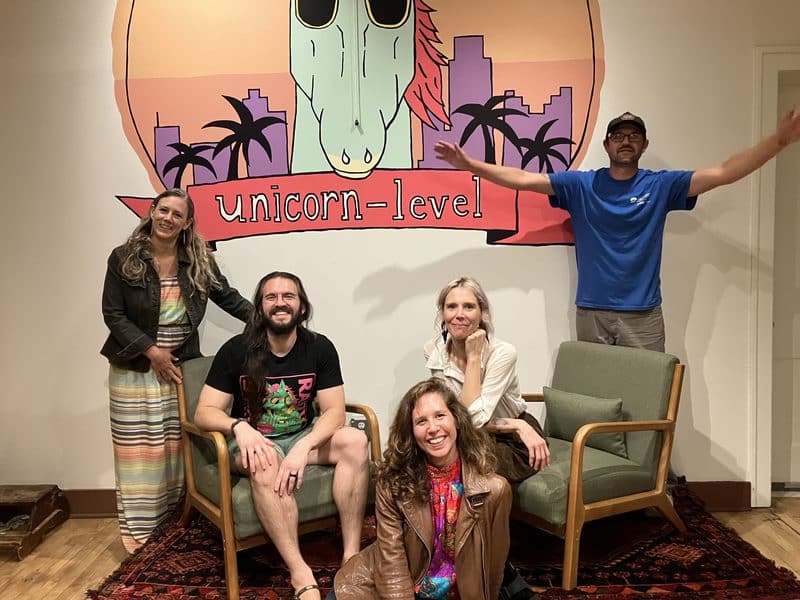
Two Dollar Radio HQ reopens with an expanded ownership group and a similarly expanded vision for the future
‘I think a big part from opening was to give authorship of the space to people with good ideas, to open the doors to people to try different things.’

Edward Julian Sr. embraces poetry as a means to release and reflect
Ohio’s poet laureate features at Urban Arts Space tonight (Thursday, Sept. 24), appearing as part of the Poetry Festival, which continues through the weekend at Thurber House and the Grange Insurance Audubon Center.
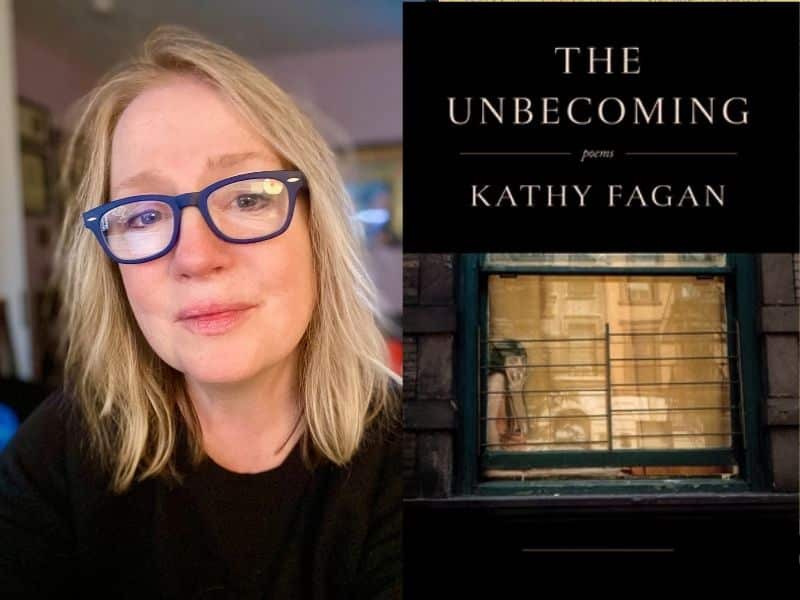
Kathy Fagan takes stock with ‘The Unbecoming’
The poet will celebrate the release of her new collection with a reading at Gramercy Books on Thursday, Sept. 24.