Kathy Fagan takes stock with ‘The Unbecoming’
The poet will celebrate the release of her new collection with a reading at Gramercy Books on Thursday, Sept. 24.
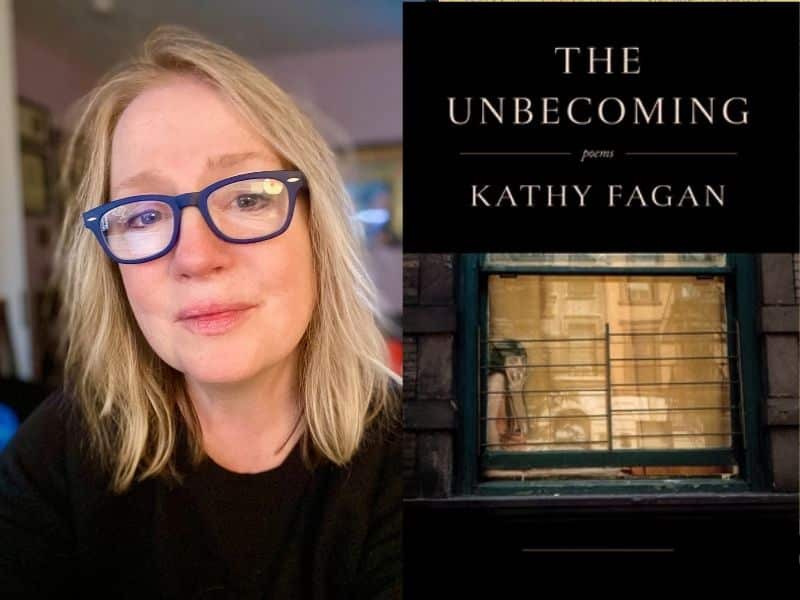
The early 2020s were a trying, transformative time for Kathy Fagan, the poet navigating the deaths of both of her parents along with a global pandemic over a stretch of less than five years. Owing to this, Fagan’s new collection, The Unbecoming, emerged in part as a means for her to survey this altered landscape.
“This book is very much about what happens after,” said Fagan, who will celebrate the release of The Unbecoming in conversation with Maggie Smith at Gramercy Books beginning at 7 p.m. on Thursday, Sept. 24. “It’s what happens after the death of parents, after middle age, and also the aftertime for maybe our democracy, for our planet. And it’s [asking] what do we do with that? And I don’t want it to be a downer, and I think the book is about transformation as much as anything else. It’s looking at how we go forward, because if we’re breathing, we must.”
There also exists within the collection a desire to look outward, with Fagan embracing her loss as a way to connect with the world at large, buoyed by an awareness that death, as shattering as it might be, remains a universal human experience. Witness “The Elevens,” where the word I gives way to they over the course of the poem. “Curious as children, they take in the air, the sun and all its damage,” Fagan writes, “a view of something, anything other than themselves.”
A donation powers the future of local, independent news in Columbus.
Support Matter News
Aspects of this universal pivot could have been informed by the poems taking embryonic shape early in the pandemic, as the Fagan sought a greater sense of connection in a time of deep isolation. An overseas trek to Florence, Italy and current events in Gaza later combined to reinforce this worldly turn, cementing for the poet the long-term, global nature of human suffering.
“We thought we had it bad during the pandemic, but what about before? And we think we have it bad in the U.S. with the current administration, but what about the rest of history?” said Fagan, who began to ask these questions as she researched the catastrophic bombing campaigns carried out in Florence during World War II, seeing in that history echoes of modern times. “And certainly, I was thinking about contemporary events. And there’s a very clear reference to [Aaron Bushnell], who self-immolated to draw attention to events in Palestine.”
One of the last sentences spoken by Bushnell before his death – “This is what our ruling class has decided will be normal” – appears in abbreviated form within “Listening to Others,” Fagan embracing his words as an acknowledgment of the damages being wrought by the billionaire class on everything from the planet to the nature of democracy.
“And this loss of innocence, or this awareness that we can’t protect anyone and we ourselves are not protected, this might be a new discovery for white, middle-class Americans, but it is not new at all for most of the world, historically speaking,” she said. “And maybe the sooner we can understand that as white Americans, then maybe the sooner we can grow up and grow a pair.”
These outward-looking poems sit alongside more personal remembrances, Fagan spinning verses from a closer examination of her parents’ wedding photo (“Wedding Picture of My Parents”) and the hours she spent seated alongside her father in hospice. “The oxygen is louder than you think breath should be,” she writes. At another point, the words spoken in class by a yoga instructor elicit for the poet memories of both parents’ passings, with Fagan acknowledging that the process of translating these memories to the page led her to interrogate the inherited parts of each she continued to hold dear, as well as those traits from which she has worked to distance herself.
“It’s like, what did you get from their DNA? And is that even rejectable or modifiable?” she said. “And then you’re sort of looking at what you’re grateful for from your own upbringing or still raging about from your upbringing. And certainly, I had a lot of that.”
Whether engaged in personal excavation or more universal explorations, the verses collected within The Unbecoming carry a similar air of mystery for Fagan, who said she prefers to “let the poems shape themselves.”
“I don’t exert a whole ton of control over them. Sort of like Robert Frost: No surprise for the writer, no surprise for the reader,” Fagan continued. “And I won’t keep the poems, I won’t publish them in a book, if they don’t continually surprise me. So, virtually all of the poems in The Unbecoming, when I read them, it’s like, ‘Hmm, what is this poem trying to tell me?’ And I don’t always know the answer. And I don’t always understand them. … And you know, that’s the great beauty of art. Like, what does music mean? I don’t know. And I don’t know what a painting means, or a sculpture, but I love to be in their presence. And I feel the same about poems. I just want to be there with them and abide them and see what they reveal.”
Author
Related Articles
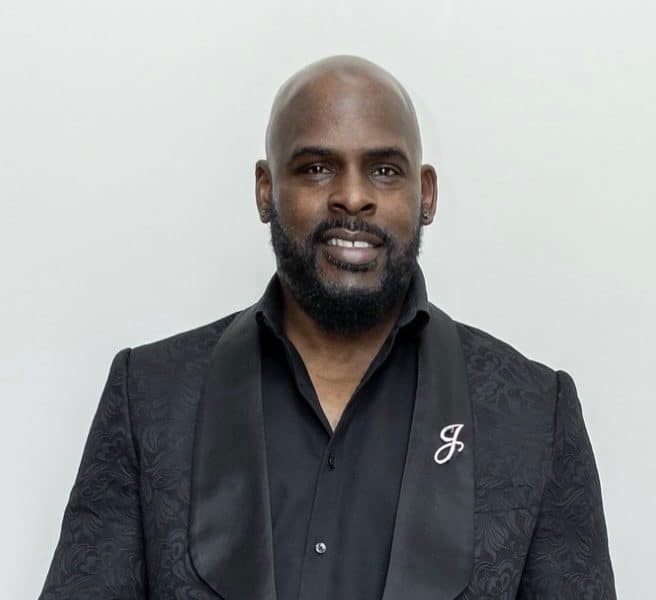
Edward Julian Sr. embraces poetry as a means to release and reflect
Ohio’s poet laureate features at Urban Arts Space tonight (Thursday, Sept. 24), appearing as part of the Poetry Festival, which continues through the weekend at Thurber House and the Grange Insurance Audubon Center.
Derf Backderf delves into the past, finds lessons for the present with ‘The Dissidents’
The Cleveland cartoonist will celebrate the release of his sprawling, deeply engaging new book with an appearance at the Wexner Center for the Arts on Wednesday, Sept. 23.
Barbara Fant returns to Columbus ready to leave her mark on Thurber House
The poet and newly minted executive director of the literary nonprofit will take part in a community reception welcoming her to the role on Thursday, Sept. 17.