
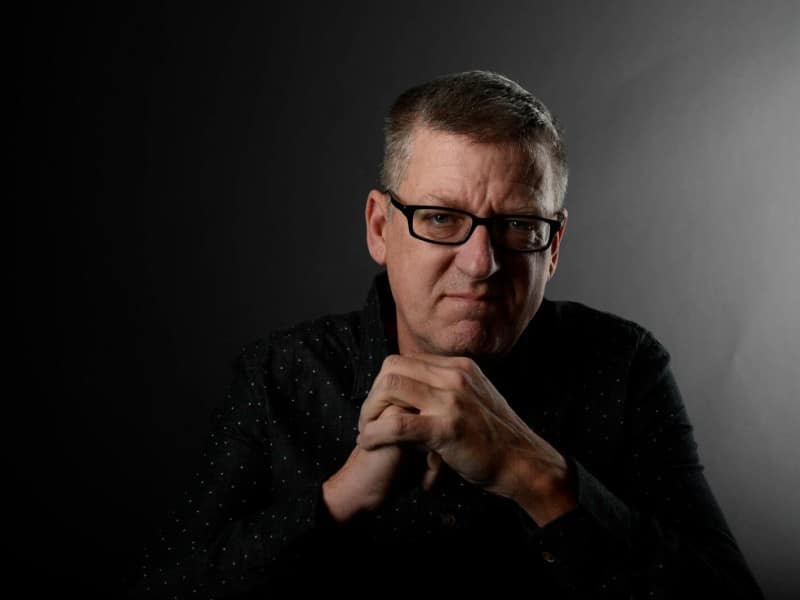
The urgency of the moment leads Christopher Sunami to ‘Free Your Mind’
The Columbus philosopher and author hopes to spark a larger conversation with his new collection, which he’ll celebrate with a release event at Clintonville Books on Wednesday, July 1.
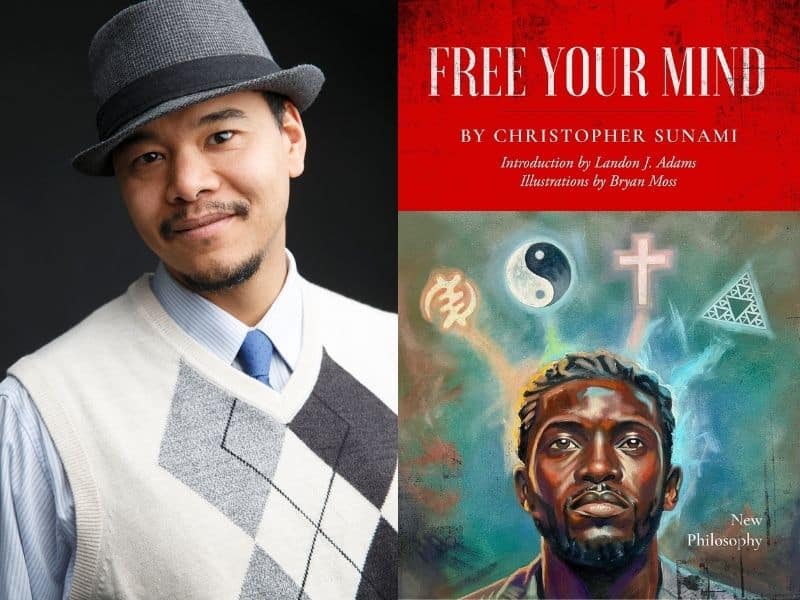
Christopher Sunami initially envisioned his first philosophy book as a collection of essays, eventually shifting away from the idea when multiple attempts at a draft failed to gain traction.
“I was just like, this is not engaging,” said Sunami, who experienced a breakthrough when he began to attend meetings hosted by the Columbus chapter of Black Men Build a couple years back. “And it was this circle of mainly young Black men, and they were having these really deep conversations. … And that atmosphere, that feeling of give and take, it really helped open things up, and it really brought things to life for me.”
Sunami said he’d previously never been much of a joiner, but he was compelled to give the organization a whirl following the 2024 death of Ernest Levert Jr., a friend and mentee who helped to establish the local chapter of BMB, in addition to founding the Royal Oak Initiative, a nonprofit aimed at utilizing chess as a means to connect with and guide the younger generation. The two first connected via a mutual friend early in the Covid pandemic, bonding in weekly fireside chats held outdoors that eventually dovetailed into more intimate conversations.
A donation powers the future of local, independent news in Columbus.
Support Matter News
“Ernest was a big thinker, and he would always ask me really interesting questions,” said Sumani, who soon realized that he needed to work to hold Levert’s attention. “And one thing I got into the habit of doing with him was turning [the conversations] into little puzzles or games, because he was so quick that if he figured something out, or if he thought he’d figured it out, he would just move on to the next topic. So, if I really wanted to make him think about something, I had to hide it or make it a little bit mystical.”
Both these one-on-one conversations and the larger group discussions Sunami took part in with BMB helped to inform his new philosophy book, Free Your Mind, which unfolds as a series of debates between fictionalized characters attending a meeting of the Secret Society of Builders, an imaginary group loosely inspired by Black Men Build, where they delve into expansive interrogations of topics such as race, the function of capitalism, and the nature of reality, among others.
For Sunami, philosophy has always existed not in the abstract but as a means to confront more concrete issues – an understanding he traced in part to his enrollment in an undergraduate philosophy course at Swarthmore College taught by Dr. Richard Schuldenfrei.
“I think the fact that [Schuldenfrei] started from a political standpoint and then kind of got into the philosophy of it really informed the fact that he still saw these things as very real-world oriented,” said Sunami, who will celebrate the release of Free Your Mind in conversation at Clintonville Books on Wednesday, July 1. “Philosophy was just something that was very alive for him.”
Sunami’s approach is further influenced by a natural curiosity that exhibited itself from childhood, his innate urge to question everything eventually leading him to deeply research the root causes of massive societal issues such as poverty and war, believing achievable solutions existed that could provide a more equitable solution for all.
“I think a lot of times the reason we’re not making as much progress as we hope we can make is that we don’t really have a strong vision of where we’re going or why we’re doing it,” Sunami said. “And so, for me, the push toward really getting into philosophy was just seeing a lot of stuff in the real world that was just not right and not sustainable. And, especially in the last few years, I’ve felt the need to pursue this more urgently.”
This urgency is driven both by personal landmarks – Sunami turned 50 not long after completing Free Your Mind, a birthday that led him to a period of deep personal assessment – and external factors including climate change and global warfare, both of which he said began to increasingly feel like crises that threaten the very nature of existence.
“I’m somebody who’s always felt like we were on the verge of crisis. … And throughout my young adult years, I was always rushing to get my ideas out, because it felt like time was running out,” he said. “But now I really do feel like time is running out. And I don’t feel like any of us have the luxury to wait any longer, because I do think a lot of things, like our social institutions, our governmental structure, our environment, I think all those things are reaching catastrophic points.”
If Sunami once approached his conversations with Levert as though he were building a maze, layering in complexities as a means to keep his friend engaged, then Free Your Mind adopts the converse approach, with the author introducing complex subjects and then breaking them down in a more digestible manner. Witness one back-and-forth between Professor Diotima (named after Diotima of Mantinea, a character from Plato’s Symposium) and the Young Conservative in which the Black elder cooly debunks the white character’s claims related to absentee fathers in the Black community, pointing as evidence to the mass incarceration of Black men propagated by the United States’ ongoing “War on Drugs,” whose architect, John Ehrlichman, an advisor to Richard Nixon, admitted on record that the initiative was meant to weaken the Black community and hamper its successes.
Though the characters and conversations are fictionalized, Sunami includes a number of details throughout that are rooted in his life and experiences growing up in Columbus and which serve to give the text greater dimensionality. Writing about how the headquarters of the Secret Society of Builders smells of sandalwood, for instance, the author links the scent to the visits he made as a child to Baba Obadina’s East Side art gallery. “He was a woodcarver, a good friend of my mother’s, and the first person I knew who represented an Afrocentric approach to life,” Sunami writes. “When I was little, we had often visited his gallery, which was also his home and his studio, and so the scent reassured me through its familiarity.”
“Those details were helpful, and they also gave me a chance to kind of celebrate the local community,” Sunami said. “One of the things I’ve learned as a writer is that if you’re writing for everybody, you’re really writing for nobody. And so, I really decided to lean into that local connection for this one, and it’s okay that not everybody will get the references.”
One thing that has remained consistent, however is Sunami’s belief that philosophy can help to provide solutions to a host of calamities that often feel out of our grasp, the author acknowledging that the greatest hope he holds for his book is that it might help to rewire the way that some readers think about the issues presented within.
“I really do still feel like there are solutions, and often simple solutions. It’s just that the solutions require us to have different values, to think about things differently,” Sunami said. “And so, the question becomes, how do we get there? What changes how people think? And I think this book is my attempt at that. … And not so much in saying that I have all the answers, but maybe by saying, this is a way of thinking that can get us to different answers than the ones we have now.”
Author
Related Articles
Edward Julian Sr. embraces poetry as a means to release and reflect
Ohio’s poet laureate features at Urban Arts Space tonight (Thursday, Sept. 24), appearing as part of the Poetry Festival, which continues through the weekend at Thurber House and the Grange Insurance Audubon Center.
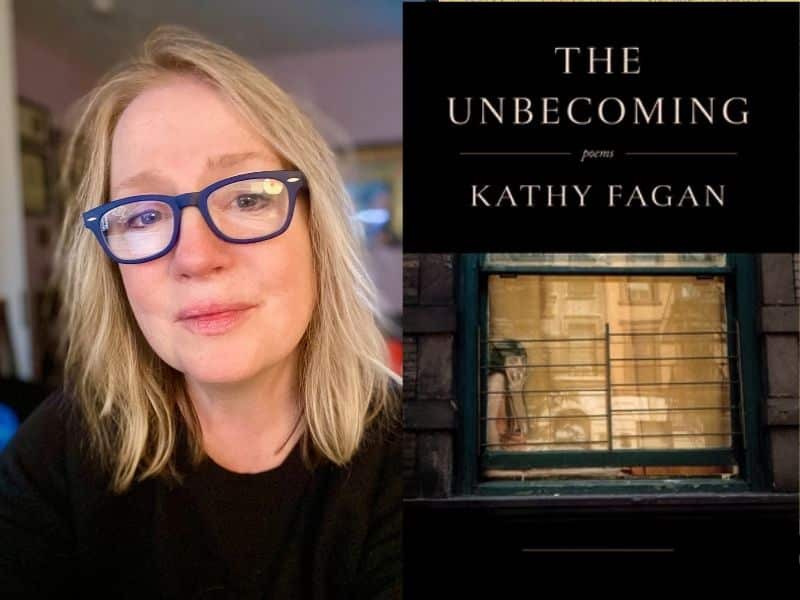
Kathy Fagan takes stock with ‘The Unbecoming’
The poet will celebrate the release of her new collection with a reading at Gramercy Books on Thursday, Sept. 24.
Derf Backderf delves into the past, finds lessons for the present with ‘The Dissidents’
The Cleveland cartoonist will celebrate the release of his sprawling, deeply engaging new book with an appearance at the Wexner Center for the Arts on Wednesday, Sept. 23.