
Opinion: Trifectas are only good for racing and the lottery
The legacy of Ohio’s Republican Party is corruption, scandal, and culture wars. Our votes could put an end to their occupation of state government.
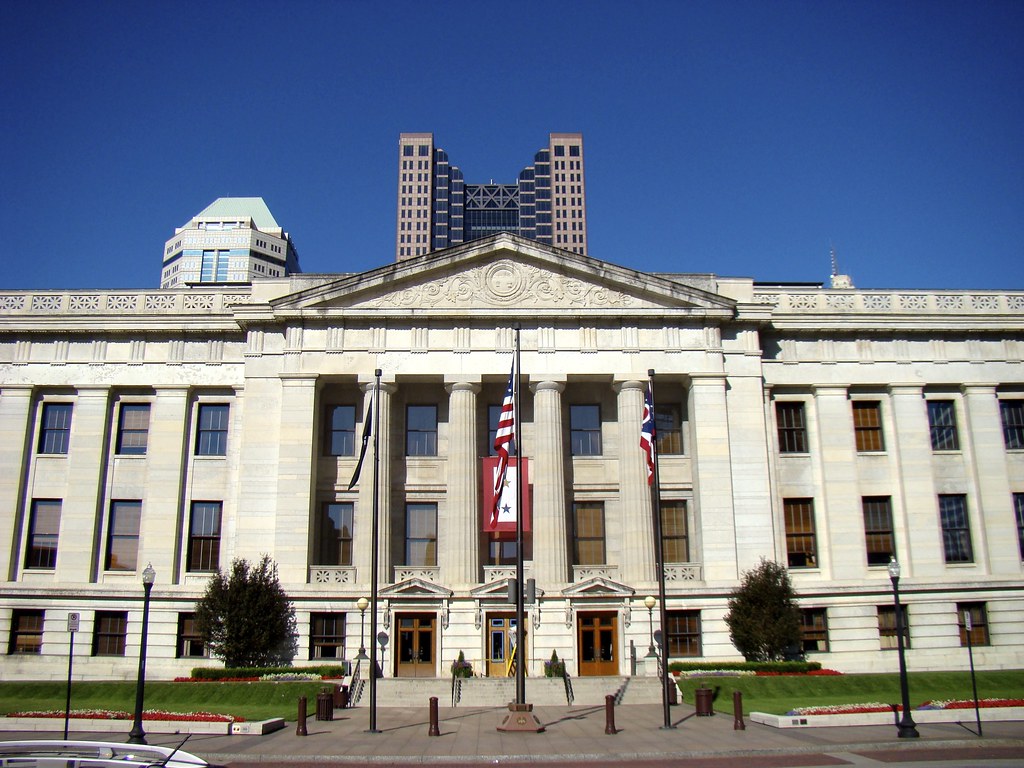
Here in Ohio, the Republican Party enjoys what’s known as a “trifecta,” having held the governorship and veto-proof supermajorities in the legislative chambers for the past 15 years. Some observers refer to this situation as a “one-party state,” or “party-state capture.” What it means for Ohio citizens is that we’ve been subjugated to the Republican Party’s questionable lawmaking absent challenge for years.
Ohio Republicans have kept their grip on power in part through gerrymandering, creating legislative maps that make it almost impossible for Democrats to break the existing supermajorities. The Ohio Supreme Court has repeatedly struck down districts created following the 2010 and 2020 U.S. censuses as unconstitutional, but somehow they remain in place.
Republican legislators have chosen to prioritize wedge issues such as limiting reproductive healthcare, DEI in higher education, LGBTQ+ and transgender rights, and advancing prayer in public classrooms. Significantly rising housing and living costs have occurred under Republican rule, yet their current gubernatorial candidate has blamed Democrats, who’ve been virtually powerless to address economic issues at the state level.
A donation powers the future of local, independent news in Columbus.
Support Matter News
Perhaps worst of all, the Ohio Republican Party has a long-documented history of major political corruption and financial scandal. As just one example, in 2020 the House Bill 6/FirstEnergy scandal included a $61 million dark money scheme and a $1.3 billion bailout for nuclear and coal plants, leading to the convictions of Republicans Larry Householder and then-Party Chair Matt Borges. It stands as the largest public corruption case in state history.
The upcoming midterm election represents a significant opportunity to rein in Ohio’s Republicans. All 99 seats in the Ohio House of Representatives are in play, and any less than 60 won by Republicans would end that supermajority. In the Ohio State Senate, races for 17 of the 33 seats could potentially end the required 22 Republican supermajority seats. Finally, a Democratic win in the governor race could allow for vetoes of Republican legislation that they could not easily overturn.
The U.S. senate special election pitting Republican appointee Jon Husted against Democratic former senator Sherrod Brown is also on the ballot, along with races in all of Ohio’s 15 U.S. House districts. Clearly, it’s extremely important that Democrats and Independents who oppose the Republican agenda vote in the upcoming election.
The turnout rate of eligible voters in Ohio in the 2022 midterm election was a mere 47 percent. It’s commonly understood that higher voter turnouts favor Democrats. Republicans have a long history of attempting to suppress voting, and current Trump administration efforts to subvert the election process come as no surprise.
If you haven’t yet, please make a plan to vote. Please also share the below resources as needed. The following information is included for Franklin County residents. Equivalent information can be found via the Boards of Elections for surrounding counties.
• Election Day is Tuesday, Nov. 3. Polls will be open from 6:30 a.m.to 7:30 p.m. Early voting occurs from Oct. 6 to Nov. 1 at the Franklin County Board of Elections (1700 Morse Rd.).
• To qualify to vote, you must be a resident of Ohio for at least 30 days immediately before the election. Franklin County residents can register here.
• The website linked above also allows you to confirm your voter registration, identify your polling location, and request an absentee ballot application. The deadline to submit an application for an absentee ballot is the Tuesday before Election Day, Oct. 27.
• Absentee ballot applications and completed absentee ballots can be placed in the secure drop box located outside the Franklin County Board of Elections at the above address.
• Absentee ballots must be received no later than 7:30 p.m. on Election Day to be counted. The drop box is checked every day by a bipartisan team of Board of Elections employees and is kept under 24/7 video surveillance. Due to recent Trump administration post office rules for mail-in ballots, some observers have suggested allowing two weeks for USPS delivery.
Ohio Democrats and Independents represent more than 60 percent of registered voters. A strong voter turnout could put an end to the Republican trifecta, and help create a state legislature that actually reflects the views of the majority of Ohioans. Voting is a civic duty. Please make your voice heard in this important midterm election.
Paul Nini is an Emeritus Professor and a past Chairperson in the Department of Design at The Ohio State University. He’s written for numerous design publications and has presented at a variety of national and international conferences.
Related Articles

The billionaire-backed think tank that wants to change harm reduction and homeless policy
Joe Lonsdale’s Cicero Institute contends that we can arrest our way out of the housing crisis, and that states must enforce laws ‘prohibiting open drug use, urban squatting, camping, and loitering.’
Opinion: You can’t talk about Issues 8 and 9 without race
A problem with the discourse around these issues is that it isn’t being completely honest when it comes to race. Not publicly, anyway.

If you start from a place of love, you can’t go wrong
A vigil for an unhoused community member who recently died in Newark served as a call to not look away.