
New Urban Arts Space exhibition opens up a conversation about death
‘Spirit & Dust,’ co-curated by Diane Callahan and Michelle Burdine, explores grief, loss, and the weight of mortality from a wealth of perspectives.
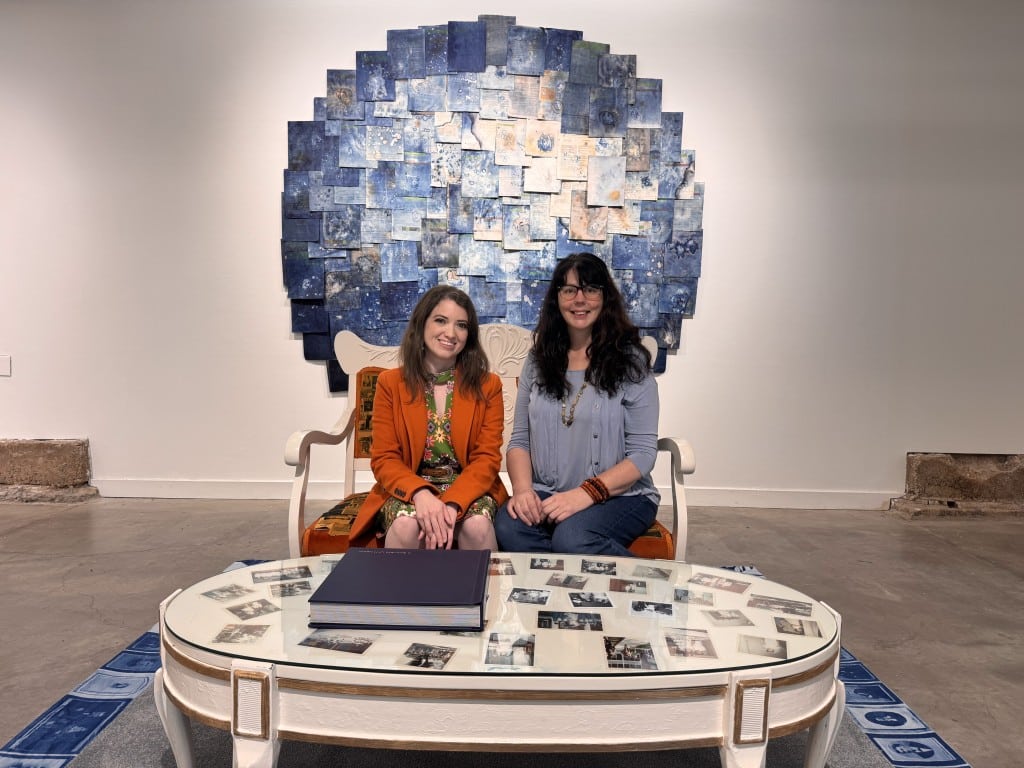
Diane Callahan, who co-curated “Spirit & Dust” alongside Michelle Burdine, traced the genesis of the new Urban Arts Space exhibition back to the first Death Cafe conversation she attended in 2018.
“And the principle of it is that you just gather to talk about what’s on your mind about death,” said Callahan, whose “Spirit & Dust” kicks off today (Tuesday, Oct. 13), with an opening reception planned for 5-7 p.m. on Friday, Oct. 16. “And there’s no agenda. There’s no religious motive to it. You just drink tea, you eat cake, and you talk for an hour or two. … And I really liked going beyond all the small talk and getting to the heart of things in life, hearing all these different perspectives on the afterlife and end-of-life care and the grief people had experienced in their lives.”
The meeting has surfaced in myriad ways in Callahan’s creative life, also informing her in-progress novel, which stages a core scene at a Death Cafe and includes a character who can see how people will die. And yet, Callahan said it was not an interest in mortality that initially compelled her to attend, but rather an internal pull that has always led her to seek out “anything a little strange or different,” as she explained it.
A donation powers the future of local, independent news in Columbus.
Support Matter News
A similar curiosity exists within “Spirit & Dust,” the assembled artists tracing an expansive path, with some interrogating death as intensely personal and others, such as Elvira Clayton, applying a wider lens, her hanging sculptures unraveling the impacts of slavery and the ancestral grief left in its wake.
Though centered on death, Callahan said a number of the pieces within the exhibit confront the grief left in a person’s absence – “As they say, grief is for the living,” she said – an emotional weight represented in a handful of works by the presence of stones. This includes a performance piece by Michael J. Morris slated to take place during Friday’s opening reception, which Callahan said will involve the artist interacting with a large stone for the two-hour duration, moving it slowly across the gallery, sitting with it, and lifting it. “Maybe as if they’re carrying grief, or the weight of death,” she said.
Personal tributes also abound, including a jarring sculptural instillation by Paul O’Keeffe done in remembrance of his son, who died by suicide at age 20. “And it’s this long, blue sculpture that ends in this almost portal structure. And on that structure is one of his son’s poems,” said Callahan, who added that the gallery will also have free copies of a chapbook assembled posthumously by the O’Keeffe family as a means to ensure that their son’s words “could be out in the world.”
In addition to co-curating the exhibition, Callahan, a writer and poet, also contributed a visual work that she envisions as the first part of a trilogy examining those deaths that have impacted her. Created in homage to her late father-in-law, the drawing of an inverted blue morpho butterfly recalls the hours she and her former husband spent with her in-laws at the Franklin Park Conservatory.
“And he told us on that trip he had lung cancer. And then he ended up dying three months later,” said Callahan, who can still recall the moment on that visit when a blue morpho butterfly landed on his hand.
Callahan acknowledged that part of her interest in delving into mortality extends from her fears of old age and death, the curator sharing how she carries with her an anxiety that some tragedy will befall a loved one, leaving her to carry onward amid grief and loss.
“And I think when we are able to talk about death very openly, and hear other people’s stories and experiences, it creates this collective story and collective memory that feels very comforting,” she said. “It gives you this place of belonging and this place to share feelings that are really scary if you’re experiencing them alone.”
In curating the space, Burdine and Callahan kept this idea close, envisioning the gallery as a place where not only could visitors engage in conversations, but also the artworks themselves. As one example, Callahan pointed to a quilt by Elvira Clayton placed adjacent to one of Ton’nea Green’s paintings, the two sharing qualities that the curator described as watching “the past engaged in conversation with the present and the future.”
“I think we were very intentional in how we laid everything out,” she continued, noting how the two created paper floor plans and digital renderings, diving into the different ways the works could interact. “And always with that idea in mind: How does this piece sit in conversation with the one near it?”
Having spent years engaged in this process that forced her to consider and sit with death, I asked Callahan if her fears of the end had in any way lessened.
“No, absolutely not,” she said, and laughed. “But it’s funny, there were things [with the exhibition] that didn’t go as planned, which is always the case, and I had to remind myself that I can’t worry so much about the small stuff because we’re all going to die someday. … So, it’s like I have these two minds at once now. It’s one living in the moment, being annoyed or angry or disappointed about things happening now. And then there’s this other part of me that can take a more objective view and be like, you know, my life right now is literally making a show at an art gallery, which is a beautiful thing and a privilege. And how amazing is it that I get to live this life?”
Author
Related Articles
Scrawl meets Scrawl
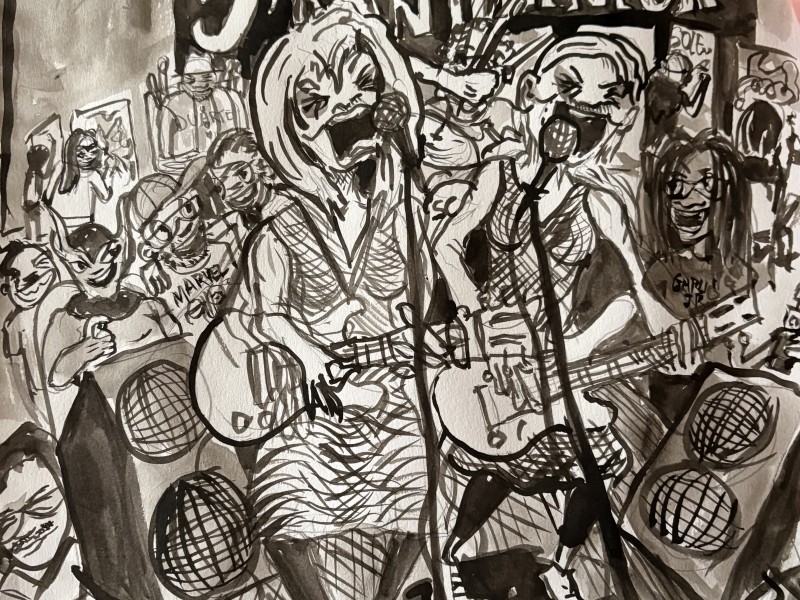
Marcy Mays and Sue Harshe recently joined pioneering Urban Scrawl artist Dan Gerdeman for a conversation ahead of the band’s performance at the Franklinton art event that has been a longtime source of confusion for some of their fans.
‘Immigration: A Journey of Belonging’ seeks deeper understanding
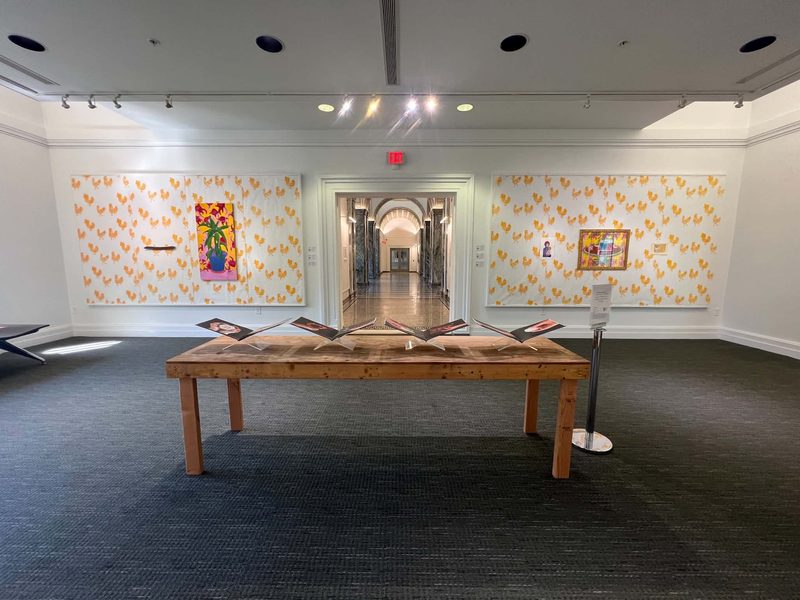
The new group exhibition, open now at the Losinski Gallery at the Main Library, will host a reception from 2-4 p.m. on Saturday, Oct. 3.
Deep conversations pave the way to ‘Chasing the Light’
A couple of years ago, Loren Bucek invited a group of artist friends to her Clintonville home. The gathering soon evolved into regular meetups that shaped the creation of a new exhibition opening this week at McConnell Arts Center.