
Villagerrr’s Mark Scott would gladly hop off the industry ‘Carousel’
“I was getting a little frustrated with feeling responsible for promoting the album, because putting yourself out there, it’s not the most comfortable thing for a lot of people, and it definitely wasn’t for me.”
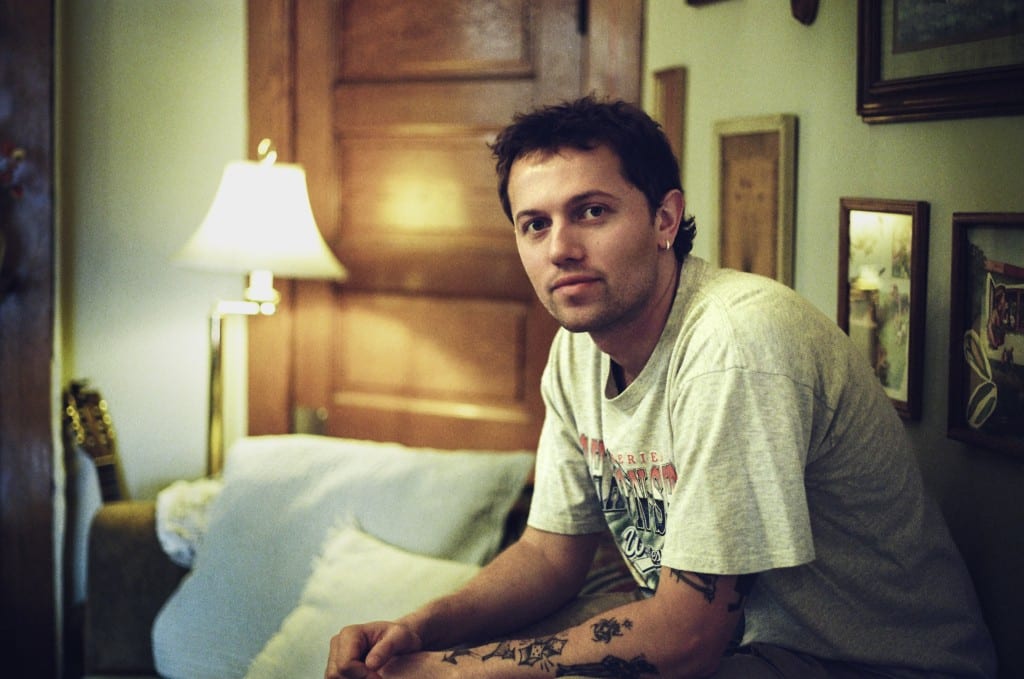
A handful of songs on the latest villagerrr album, Carousel (Winspear), find Columbus singer and songwriter Mark Scott navigating the weight of expectation he felt when Tear Your Heart Out, from 2024, broke containment, allowing the homespun project’s profile to reach a point where he could launch tours of both the U.S. and the U.K., in addition to landing prime slots opening for the likes of Ratboys and Friko.
“Would you play if there was no one around? No Clout, just sound,” Scott sings amid the gauzy churn of the title track, while “Gleam” addresses the conflict of commodifying one’s art (“Put my feelings all on display/For pay”). Then there’s the semi-ironic “Roadstar,” which at its core appears to be about the challenge of maintaining a relationship while pursuing a career that forces you away for stretches, but which also includes the tongue-in-cheek line, “And you know I want to be/Bigger than TV.”
“I feel like I was almost freaking out a little bit about more people potentially paying attention and hearing the songs,” Scott said by phone ahead of villagerrr’s 6 p.m. concert at Cafe Bourbon Street on Thursday, Oct. 15, supported by Shep Treasure. “And I think I was getting a little frustrated with feeling responsible for promoting the album, because putting yourself out there, it’s not the most comfortable thing for a lot of people, and it definitely wasn’t for me. … And not all the songs are about that stuff, but I think some of them pretty directly are, and it felt good to address it.”
A donation powers the future of local, independent news in Columbus.
Support Matter News
As one example of this promotional carousel, Scott pointed to his recent experience playing “Would You Rather,” a social media trend in which a subject appears on camera and is asked to choose between two pieces of art, with the selected work advancing to face a new contender in a series of bracket-esque rounds. (In Scott’s case, he selected The Glow Pt. 2, by the Microphones, over the Cocteau Twins’ Heaven or Las Vegas in the opening bout, and then again over Siamese Dream by Smashing Pumpkins in round two.)
“And I just got flamed so hard for what I was picking, which I guess is the point, that it’s supposed to be controversial. … And people were calling me a rate-your-music snob and asking how I liked my matcha, and I was just like, why in the world?” said Scott, who was more troubled by those commenters who brought up his appearance, slagging him as “super white” (Scott’s dad is half Black). “And I feel like that’s the kind of shit I would have gotten made fun of for in high school. … And that’s just one small reason why I have no interest in becoming a personality or an influencer or whatever. And I get worried that idea is inseparable from music, in some ways, unless you decide to stay completely offline, which is valid, but which also makes it hard to make a career out of it.”
In some ways, Carousel developed as a means for the musician to interrogate these dynamics, allowing him to grapple with the want to keep the art pure while also desiring his songs to find a larger audience. “Selfishly, yeah, I want people to hear it and connect with it, and I hope at its best it can make them feel a little bit better,” he said. “But, yeah, [the industry] can also feel draining and humbling and a little humiliating. … And maybe the dream is one day to have done the work where … we can pull back a bit on the visibility side and the availability and focus more on playing shows and talking to people at shows and just hanging out and having it be a more intimate experience.”
The connection Scott hopes others find in his music aligns with what has long drawn him to the form, which he described as “therapeutic,” sharing how, for him, the act of listening remains a private, intentional act. Rarely will he throw music on in the background, he continued, preferring to be fully engaged with the experience. The same goes with the act of songwriting, Scott acknowledging that he’ll rarely pick up a guitar just to fiddle with it, sitting down to write only “when I have this really strong feeling that I want to make something.”
The intentionality with which Scott creates within villagerrr resonates in the dreamy sonic world he has built and continues to inhabit on recent albums, his music instantly recognizable as entirely his own. When I recommended Carousel to a friend earlier this year, he replied after first listen that the music was “a vibe,” which sounds nebulous but is also entirely accurate, Scott’s hazy, beautifully shambolic songs universally exuding the warmth of late spring no matter how calloused the sentiments he’s expressing might be.
“I’ve not been making music for a really, really long time, but I do think maybe four albums or so ago, I just sort of started being influenced by myself, if that makes sense,” he said. “And instead of looking to other bands or trying to mimic other people … it started to become more like, okay, why wouldn’t I just lean into my own strengths and try to further develop that?”
While villagerrr might inhabit its own music world, Scott is all too aware of the fast-corroding reality the band actually occupies, describing the songs he’s written more recently as focused on those friends, family, and experiences that have left him feeling “more optimistic for the future – at least in my personal life, since I still feel like there’s a lot of fucked up stuff going on.”
“Sometimes I’m just like, dude, people are crazy. And at my worst, I’m like, people are evil,” Scott continued. “People are always trying to bring you down. People are bombing people in other countries. … I feel like me and my friends have hearts, and stuff just gets pretty heavy sometimes. And I kind of feel like that’s the Carousel thing. It’s like, okay, we’re going to toil away doing this thing. And we’re going to put ourselves in a metal box and drive 100 miles per hour across the country and guzzle down gas and make people buy drinks at bars. And I don’t know. It just feels like we’re part of the problem. And maybe it’s hard not to feel like that living in the U.S.”
Author
Related Articles
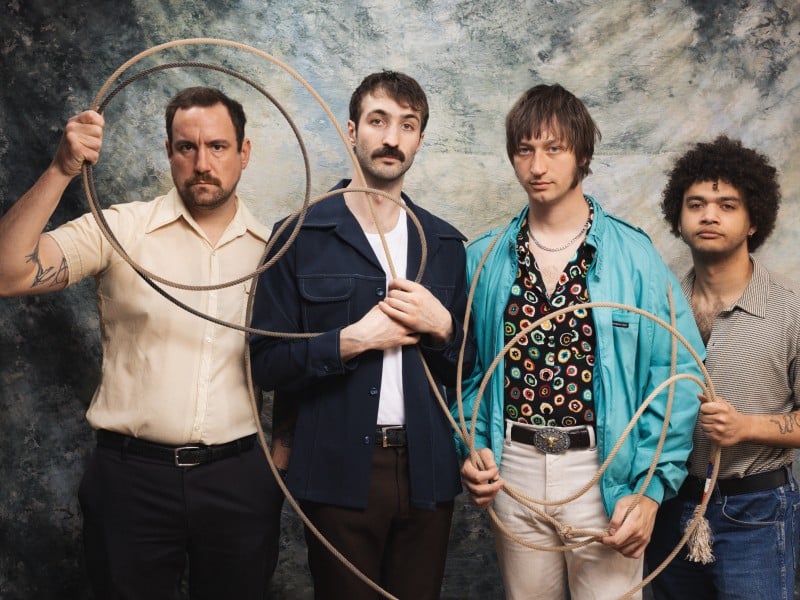
Liteweight Champion survives the fire
The Columbus rock band will celebrate the release of new album ‘Geronimo Hardstyle’ in concert at Dick’s Den on Friday, Oct. 9.
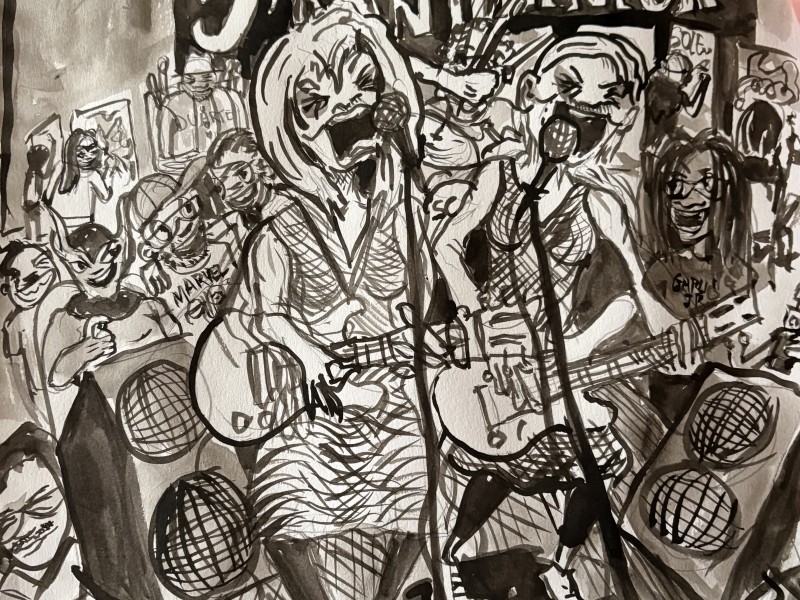
Scrawl meets Scrawl
Marcy Mays and Sue Harshe recently joined pioneering Urban Scrawl artist Dan Gerdeman for a conversation ahead of the band’s performance at the Franklinton art event that has been a longtime source of confusion for some of their fans.
Cordyceps Corpse keeps it brutal with ‘Perverse Craving for Rotting Corpses’
Columbus multi-instrumentalist Nani Porter is a growing force in the world of slam metal.