
Opinion: You can’t talk about Issues 8 and 9 without race
A problem with the discourse around these issues is that it isn’t being completely honest when it comes to race. Not publicly, anyway.
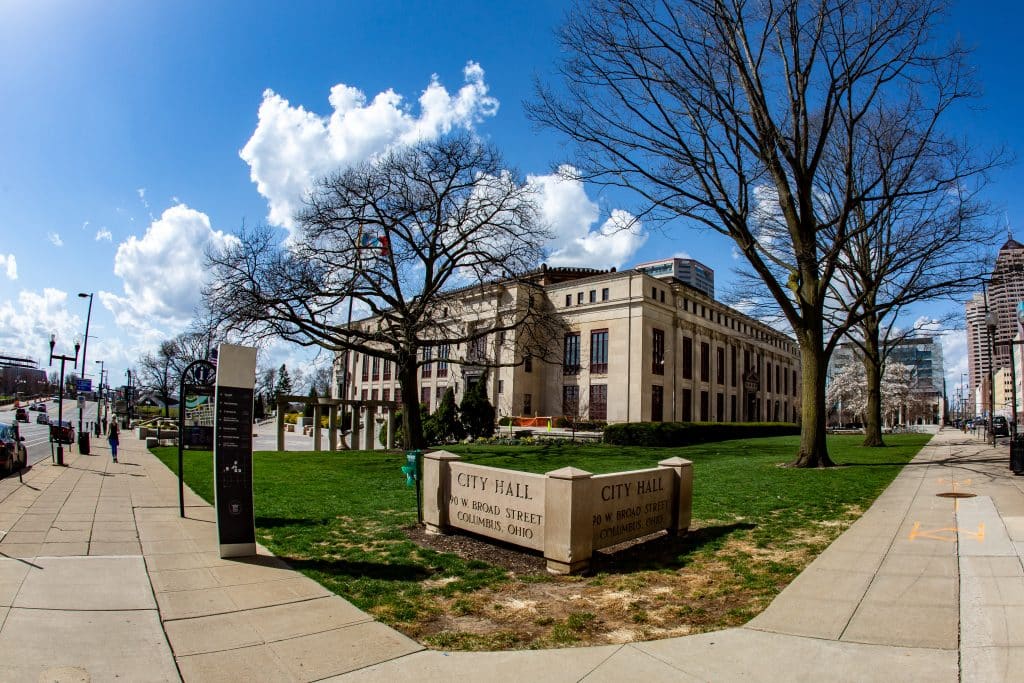
I want to talk a little bit – not comprehensively, not thoroughly – about Issues 8 and 9. These proposals are attempts to change how Columbus City Council members are elected.
(If you’ve never heard of these issues or knew that this is what they were designed to address, I should not be your first stop. I will only be addressing a couple of very specific concerns.)
A problem with the discourse around these issues is that it isn’t being completely honest when it comes to race. Not publicly, anyway.
A donation powers the future of local, independent news in Columbus.
Support Matter News
No surprise there, of course. Politics is racial. But what I’m referring to specifically is how much of the current momentum behind getting 8 – and its cousin-in-a-trenchcoat 9 – to the table didn’t happen until Jesse Vogel lost his race against Tiara Ross in District 7 last year. All of a sudden, everyone HAD to make a stand against the 100-year-old at-large system versus a ward system.
Fact: The minute you draw a political action line in the sand against a Black person, it looks like you don’t think they should have the job. There may be plenty of reasons to not want someone in a job, but politics is racial and it has optics. It’s hard to talk about honestly on any side, and it has real costs.
(Of course, there are always plenty of Black people who just want Black people in those jobs whether they accomplish anything or not, which is also a problem. And they’re usually very vocal without being 100 percent honest about that.)
The fact that the Vogel/Ross election played out the way it did doesn’t help matters. Black people from outside of District 7 nudged Ross over Vogel. If it weren’t for those Black voters who want Black representation but don’t even live in District 7, Vogel would have won.
The dialogue since that election hasn’t spent a lot of time pointing that out. Why? Because to say it out loud makes it sound like you don’t want Black voters to participate. Political NIMBY: “I don’t mind Black voters participating. I just don’t want them voting in my backyard.”
(I say all of this aware that Ross had all kinds of problems out the gate, like not living in the district, among other, very real concerns. If I lived in District 7 I probably would have voted for Vogel because of his stand on issues I care about. But then my vote would have likely been offset by one of my brothers on a different side of town. Damn you, T*** and S****!)
I don’t know Vogel or Ross. Having a predominantly POC City Council for a long time now has shaded what I want “representation” to mean. What I do know, and this is the fear of many Black people, is that if there are fewer or no Black people on City Council, they absolutely will not have their problems addressed. Both issues give us that possibility because of how districts break down ethnically. Issue 8 makes that easier to pull off, but 9 could do it too. Equally? Hard to say. None of us knows who will run for* or sit in the seats.
*Some people know some of this now, but not across the whole council, I gather.
The data is this: Black voters in Columbus win more races with at-large voting. If you think the white people trying to make either of these changes don’t know that, you’re fooling yourself. (Is that generations of redlining and neighborhood busting via freeways coming home to roost I smell?)
This was kind of the implication during the blowup last year over the Supreme Court decision that gutted the 1965 Voting Rights Act with the case of Louisiana v. Callais: If you don’t have any predominantly Black wards in a city with 30 percent Black people, what kind of maps are you using? And who are you qualifying to redraw the maps (which is a kicker in both issues 8 and 9)? Are you a white person trying to use a racist Supreme Court decision in your favor locally?
The crookedly-applied at-large system we’ve employed to date (by which I mean the last 110 years), Columbus City Council has never been more diverse. The problem is that the political machine of Columbus makes it very difficult for POC politicians to do anything on behalf of non-white communities…
(Mind you, I’m not suggesting that those politicians have been leading the charge on much of anything concerning POC communities, especially Black communities. In fact, let me help matters by not saying “communities,” which are easy to dialectically infiltrate in these discussions, and start saying “neighborhoods,” where the outcomes are more concrete. That’s how you can tokenize a developing area like, say, King-Lincoln against efforts to develop areas like Linden in similar fashion.)
…on behalf of non-white neighborhoods.
Black folks don’t trust that, in a city in which the current lines are drawn against our population numbers (again, 30 percent of the city), that we will have Black people representing us. And yet, it’s how we’ve ended up with a lot of Black politicians and city leaders who haven’t served us well, either by design, agenda, or default.
The concern from the other side of the street is that having at-large seats mixed in will continue to serve power brokers and political machination over people. With four seats going a certain way, you only need to gather a few seats to their side to move the needle on anything. Why should we assume that the four at-large seats will be a block? Because that’s how City Council has traditionally operated. It’s how you end up with a City Council voicing dismay over things of which they’re actually voting in favor. (See: McCoy Park.) Also, I hope you like more Republicans on your City Council because you’d be “surprised” at how many of them haven’t had a shot at a seat because of the at-large system. Once you start giving Republican pockets – again, sorry, neighborhoods – a shot at ward-based seats, expect some long City Council meetings.
Too much trust has been broken to assume it wouldn’t work that way. The fact that the current City Council is presenting Issue 9 practically seals the deal for most people. You almost want to vote against it on that fact alone. Why would anybody create a system that would draw power away from themselves? Change of heart? Please.
Some people have less of a problem than I do with the way City Council has operated, which is to allow a council member to step down, install a new person internally, and then run that person with the full support of the party machine against any outside challengers, each of whom loses in perfectly legal and democratic fashion every time. People who are okay-enough with that process aren’t as concerned that some of those chosen players might end up in at-large seats (or someone of similar alignment). Those voters want just enough change to fend off detractors.
All of these changemakers are asking voters to put premium-grade trust in the tank of a political system after years of less-than-basic unleaded results. Both issues want us to place an inordinate amount of trust in them without speaking very much on what they think will happen, besides, “Well, it’ll be different.”
I get that, but different how and for whom? There are many versions of Columbus working all of the time. How are the 12 Columbuses I engage with going to be impacted by either of these changes? Hard to say.
A lot (not all) of the talk coming from Issue 8 folks is right, but pulls up short of addressing racial inequities. They will tell you that they have every intention of helping install people who understand these things. A lot (not all) of the talk coming from Issue 9 folks is piggybacking on Issue 8 (which is intentional). They will tell you we have to get more people to vote at-large for who we think will hurt us less.
Bottom line #1: If you aren’t engaging Black concerns in discussions about Issues 8/9 then you’re either a) not concerned with Black neighborhoods; b) think that justice will trickle down to Black neighborhoods contrary to all of history; c) want to get what you want by bulldozing Black applications with silence; or d) don’t know enough Black people willing to have an honest conversation with you about the kind of thoughts and histories I’m describing.
Bottom line #2: The way the elections work now is a sham. They must be changed. Issues 8 and 9 are not close to perfect. We won’t even know if they’re better until we get some seats filled and see how they work. But can we risk not trying to change in any direction? Can we continue to survive the status quo?
Related Articles
Opinion: Trifectas are only good for racing and the lottery
The legacy of Ohio’s Republican Party is corruption, scandal, and culture wars. Our votes could put an end to their occupation of state government.

If you start from a place of love, you can’t go wrong
A vigil for an unhoused community member who recently died in Newark served as a call to not look away.
On Development: Rapid-transit is moving slowly. Maybe we need a new model
Our policies suggest a willingness to spend any amount to add lanes and bigger (towering!) interchanges for major highways, while transit spending is too often regarded as frivolous.