
The Other Columbus: Columbus police stay in the news for all the wrong reasons
Dozens of local police traveled to Milwaukee to provide security support to the Republican National Convention. Five of those officers shot and killed an unhoused Black man named Samuel “Jehovah” Sharpe Jr.
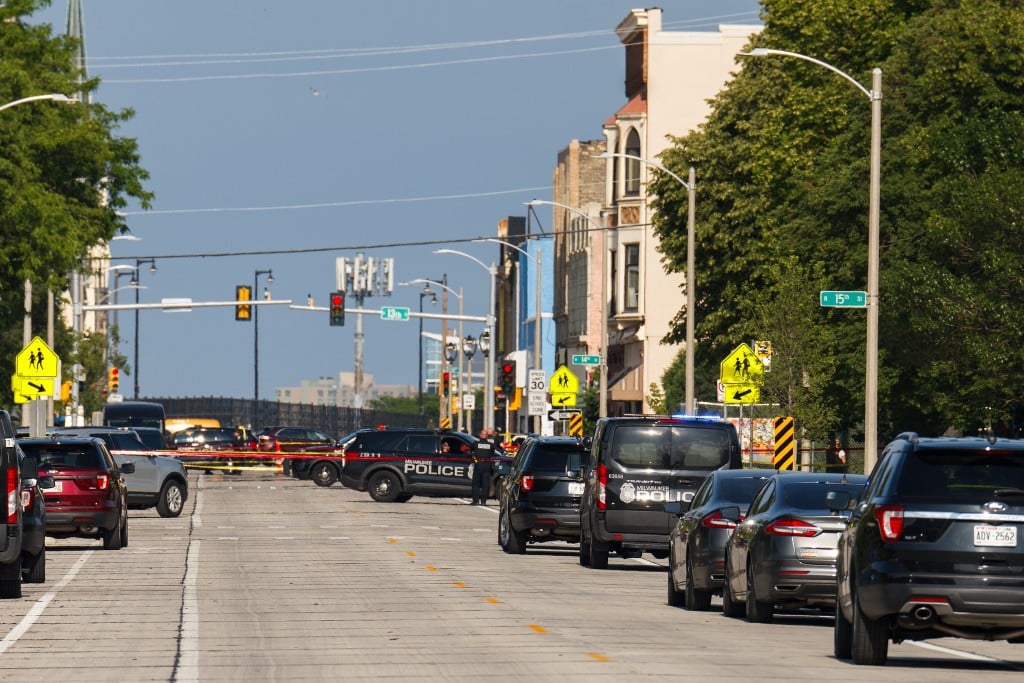
Here is a description of events that occurred yesterday in Milwaukee that cannot be disputed by anyone: Dozens of Columbus police officers traveled to Milwaukee to provide security support to the Republican National Convention. A number of them were assigned to the outer security perimeter, approximately one mile away from the convention. Five of those officers encountered, shot and killed a Black homeless man named Samuel “Jehovah” Sharpe Jr., who was in an altercation with another man. Body camera footage released by Columbus police showed Sharpe holding two knives.
Since we are, all of us, in a constant state of nerve-fraying “what’s next?”-ism, let’s start off with the thing we always have to say when it comes to police shootings (but especially shootings by Columbus police, which are notoriously suspect): Never believe the cop’s version of the story out of the gate. I have lost count of how many times the story a police department has released turned out to be false upon review of actual evidence, which is often delivered later when no one is looking, and usually under duress. That said, bodycam footage from this specific incident suggests that Sharpe was going to harm another person and the police had to do something. I guess I wouldn’t debate that either.
What I take issue with is how often these scenarios, especially when it comes to Columbus police, end in quick, sharp death. There is something wrong with our idea of safety when you can shoot someone with a knife by firing squad and not label it excessive force, much like the idea that political violence is never the violence politicians inflict on millions of people every day.
A donation powers the future of local, independent news in Columbus.
Support Matter News
I am not always looking to accuse police of wrongdoing. In fact, I am never looking for police at all. The less contact I have with an officer, the better. As far as I’m concerned, whenever an officer is present, the risk of something bad happening increases. Whenever an officer enters a space – a business, a school, a shelter, a park – the nature of the space changes. It conforms to the will of the officer, not to the will of the owner or the manager or the principal or the victim. Whatever purpose the space served before the presence of police is upended. I treat the presence of police anywhere like an active shooter situation: put space between me and the potential assailant, get as far away as possible, try not to attract their attention in any way.
I have lived in Columbus all my life. I have had a healthy fear of the police the entire time. My fear is healthier than attempting to convey respect, which I have discovered from experience is not a relationship in which they’re interested. That would be true even if I weren’t Black. But it is especially true because I’m Black.
Columbus has seen this reality play out at the end of a smoking gun so many times here it boggles the mind. Our police are a special breed of slick. They’re like the Dukes of Hazzard, constantly ending up in sticky situations but managing to evade any accountability for their brazen, life-wrecking solutions. When you can name your bad cops (hey, Zach), your city has failed you. Somehow, it made an evil sense that police from Columbus would find themselves in this situation. It’s The Columbus Way.
The citizens of Columbus have attempted every legal route to change policing. We have marched. We have protested. We have lobbied and sat down with political leaders. We have written letters. We have played ball and made committees and task forces. We have prayed for, over and with. We have conceded. We have legislated. We have bargained with and gambled on. We have dumped more and more money into the money pit of expectation. And yet, nothing has changed. So much has been committed to the cause of right-correcting Columbus police that the outcomes make plain that there is no change to be had.
I’ve said this before, during the nationwide celebrations that followed Derek Chauvin’s April 2021 conviction for the murder of George Floyd. On the same day the jury handed down a guilty charge, a Columbus officer shot and killed 16-year-old Ma’Kiah Bryant within seconds of arriving on the scene. She had a knife, too, and was in similar distress. The questions I’m raising now were raised then. They were answered with no change in policing.
I have heard every answer there is as to why police automatically go for the most lethal option in situations like this. While I am not impervious to reason, these flashpoints never change anything for me. At the point that there are many officers to one person – even an armed person – there remain options. I get why de-escalation tactics may not have been much of an option here, but if they’re never going to use tasers, why purchase or carry them? Are warning shots just for movies? I never leave these sad situations feeling like a barrage of lethal firepower was the best answer.
Kenneth Johnson, who volunteers regularly in the area as part of Friends Without Shelter, said something that I can’t get out of my head: “They shouldn’t have jurisdiction to be in this area. This isn’t near where the zones are. These are tent communities over here; they shouldn’t be over here.”
That last line – “These are tent communities over here; they should be over here” – is a gut-wrenching way to interpret “to protect and serve.” Johnson understands that police transform spaces with their presence. They aggravate. They look for problems in places they may not exist. When they find problems, their reaction is not to de-escalate or interpret or smooth over. It is to exterminate.
A tent community is a delicate space. They are places given rise by deep and constant needs, tempered with occasional hope and brief respites. They are communities with leaders and values. They are fragile, always balancing between managing the harshest of human conditions with finding a way to survive long enough for the next bit of help to manifest. God help you if your needs stretch beyond your ability to manage them on a given day, when your mind cannot contain the emotional weight of a world that would rather you die than find a way forward. Or worse. The last thing you want anywhere near a space like that is a police officer, let alone a phalanx of them from out of town.
It is admittedly easy to armchair quarterback a situation like this, to see conceptual things that a gang of officers on the ground doesn’t. But I refuse to believe that there is no better way for people adorned with weapons, technology and the deference given to them at all times to deal with such situations. Yes, no matter how abrupt or fast or surprising. I may not have faith that they want to be those kinds of servants, or that the system that employs them has any interest in providing such service, but I refuse to believe there is no other way. It is easier and truer to say they have no will than to say there is no path.
Related Articles
On Development: Rapid-transit is moving slowly. Maybe we need a new model
Our policies suggest a willingness to spend any amount to add lanes and bigger (towering!) interchanges for major highways, while transit spending is too often regarded as frivolous.
Local Politics: Drain the swampy Municipal Courthouse
Columbus wants to renovate the Franklin County Municipal Courthouse instead of replacing it. The people who work there say this very wet “derelict” building is beyond repair.
Opinion: Flock cameras won’t make us safer. Here’s what will
Flock Safety, the company behind the cameras, obstructs any attempt to establish guardrails, accountability, or transparency. Amazon is no one’s model for corporate responsibility, and even it cut ties with Flock.