
Cameron Granger’s debut video game doubles as a love letter to the Columbus DIY scene
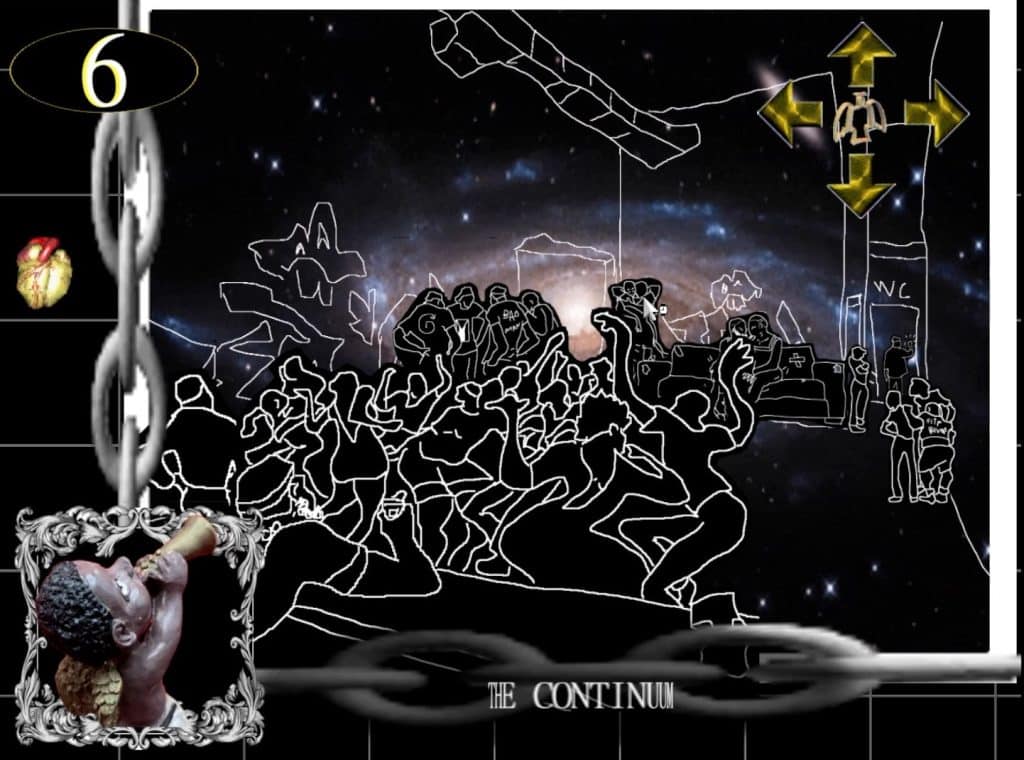
In ‘Sidechain,’ set at a warehouse party on the final night before the world ends, players navigate scenes that draw inspiration from the formative years the artist spent frequenting spaces such as MINT, Corrugate, and Skylab.
In late February, artist and filmmaker Cameron Granger attended Dweller Fest in New York City, describing the surreal experience of emerging from an at-capacity early morning set by Travella and stepping into a full-on whiteout.
“We got there maybe 20 minutes into the set, drums were going, people were dancing, homies were there. … And at the end, you’re covered in sweat, and it’s not just yours, but sweat from five or six people,” Granger said by phone in late April. “And when my partner and I went to dip out, we were in this massive traffic jam of people. … And we started to see all of this snow coming down, and it was really light and fluffy. … It was almost like that week, that set, that program of really transcendent Black music had ripped open the veil, and that storm was kind of the aftershock.”
With his first video game, “Sidechain,” Granger aimed to capture a similarly transportive experience – one he has long associated with these types of underground DIY events and spaces, and in particular those he frequented during his formative years in Columbus, including MINT, Corrugate, Skylab, and No Place Gallery.
A donation powers the future of local, independent news in Columbus.
Support Matter News
“And those are the places where I really became an artist,” said Granger, who began to experiment with creating his own video games last year after working as a teacher’s assistant in Blake Andrews’ 100 Games Later class at the School for Poetic Computation. “I was shaped in these warehouses. Those were the spaces where I learned how an artist is part of a larger ecosystem, and where I learned the value of play, of experimentation, and how it feels to be part of a lineage of artists. And not even just you and your friends, but the people who came before you. You’re standing on well-traveled ground. And that’s a cause for celebration.”
“Sidechain” is built upon similarly well-loved terrain, informed by a wealth of source material that includes among other things: the Ife Olujobi and Garret Allen play “Down & Out”; McKenzie Wark’s book On Raving; a 2016 interview in which reclusive Cybotron cofounder Rik Davis discussed his experiences in Vietnam; the work of artist Ernie Barnes, and in particular his iconic painting “The Sugar Shack,” whose elastic figures served as templates for the onscreen characters existent in Granger’s game; John Akomfrah’s 1996 Afrofuturist documentary “The Last Angel of History”; and the book Assembling a Black Counter Culture by author DeForrest Brown Jr.
Granger said he was initially drawn to game development by the way it engages myriad senses, from sight and hearing to touch, with players required to physically manipulate their computer mouse to navigate these digital spaces. “There’s a full body sort of enactment happening when you play a game. And to me, it’s similar to how you experience a good set, where you don’t just hear it with your ears, but you feel it in your body, you feel it in your soul,” said Granger, who fleshed out the game’s soundtrack with cuts that range from atmospheric to more hip-shaking, a handful of which arrive courtesy of DJ and fellow Columbus expat Love Higher.
In “Sidechain,” which you can experience by clicking here, players are tasked with guiding the Angel of History into a warehouse party, across the dance floor, and to the DJ booth. Along the way, players confront a diverse cast of characters that include an unhoused veteran and an array of partygoers, each imbued with a layered backstory discernible even in these brief interactions. In developing these three-dimensional characters, Granger said he looked to the Bill Gunn film “Personal Problems,” from 1980, drawn in by the way even the movie’s minor characters appear to have complex identities not restrained to what is shown onscreen.
“You get the sense that all of the people these characters are interacting with, even in passing, have these very full life-worlds,” Granger said. “And I wanted to show some of that fullness. I think for [the game] to feel authentic, the characters you’re encountering throughout this night have to feel like living, breathing folks.”
The elder unhoused man, for instance, makes only a brief appearance, but in developing the character Granger found himself diving down internet wormholes, researching the wartime experiences of military veterans, but also unpacking his own memories, lingering on the unhoused people he used to engage in conversation outside of MINT. “So, we’re doing this one thing inside the warehouse, and then there’s this whole other world happening just down around the corner,” he said. “And I wanted to bring that into the game, because these spaces are a meeting place for all of these histories.”
Granger sets the warehouse party in “Sidechain” on the last night before the world ends, describing this as “a practical decision” meant to frame the action and keep the programming aspect manageable. Gradually, however, this applied arc began to tease out unexpected dimensions for the artist, who came to see in the game a more literal twist on the kinds of experiences he recalled having on countless occasions within DIY spaces.
“And that apocalyptic [element] started to feed in as I was building everything. And the characters, which I was doing as I looked at a lot of these Ernie Barnes paintings, became more elongated and wispy, almost like these spirits or ghosts … passing through this space,” Granger said. “There are so many people that I’ve had these really intimate conversations with at a party, and then I never see them again. And maybe some of that is drugs or alcohol, but there’s also a certain undressing that happens in these spaces, where all of these things are just colliding together. … But eventually we’re all going to leave this party and continue to live our very separate lives. And some of us may be in community with each other, and some of us may not be. Some of us might see each other next weekend, and some of us might never see each other again. But I don’t think that makes what unfolded here any less valuable, any less impactful, any less necessary.”
Author

Related Articles
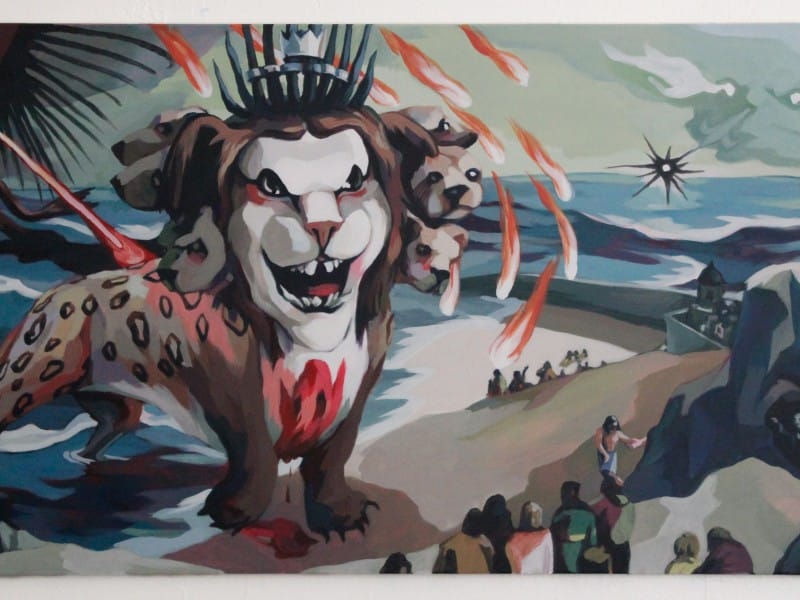
Aaron Burleson explores the nature of reality at Chaos Contemporary Craft
The Columbus artist will celebrate the opening of ‘Touchdown Jesus’ with a reception from 5-8 p.m. on Friday, April 17.
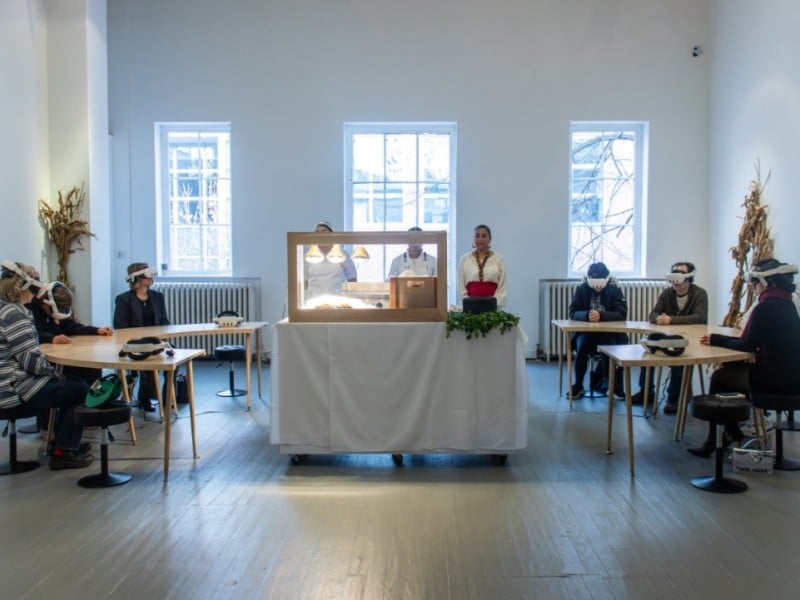
Artist Illya Mousavijad and chef Cristina Martinez bridge continents, cultures with ‘Taste of Exile’
The unique, multisensory exhibition kicks off at No Place Gallery with an immersive dining experience on Friday and Saturday, April 24 and 25.
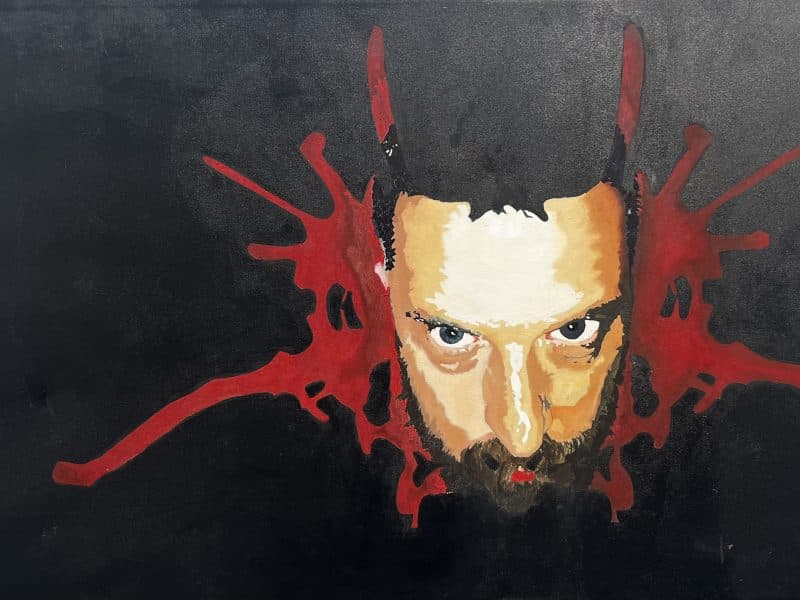
Matt Yoho finds his way back with ‘Alright So Far’
The Columbus artist’s new solo exhibition – his first in nearly 15 years – kicks off with an opening reception at Awesome Gallery from 1-3 p.m. on Saturday, April 11.