
Winston Hightower finds time for himself with ‘100 Acre Wood’
The Columbus musician will celebrate his new record with concerts at Cafe Bourbon Street tonight (Friday, April 17) and at Used Kids records on Friday, April 24.
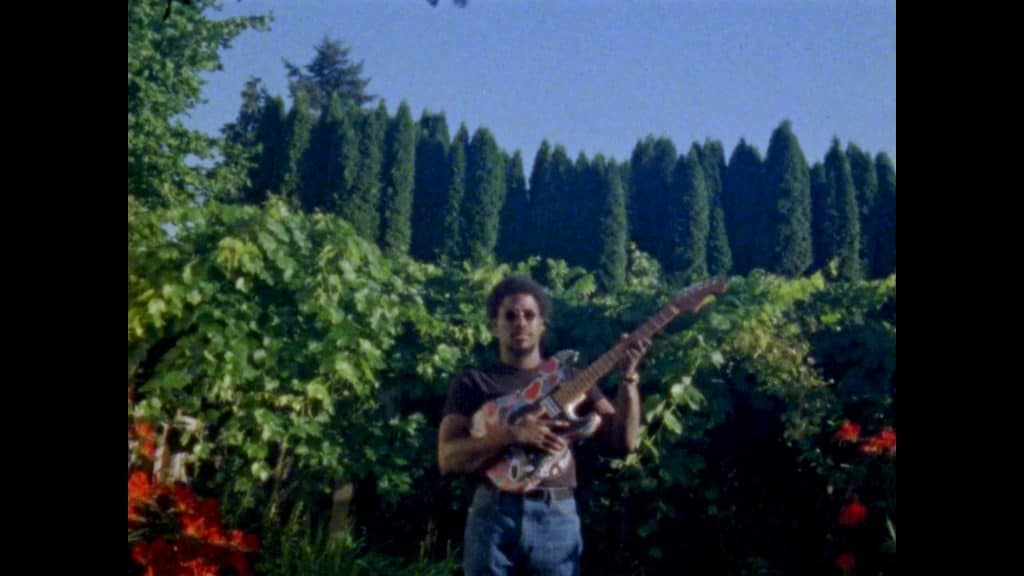
Throughout new album 100 Acre Wood (K Records/Perennial), Winston Hightower makes repeated reference to the need to carve out time and space for himself, whether writing about the importance of taking things as they come (“On Our Own Time”) or his desire to do things at his own speed (“Me Time”). Even the album title could be viewed as reflective of this idea, conjuring images of an expansive, forested retreat obscuring the Columbus musician from any outside demands that might be placed on him.
“And that was a funny thing to realize,” said the musician, who will join his band Winston Hightower’s Perfect Harmony in celebrating the release of 100 Acre Wood at Cafe Bourbon Street tonight (Friday, April 17), alongside Good Flying Birds and the Pranks. “Even [the song] ‘Poppi’ is kind of about that, with the lyric, ‘I reject going outside.’ There are a lot of songs about wanting to be alone.”
Hightower traced this development in part to a recent stretch in which he has logged his free time immersed in documentaries about everything from the roots of the Great Depression to the history of organized crime. “And because I’ve been obsessed with obtaining knowledge, in a jokey way, anytime I have to do something, I’m bummed out I have to stop watching whatever thing I’m into,” said Hightower, who will also perform a free show at Used Kids on Friday, April 24, joined by Marcy Mays. “And I’m like, ‘Ah, man, I wish I could just do this all the time.’ But that’s not reality.”
A donation powers the future of local, independent news in Columbus.
Support Matter News
The bulk of the songs on 100 Acre Wood surfaced in a three- or four-week flurry about a year ago, with recording sessions following a couple of months later. “I made it pretty quick compared to other ones,” Hightower said of the album, attributing this speed in part to a looseness he welcomed into his process. “Sometimes when I try to make rock songs, musically I want them to be serious. And on this one, I tried to let go of that. For instance, I’ll tell a secret that I hope no one steals from me: A lot of the songs have double bass parts, so I’d start the track and it would have a melody bass part, and then I would add a lead bass part. And the first time I did it, I was like, ‘Man, this is goofy.’ Then I started doing it a bunch, and it opened up this idea that I could make some really circus-y songs.”
Hightower countered this more freewheeling musical approach by treating his lyrics with degrees more seriousness, sharing that in the past he tended to hole up in his bedroom and write “goofy” verses that he never intended to perform in concert. “And then you find yourself playing that song live, and you realize the words don’t really mean anything,” he said, and laughed. “So, I tried to be more intentional with my lyrics, and to have them actually be about something.”
Witness “The Me I Know,” a discordantly hypnotic turn in which Hightower acknowledges that the person he is now exists at a distance from the one he once was, and that this perpetual shedding of skins is a necessary part of life.
“And as I’ve gotten older, I realized all the years I was parading around like I was right about something, I actually had so much to learn,” Hightower said. “And so, [the line], ‘Over again in my mind, I try to be born as the me I know,’ that’s like, ‘Okay, I guess I didn’t know everything I thought I did last year, but this year I’m going to know everything, and I’m going to be on my game.’ And then I just did that for a decade from my 20s into my 30s, thinking that I knew what was going on. … And now that I’m older, I realize that I don’t have everything together.”
While the lyrics reflect a growing self-awareness, Hightower said “The Me I Know” initially felt like a musical stranger, its influences less easily pinned when compared to other songs on the album. “It was a thing where I was like, ‘I’m unsure about it,’ and usually when I’m unsure about something it’s because I don’t have another song or style to reference it to,” said Hightower, who allowed that other songs on 100 Acre Wood were shaped by his pandemic immersion in the catalogs of bands such as Pavement and Silver Jews. “But then I guess that’s how things start, or a different sound starts. Not to say I’m creating a different sound.”
Hightower credited aspects of this experimentation to the time he spent recording at Mobile Control in Olympia, Washington, describing the studio as “Musicol if it were in someone’s basement.” Within these confines, the musician had access to a wealth of vintage gear and a producer, Hayes Waring, who on occasion pushed him to stretch beyond his comfort zone. Hightower credited the engineer with the decision to incorporate melodica on the languid, lo-fi “Lay Low” and for pressing him to double-track his vocals throughout – a sonic choice that lends the whole affair an off-balance, discomforting vibe.
The album’s at-times-unsettling feel reflects a theme to which Hightower has returned at various points in his music career, and which surfaces here in “Virtue Signaling,” a song that touches on the idea of presenting to the world like you’re okay when you’re actually not.
“I mean, I feel like that’s what all my songs are always about,” said Hightower, who then cited Robin Williams as his “spirit animal,” sharing that he got a “Flubber” tattoo just hours after the deeply influential comedian and actor died in 2014. “I feel like I’ve had a pretty rough life, and I’m not saying other people haven’t, but I feel like my energy is like I’ve always gotta be putting a smile on, but not in a way that’s forced. When I want to be, I can be sad. But then it’s hard not to be grateful for a lot of things, you know?”
Author

Related Articles
Chlorine’s Joseph Mangum lets his memories bleed through the page
The Kentucky band joins a stacked lineup at Rambling House on Thursday, Oct. 15, performing alongside the Dolphins, Son of Dribble, and Calico Boy.
Villagerrr’s Mark Scott would gladly hop off the industry ‘Carousel’
“I was getting a little frustrated with feeling responsible for promoting the album, because putting yourself out there, it’s not the most comfortable thing for a lot of people, and it definitely wasn’t for me.”
Liteweight Champion survives the fire
The Columbus rock band will celebrate the release of new album ‘Geronimo Hardstyle’ in concert at Dick’s Den on Friday, Oct. 9.