
The rapid origination of Andy’s Law
Tensions between guards and the incarcerated at Ross Correctional Institution went from bad to worse following the 2024 murder of corrections officer Andy Lansing. Now, the prison could serve as a restrictive model of what’s to come under consequential House Bill 338.
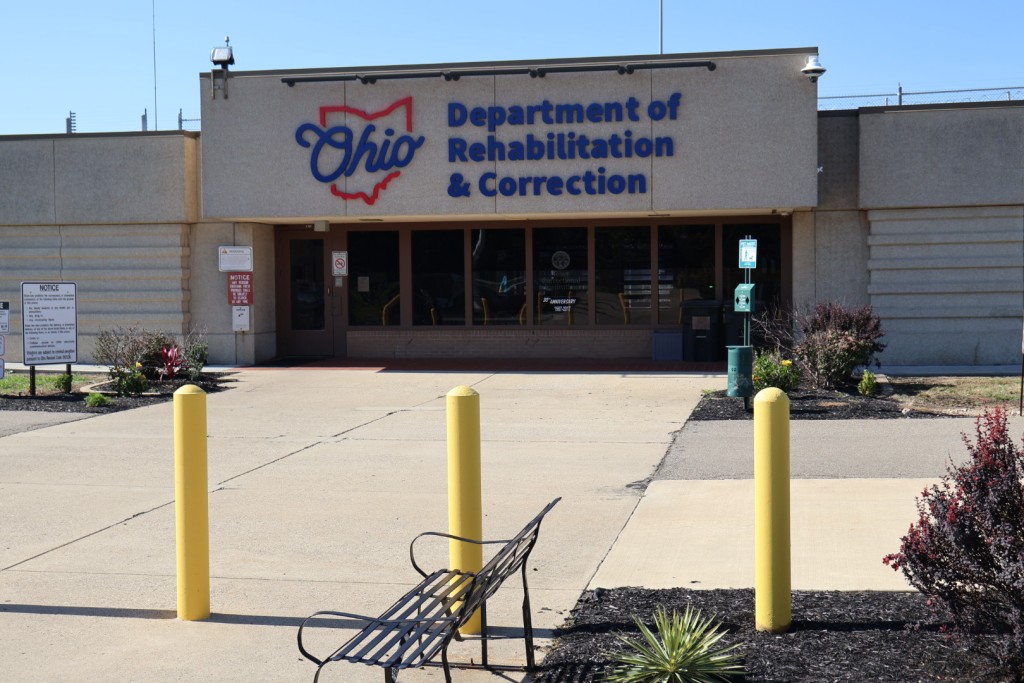
In the first week of April, I received a call from a person incarcerated at Ross Correctional Institution (RCI) – the prison that is also home to most of Ohio’s death row population.
Scott, a pseudonym, said he and his fellow residents had been living in lockdown for the previous 16 months, ever since the death of corrections officer Andy Lansing on Christmas Day 2024. His life inside had never felt more confined, and he said that tensions at the prison were at an all-time high.
RCI was buzzing that week with news that another incarcerated person in Ross County had been beaten and raped by his cellmate. Afterwards, he went running to the sergeant on duty, who told him to “Get back! Get the FUCK BACK!” Scott said.
A donation powers the future of local, independent news in Columbus.
Support Matter News
The corrections officer (CO) then forced the incarcerated man back into his cell where he was beaten and raped a second time, Scott said, and few days later he was transferred to another undisclosed prison. RCI residents told me they were confused and disturbed by the incident, which made them feel as though they could no longer rely on the guards to protect their safety.
Spokesperson for the Ohio Department of Rehabilitation and Correction (ODRC) Jenn Truxall said over email in September that the actual scope of the incident was much larger. Two COs were fired and a third resigned over the incident, and the case is still being investigated by the Ohio State Highway Patrol. (All criminal investigations occurring at Ohio’s prisons fall under the jurisdiction of the State Highway Patrol)
The case appears to represent the opposite of what the ODRC had maintained for months to local and national media outlets – that tensions between guards and the incarcerated were unfounded.
RCI had been in the spotlight for well over a year at that point. Rumors of retaliation by guards against the incarcerated for Lansing’s death were immediate, and local media covered the prison extensively. In January 2025, The Marshall Project wrote that “correctional staff, joined by a tactical unit with no body cameras, have increased the use of force and pepper spray. Cell-by-cell searches are ending in altercations. Incarcerated men say they fear retaliation.”
And yet, the prison maintained for months when questioned by the media that tensions at RCI were not a concern.
Before he was killed, Lansing had conducted a “routine shakedown” of resident Rashawn Cannon’s cell and found a significant amount of the synthetic cannabinoid K2 and an illegal alcoholic beverage. After the search, Lansing was allegedly accosted by Cannon on multiple occasions, with Cannon once threatening to kill Lansing in a fit of anger. The family of Lansing has since filed a lawsuit against the ODRC, and the investigation into his death is ongoing.
In the almost two years since Lansing’s death, the ODRC has seen dramatic changes in operations and policy, while its facilities have been subjected to continued media scrutiny. The growing drug epidemic in Ohio’s prisons has been investigated by the Marshall Project, The Columbus Dispatch, and The Cincinnati Enquirer. Chillicothe, home to RCI and the Chillicothe Correctional Institution directly across the street, has also had its share of media attention related to the adjacent prisons.
In the aftermath of Lansing’s death, RCI began operating under “restricted movement” – a security protocol where the entire prison goes into a severe state of lockdown while a prison-wide investigation is conducted. The incarcerated men were confined to their cells or dormitories for 23 hours a day, with limited ability to go outside or utilize common areas or classrooms. Books became harder to access because they had become vessels for trafficking K2. (The most infamous case of K2 trafficking to date occurred in November 2025 when 30-year-old Austin Siebert was sentenced for spraying drugs onto pages of Hillbilly Elegy and disguising them as Amazon orders to be received in prisons.)
In addition to the crackdown on reading materials and the general squeeze of life under restricted movement, residents told me that at the time they were concerned about a myriad of long-term consequences related to Lansing’s death. They heard rumors their tablets would be taken away as retaliation for the killing, and that the prison would be reverting back to a wall phone model where all residents of a block share one phone per unit – a setup known to be less private and more dangerous. And some residents told me they were living in fear that their education could be taken away from them as well.
While the April phone call from Scott arrived at a boiling point between the incarcerated and COs, residents told me in October that relations had mellowed in the time since.
The data reflected these conversations, showing an overall decrease in violence between residents and staff year over year, though figures are not yet available past July 2026. According to the ODRC’s most recent Annual Report, violent incidents between incarcerated adults and staff members decreased from July 2025 to June 2026; There were around 70 incidents reported for July of 2025, compared to around 50 in July 2026. While exact figures aren’t available, serious injury occurs between incarcerated adults and staff members between 1-3 times a month. That number has stayed relatively steady, but minor injuries reported have been decreasing on average and non-injury incidents remain far and away the majority of events reported each month.
The fears residents at RCI had regarding their limited freedoms, though, weren’t unfounded. In interviews, each alluded to key elements of a bill introduced to the Ohio General Assembly months earlier that, at the time, was well on its way to passing in the Ohio House: House Bill 338.
Proponents of the bill call it essential for reducing violent offenses against COs and advancing the drug war in Ohio’s prison system; Critics consider it inhumane and many of its restrictions unfounded and potentially harmful.
For the men in RCI, one of Ohio’s highest-security prisons, new restrictions imposed by the bill would include no longer being issued a tablet for daily use, the elimination of higher education or vocational training programs, the loss of contact visitation, and the ushering in of harsher penalties for specific offenses, such as murdering a guard (or throwing urine at them). The residents at RCI are largely level 3 and level 4 security, and it’s these higher security level individuals who have the most to lose with the passing of the bill.
Andy’s Law
On Christmas morning 2024, at around 9:30 a.m., Chillicothe’s state representative in the Ohio House, Representative Mark Johnson, was at his mother-in-law’s house when he received a text from his son, a police officer for the county. The text said there was an officer down at RCI and things looked bad. Johnson went to the prison the next day to see the scene for himself, and he got what he called an “earful.”
“You know, when one of your favorite coworkers passes away, it doesn’t matter whether you’re a correction officer, a sergeant, a lieutenant, a major, a deputy warden or a warden even, the truth comes out,” he told me over the phone in September. He remembers a stream of confessionals and outpourings of grief from every direction.
Johnson said Lansing’s family continues to weigh heavily on his mind. Lansing’s nephew, who also worked as a CO at RCI, was on duty when the murder happened, and he witnessed the chaos of trying to revive him (Lansing was working alone in a shack in the prison yard when he was killed). The nephew has since relocated to the lower security prison across the street, Chillicothe Correctional Institution. Johnson told me that when the nephew sought counseling after the death of his uncle, he still had to pay a $30 copay not covered by the ODRC. Four days after the CO’s death, according to Johnson, Lansing’s widow found out while she was refilling her prescriptions that her insurance had been terminated.
The murder of Lansing, the experiences of the late CO’s family, frustration with the ODRC leadership, and the wide-ranging testimonials he heard from COs on everything from everyday policies to the response of the administration spurred Johnson to move toward creating new legislation. He started by putting together what he described as a “coalition” of COs, former wardens, prison system staffers, and even members of ODRC’s upper management.
“A lot of people in upper management were wary to talk to me in public since they had no protection – they wouldn’t even talk to me after meetings,” he said. “They would come to my living room in my home and that’s how the bill was put together. … Through about 200 people putting input together.”
Johnson introduced HB 338, aka “Andy’s Law,” with his co-sponsor, Rep. Phil Plummer of Dayton, less than a month later, on Jan. 22, 2025. In November 2025, the bill passed in the House with a vote of 82 to 3, and it is currently being reviewed by a committee in the Senate. Johnson said they expect to make some compromises, specifically over the use of tablets, but he is optimistic the bill will pass.
A “kitchen sink” or necessary evils?
Depending on your vantage point, HB 338 is either long overdue and maybe still not quite enough, or a scorched-earth approach to draining the drugs out of Ohio’s prisons that is destined to make matters worse. Lansing’s death has become the de facto rationale to include policies and procedures in the bill that have nothing to do with reducing violence against corrections officers.
Some of the bill’s key components center on security and are a direct response to Lansing’s death and the prevalence of prison altercations. Specifically, the bill expands the mandatory sentencing for a variety of offenses, including: a three-year consecutive sentence for the assault of throwing bodily fluids at an ODRC or a Department of Youth Services (DYS) employee; a 7-year consecutive sentence for incarcerated people who commit a felonious assault against an ODRC or DYS employees; and life in prison without parole if an incarcerated person murders a ODRC or DYS employee.
Under Andy’s Law, supervisors and higher-ranking staff members of prisons would also be permitted to detain individuals who attempt to bring illegal substances into prisons. Currently, corrections officers and State Highway Patrol officers rarely prosecute conveyance when visitors are caught passing drugs to the incarcerated; Johnson said the rate of prosecution for onsite conveyance was only about 6 percent of cases.
But the bill’s critics point to a lack of humanity and, frankly, a lack of data in support of new restrictions. The bill is also the latest example of what the ACLU calls the Statehouse to Prison pipeline. Each year, according to the ACLU, legislators of both parties in Ohio introduce laws that create new crimes or extend the scope of existing laws to lengthen prison and jail sentences. The ACLU of Ohio has been monitoring the Statehouse to Prison Pipeline for the past 10 years; In the most recent General Assembly, 7.5 percent of all bills introduced created a new crime or expanded sentences. And Andy’s Law might just be the most consequential piece of legislation to surface in the time the ACLU has been tracking the issue.
The ACLU called the bill a “kitchen sink” approach, with Ohio ACLU legislative director Gary Daniels directly pointing to the lack of connection between the numerous provisions in HB 338 and the death of Lansing. He said in his November 2025 opponent testimony to the bill that no data behind the bill had been delivered, asking, “How often is violence targeted by HB 338 committed against prison staff? How often do people get caught smuggling contraband into prisons (and how often is it the result of prison staff, not visitors)? What is the prevalence of prison staff being assaulted by, or threatened with, the throwing of and exposure to bodily substances?” (Information on prison incidents is available on page 21 of the ODRC’s annual report.)
Among its new restrictions, the bill would no longer allow level 3 and 4 incarcerated people to have contact visitations, meaning fathers and mothers would lose the ability to hug their children. Around 11,429 people are on a level 3 or higher security level across Ohio’s prisons.
Andy’s Law would also require DRC to create and maintain a public registry of those who commit any sexual offenses while in prison, publish all the data involved regarding an offense on the DRC website, and keep all that data posted for 10 years after the offender’s final discharge. In laymen’s terms, that means any time incarcerated people are caught engaging in sexual behavior with one another, no matter how consensual, they’ll be labeled a sexual offender for a decade
Another of the major criticisms of Andy’s Law is its move to eliminate higher education and technical training for what the bill refers to as “high security prisons.” A strict definition of a high security prison has been admittedly hard to pin down, as there are three maximum security men’s prisons and no max security women’s prisons in Ohio.
Critics of Andy’s Law also stressed that college and technical training are leading agents against recidivism – the motto of the Ohio Department of Reformation and Corrections is literally “Reduce recidivism in those we touch.” Getting rid of higher education and technical training for those most in need of rehabilitation appears unnecessary, even to the bill’s proponents. Education has nothing to do with the death of Lansing, as argued by the Ohio ACLU, and people incarcerated at RCI told me they felt the motion to eliminate higher education came from a place of resentment toward the residents.
“The guards hate that we get to go to college and they don’t,” Scott said. (Calls and emails to Chris Mabe, president of OCSEA, the union that represents Ohio’s corrections officers, went unreturned.)
But Johnson insists there’s a reason for every rhyme, relaying a story he had been told about a baby who had been brought to a visitation with a diaper filled with enough fentanyl “to wipe out a cell block and then some.”
“It’s not that I don’t want people to have contact with their families,” he said, “but it’s too tempting to pass drugs.”
Tablets, used every day as a lifeline for the incarcerated, can be jailbroken with relative ease, Johnson said, and are replaced “no questions asked” when requested, which Johnson says promotes drug trafficking and gang violence. But getting around that issue is admittedly more difficult than other pieces of legislation; incarcerated people rely on tablets for all mail communication, receiving no paper mail, so tablets might be necessary. (Johnson didn’t seem sure what would happen there.)
The other piece of the equation that Johnson said hadn’t been adequately discussed were plans to expand educational opportunities for people in levels 1 and 2 housed at lower security prisons. At CCI, across the street from RCI, there’s reportedly a waitlist of 250 people for college classes, and they have a completion rate of about 50 percent. Johnson said the priority should be getting more qualified people educated and use education and vocational training as motivation for good behavior. In 2025, 3,491 incarcerated people earned college degrees, and 5,412 earned industry-recognized credentials.
It’s unclear how often people who are incarcerated actually have a reduction in security levels year over year. But for some context, 87,743 rule infractions were reported across all of Ohio’s prisons in 2025, that’s nearly twice the amount of 46,300 people currently incarcerated in Ohio. It’s also unclear how often incarcerated people are transferred to a lower security facility; Ohio’s prisons are already notoriously overcrowded.
Weeds Among Us
While we were finishing our conversation, Johnson and I got to talking about people, politics, and prosecutions. He told me passing this bill was one step, passing reform on staff pay was another, and finally he wanted to focus on prosecution of cases. As our conversation wandered off topic onto the subject of prosecutors, he paraphrased the bible.
“It’s just like anything else, we all have weeds among us,” he said. “Christ said we have weeds amongst our crops, but don’t pull the weeds up because you might pull up the good plants.”
It made me wonder what he thought the gardens of levels 3 and 4 prisons looked like. Was he not pulling up all the roots by pushing higher security facilities into an increased state of lockdown? Was everyone on level 3 or 4 a weed?
“Until you get the drugs out of these facilities, the violence will never go down, the gangs will be in control, and so forth,” he said.
Johnson then told me all about Ohio’s prison gang dynamic and their control of the prison economy, flashing a wealth of knowledge absorbed in his time representing Chillicothe. It’s obvious he is dedicated to serving as many of his constituents as he can, including those who are incarcerated in RCI and CCI. But he was unflinching in view that there’s an urgency to this bill that can’t be ignored, that the drug problem in Ohio’s prisons was raging.
Scott, currently serving life with the possibility of parole after 20 years at RCI, is one of Johnson’s constituents. He is now working on his Ph.D. He’s unable to get some of the books he needs for some of his coursework, and last I heard it was unclear whether he would be able to continue his schooling. He’s a level 3 security, and it’s not certain when or if he’ll ever be off level 3. School is one of the key things keeping him motivated and focused. For people like him, hell is getting hotter.
When I asked Scott if he had any questions for Johnson, he got upset and declined to comment any further. It was obvious to me that he felt failed by me, by the state, by the ODRC. He didn’t want any trouble, and told me the staff at RCI had been completely professional and respectful as of late. Nothing to see here. In fact, things at RCI were actually “very mellow.”
But while things may be stable at RCI after years of turbulence, Andy’s Law is not solely about what happened to Andy Lansing at RCI, or even the 50-plus attacks on COs every month in Ohio’s prisons. The bill is a comprehensive response to seemingly every anecdote brought to Rep. Johnson’s attention in the weeks after Lansing’s death, a group numbering around 200 people.
“One thing is for sure,” Johnson said before hanging up, “this bill can’t get passed soon enough.”
Related Articles

Flock is on pause. What about all that other surveillance tech we use?
Columbus has had a contract with Shotspotter, an AI-powered gunshot detection microphone system, since 2018.

Opinion: Flock cameras won’t make us safer. Here’s what will
Flock Safety, the company behind the cameras, obstructs any attempt to establish guardrails, accountability, or transparency. Amazon is no one’s model for corporate responsibility, and even it cut ties with Flock.

‘We were once a school that allowed voices on campus. Now, no voices are allowed.’
Compared with protests at neighboring colleges, the administrative crackdown on the 2024 pro-Palestine encampment at Ohio State stands out for its severity, causing reverberations that continue to this day.