
A year after the implementation of SB1, Ohio State students reflect on its impact
‘You’ll see less Black, queer students graduating. You’ll see less Latin students graduate. You’ll see less marginalized identities going through this university successfully.’
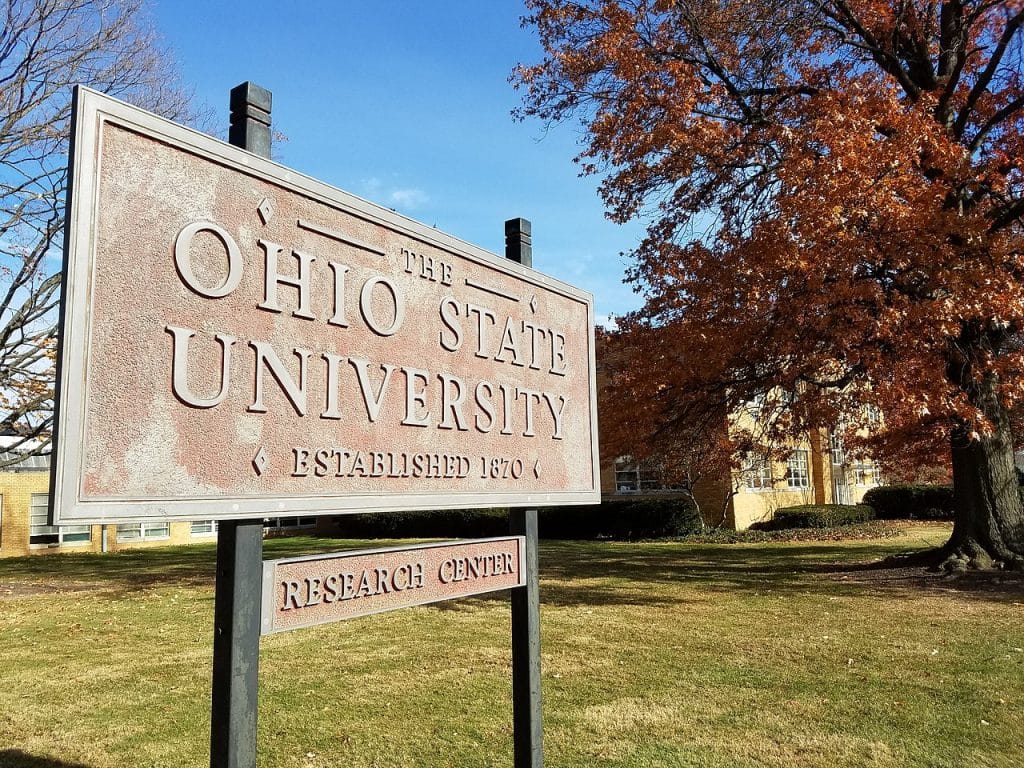
Brielle Shorter heard whispers about the potential diversity, equity, and inclusion cuts at Ohio State before they were made official.
Shorter, a 2025 OSU graduate and former student organizer with the Ohio Students Association, said that someone who worked at the Center for Belonging and Social Change told her they’d heard the building was going to be converted into a sorority house – chatter that helped to blunt the impact when the university announced DEI cuts suddenly in February 2025.
“I remember feeling shocked, but I wasn’t mortified the way other students were because I had been hearing [these rumors],” said Shorter, who remains frustrated by the university’s decision to make cuts in advance of the March 2025 passage of Senate Bill 1 banning race-based diversity programs. “Ohio colleges said, ‘We’re not going to speak out against this. We’re not going to say anything about SB1. … We’re going to pull the plug on events early before the bill even passes.’”
A donation powers the future of local, independent news in Columbus.
Support Matter News
Other students expressed similar sentiments, including Hamza Mahmood, a third-year in communications technology and the public relations chair of the Pakistani American Students’ Association. “I sort of felt disappointed in the system,” he said, “but there’s nothing you can do because there’s bigger people in power.”
“It really felt like someone quite literally just took a knife to my chest,” said Elise Britton, a fourth year in political science and the president of the Minority Collegiate Outreach and Support Team, a student organization founded to mentor 6th through 12th grade minority students. She felt additional uncertainty as a recipient of the social-justice based Morrill Scholarship. “There has never been a comprehensive explanation as to what these cutbacks really meant. It’s kind of like everyone just seems to be going along with the flow but it’s still walking on eggshells, nervous that one day something else might be revoked.”
In response to a request for comment from Matter News, a university spokesperson provided a statement that read, in part, “Ohio State strives to provide a welcoming environment for all,” pointing to resources such as Buckeye Commons, the Monda Resource Center, as well as the continued impact of the Morrill and Young Scholars Programs in fostering community for students on campus.
Immediately following the announcement of the cuts, many students began to mobilize. The Black Caucus hosted community building events and SB1 testimony writing sessions. The larger undergraduate student government body released a statement listing demands from the university and providing resources for students.
“Unfortunately, you don’t have the privilege to just sit aside. You don’t have the privilege of just waiting,” said Arielle Barnes, a fourth year in computer science and engineering and a former vice chair of the Undergraduate Student Government’s Black Caucus. “It’s about taking action.”
Several interviewed framed this response as an attempt to preserve the programs that helped them along in their time at the university, with many expressing concern for incoming students, unsure how the elimination of DEI might impact their time on campus.
“It did create that sense of fear for me,” Barnes said. “Will the incoming students or students who maybe are just discovering this organization … be able to benefit from it the same way I did?”
Growing up in a predominantly white area, Zaneb Zafar, a fourth-year in industrial systems and engineering and treasurer of the Pakistani American Students’ Association, said she always longed for the sense of community she finally discovered among the Pakistani population at Ohio State, and she worried future students might struggle to find the same.
Rebeca Vinseiro Figueira expressed similar concern for incoming students without clear avenues to discover community. While in undergrad, she was involved with Alpha Psi Lambda, a co-ed, Latino-oriented fraternity founded at Ohio State that now has chapters across the country. Despite these deep OSU roots, however, Vinseiro Figueira said the organization has experienced “struggle” with the university since SB1 was passed.
Vinseiro Figueira also experienced challenges with the Public Affairs Multicultural Student Association, a group she co-founded that she said has been heavily impacted both by funding cuts and the structural changes necessitated by SB1. “We had a lot of support with the John Glenn College in helping us navigate the changes and understanding how to remain a club, but we noticed a stark decrease in membership almost immediately,” she said. “We had to adapt so much – I wouldn’t say our mission, but our methods – [and] it did change the club a lot, and I think a lot of people noticed that.”
For some, the changes have even made them reassess their decision to attend the university, with Elise Britton sharing that the DEI cuts would have deterred her from enrolling as an incoming freshman.
“If I had been in high school and Ohio State was my top school,” she said, “and then just randomly, from a stroke of a pen, before things were even set in the stone, before things were constitutionally debated, before the legality of these issues have been determined, if it was cut just like that, I would not be as interested [in attending].”
Many resources that existed previously for minority students were also dismantled amid the DEI shutdowns, with Shorter pointing as one example to the deleted website detailing the OSU Counseling and Consultation Service’s resources for Black students. In an attempt to fill these gaps, the Black Mental Health Coalition worked to create new avenues to connect students to resources, some of which she said aren’t publicized. “It’s not advertised that you can call CCS, have a 15-minute Let’s Talk, and you can request a Black therapist,” Shorter said.
The Latine Student Success Center, previously housed in the Office of Diversity of Inclusion, was also shuttered when the office was closed. Vinseiro Figueira was a volunteer with the center and recalled feeling shocked at how “it felt so unreal that it could be taken away.”
As community centers were stripped, professors also had to contend with how SB1 regulated discussion around controversial topics, with Barnes describing the legislation as having a “white washing” effect in the classroom. “I think that we aren’t acknowledging things that did happen,” she said.
This along with changes to scholarship programs originally targeted toward communities of color, including the Morrill Scholarship and Young Scholars Program, which have adjusted selection criteria to adhere to SB1, have Shorter worried about the long-term impact on the university’s minority population.
“I think another ripple is that you will see … less Black students graduating,” she said. “You’ll see less Black, queer students graduating. You’ll see less Latin students graduate. You’ll see less marginalized identities going through this university successfully.”
And yet, student groups, and especially those focused on minority communities, have begun to adapt, finding new and creative ways to provide resources to students. “At the end of the day, it’s the people who decide what we are and what we don’t stand for,” said Hamza Mahmood.
Vinseiro Figueira also said she has seen more informal initiatives flourishing outside of university oversight, including the Semillas Program, which was created after the Latine Student Success Center was shut down. She urged students to take initiative in independently building these supportive communities “by just breaking out of your comfort zone and talking to people.”
Zaneb Zafar echoed these calls to ingenuity. “I think creativity is on the rise,” she said. “Brown people get creative when they’re limited.”
For some, these changes have added more fuel. Britton, who serves as president of the Minority Collegiate Outreach and Support Team at Ohio State, said she has purposely leaned more heavily into mentorship as a direct result of the university’s dismantling of DEI. “It feels a lot more personal now,” she said. “I would say the cutbacks have honestly served as motivation to try to get people in these spaces, because it’s evident that there’s something that the powers that be fear.”
Related Articles
An Ohio school needs funds. It voted to cut Anduril’s tax bill, anyway
How a factory for AI-powered weapons, a data center, and a needy public school collided in rural Ohio.
Flock is on pause. What about all that other surveillance tech we use?
Columbus has had a contract with Shotspotter, an AI-powered gunshot detection microphone system, since 2018.

If you start from a place of love, you can’t go wrong
A vigil for an unhoused community member who recently died in Newark served as a call to not look away.