
On Development: Little houses, big opportunities
The tiny-home movement has been around for a while – largely co-opted by wealthy faddists who can pay architects to design their treehouses and back-40 cabins. Vista Village is trying to reclaim the concept.
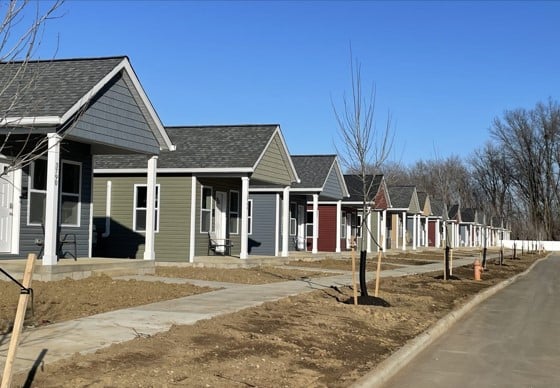
Vista Village sounds so inviting: a community of 41 tiny houses in a new subdivision on the southeast side of Columbus that is soon to be home to 41 homeless citizens, veterans, and people struggling with addiction or transitioning from prison.
At $350 a month for a 420-square-foot home, rents are affordable. But Vista Village is much more than a transaction between renters and a landlord. Vista Village is operated by a faith-based organization, and the homes are just one part of the full program – kind of a life-skills, on-the-job, living classroom. In return for low rents and a cozy, compact home, residents agree to get a job, remain sober, manage their household and yard, and arrange for counseling or any other needed services.
Central Ohio has other “life skills” programs attached to affordable housing, but they are typically focused on single mothers and their children. This one aims to meet different populations.
A donation powers the future of local, independent news in Columbus.
Support Matter News
I support the idea of all of this, but I felt oddly disconcerted when I first read about Vista Village. My initial thoughts centered on the mini sprawl of tiny tract houses with little lawns spread around them. Mini-townhouse apartments could serve many more people while requiring less space. And the location – just off of Refugee Road – is a wide, busy, speeding thoroughfare where pedestrian fatalities are all too common and bus service is infrequent.
Then I drove to Vista Village and was surprised to see it’s not only a suburban subdivision, but also a gated community, with solid, six-foot-tall fences shutting off views of – and from – the little front porches.
Residents of Vista Village are expected to move into more-permanent housing after 18 to 24 months. Some housing advocates question the notion of such temporary housing, but the life-skills aspect makes a good case for such transitions. The big question is whether central Ohio will have sufficient housing for the graduates of Vista Village.
There’s no simple or widely agreed upon definition of “affordable housing” beyond the maxim that it should be less than 30 percent of a household’s income. Rates for subsidized housing look at percentages of the area median income (AMI) – the midpoint between a region’s wealthiest and poorest residents (a point that rises as the rich get richer). Housing assistance is based on whether a household’s income is at, say, 30 percent of AMI or 80 percent.
Federal housing choice vouchers serve as a first rung on the housing ladder (as does Vista Village). But “affordable housing” can be harder to define. As household income rises and people get raises or better jobs, they may no longer qualify for the voucher program. Can they afford other housing in the same neighborhood? Or will they be forced to move to another neighborhood or community, potentially disrupting their children’s education?
Weinland Park is a neighborhood with plenty of first-rung housing. But as residents climb the economic ladder, they discover that the neighborhood’s housing ladder is missing its second and third rungs.
The tiny-home movement has been around for a while – largely co-opted by wealthy faddists who can pay architects to design their treehouses and back-40 cabins. Vista Village is trying to reclaim the concept. But as first-rung housing, it is many rungs below suburban homeownership.
Transitional housing used to be common in the form of SROs, or single-room occupancy hotels. (Sometimes called “men’s hotels,” such as the place where Elwood Blues watched the Chicago elevated trains pass in “The Blues Brothers.”) One such place in Columbus existed at 35 W. Long St., which was described in 2015 by a Columbus Dispatch reporter as a “flop house.” It was across the street from the old YMCA, which itself operated as a well-managed example of an SRO before the Y closed and the Columbus-based affordable-housing developer Woda Cooper Companies bought the historic building.
Woda Cooper announced in 2023 that the YMCA’s 400 former dorm-style rooms would become 110 to 120 apartments for people making 30 percent to 80 percent of AMI. Meanwhile, the City of Columbus targeted the vacant property at 35 W. Long St. for a $2 million renovation, transforming it into apartments for downtown workers making $40,000 to $60,000 a year.
Even with those downtown transitional-housing sites developing into other rungs of housing, there are still opportunities. Columbus has many models from over a century ago of affordable, attractive multi-family row houses, fourplexes, and courtyard apartments. A concerted focus on protecting these types of buildings could lead to both transitional and longer-term housing.
Vista Village is an important development, especially with its life-skills programs. Now imagine if those programs could be replicated around the region in different neighborhoods and different types of buildings.
Brian Williams is a semi-retired reporter and planner
Related Articles
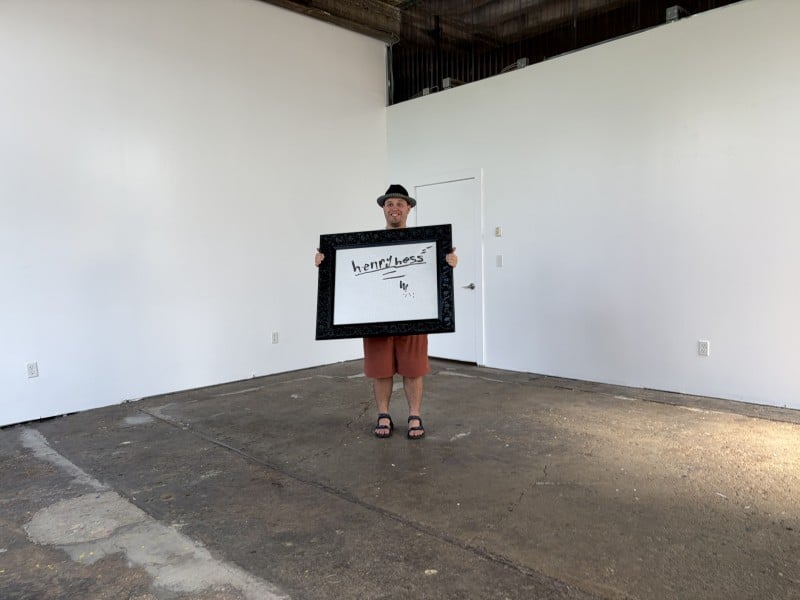
Henry Hess says goodbye to his longtime Chromedge studio
Faced with a rent increase of more than 30 percent, the Hess family opted to move on from the artist’s creative home of the last eight years. And while the next steps remain uncertain, they stressed that Henry would maintain a presence in Franklinton. ‘We’re not going anywhere,’ Sophia Hess said.

On Development: Rapid-transit is moving slowly. Maybe we need a new model
Our policies suggest a willingness to spend any amount to add lanes and bigger (towering!) interchanges for major highways, while transit spending is too often regarded as frivolous.
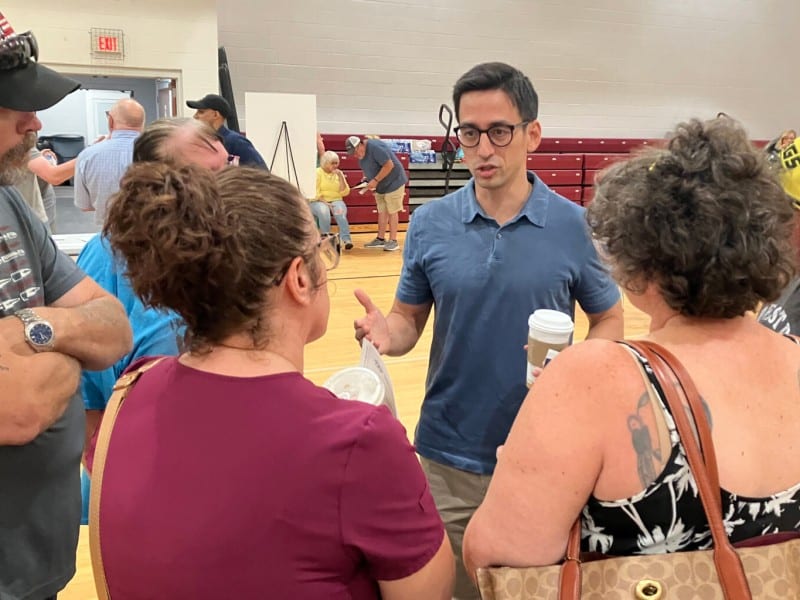
The Coming Out Party for the Country’s Largest Gas Power Plant (Serving the Largest Data Center) Was Surprisingly Quiet
A developer hosted the first open house for a gigantic Ohio project, with no signs of organized resistance.