
Thousands of missed trips leave Columbus COTA riders stranded
New records obtained by Matter News show that between Jan. 1 and Aug. 31 the number of missed COTA trips totaled 32,056, an average of almost 132 missed trips per day. The agency placed the majority of the blame on an in-house fleet maintenance issue and said it is taking steps to correct the problem.
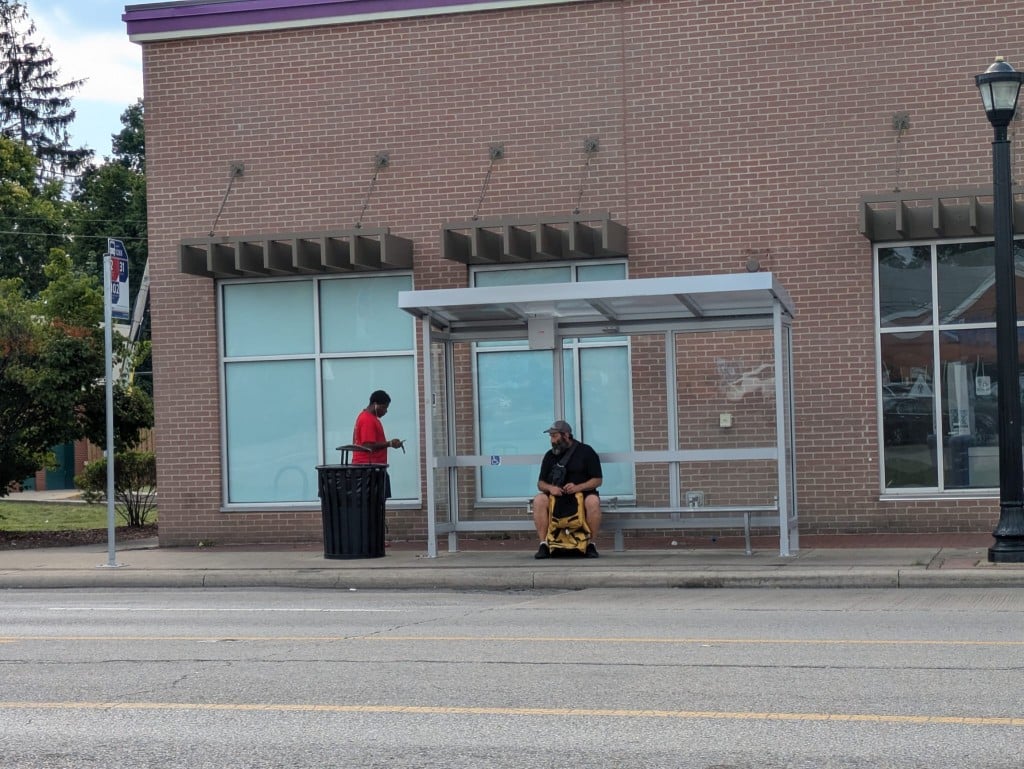
At the northbound bus stop at the intersection of Hudson Avenue and High Street, an elderly man sat on his foldable walker. Buses were fare-free due to the early September heat wave, but the man remained outside, baking in the late Friday afternoon sun. The 31 bus he needed to get to a friend’s apartment just a dozen or so blocks away hadn’t arrived on schedule. Nor was a single 31 bus showing on the live-tracking map. The man said this wasn’t the first time. Earlier in the summer, he said, COTA left him stranded for nearly four hours on the same route.
Frustrated transit riders have taken to social media in recent months to complain about scheduled buses that simply never show up. Those complaints prompted an August post by COTA apologizing for “missed trips, long waits, [and] last-minute cancellations” and calling fixing service “our immediate top priority.”
In July, the Columbus Dispatch reported “5-10 missed or delayed trips daily,” quoting COTA director of media and public relations, Jeff Pullin.
A donation powers the future of local, independent news in Columbus.
Support Matter News
But new records obtained by Matter News show the scale of the issue has been far greater than previously reported. Between Jan. 1 and Aug. 31, the number of missed COTA trips totaled 32,056, an average of almost 132 missed trips per day. The same week that the Dispatch reported “5-10 missed or delayed trips daily,” records show COTA actually missed 1,696 trips just between Monday and Friday, not to mention delays. (COTA defines a trip as the bus traveling one length of the route, from start to end.)
The problem also appears to have worsened over the course of the year. In January and February, the agency missed an average of 101 trips per day. In July and August, the number rose to an average of more than 202 missed trips per day, though the month of August was better than July. Altogether, COTA’s operational problems this year amount to hundreds of thousands of missed stops – and potentially stranded passengers.
For each of those passengers, a missed bus can be more than just an inconvenience. At the stop at the intersection of High and Long streets downtown, a man who gave only his first name, Ricky, waited for a 7 bus that never came. Ricky said he has used a wheelchair since he was hit by a car in 2008. The bus allows him to commute from his home near Gould Road on Columbus’ East Side to visit his adult children, one of whom also does not own a car. When the 7 bus fails to arrive, he said, he is sometimes forced to take a different bus on a route that entails either a long roll over broken sidewalks or in the street to reach his door. Especially at night, he said, “I’m scared I’ll get hit by a car again.”
Ricky added that the bus has become significantly less reliable in the past year, saying, “It didn’t used to be like this.”
Records show that the missed buses have not touched every route equally. The 7, which runs from downtown through the East Side to either the John Glenn Columbus International Airport or Easton, was missed more than 3,500 times, followed by the 6, which was missed nearly 3,300 times on its route through the Hilltop neighborhood via Sullivant Avenue. Other buses with more than 2,000 missed trips so far in 2026 through Aug. 31 include the 33, 8, 31, and 24 routes. On the other hand, among mainline (not express or rush-hour) services, routes 11, 102, 25, 35, and 9 ranked as the least frequently missed, with less than 400 missed trips each.
An early September Columbus Underground article also quoted COTA spokesperson Jeff Pullin, who said that on-time percentage for the year was 81.3 percent, the same as in 2025. But in an interview with Matter News, Pullin clarified that the figure only included buses that actually ran their routes. On the worst routes, including the 7 and 31, records show the missed trips come to more than 12 percent of the total number of scheduled trips.
“Even one missed trip is not satisfactory for us, and that’s not lip service,” Pullin said. “We keep a running tab of how many buses we’re missing, and we’re showing it to employees every day. Even a day we do better, we’re not celebrating, because it’s not good enough until we have a bus for every person out there.”
Asked about the previously reported five to ten trips daily, Pullin at first expressed confusion, citing several different numbers ranging from 15 missing buses corresponding to 44 missed trips for that day, September 9, to averages of 25 to 40 missed trips daily.
In a follow-up email, after examining the records COTA had provided to Matter News, Pullin confirmed that the records accurately reflected the trips recorded as missed, which consistently number more than 100 daily. However, he cautioned that those could include trips for which data was not received from the bus, or for which the bus was affected by a reroute or road closure. Pullin also said he was misquoted by the Dispatch, and that in the interview he referred to “buses” and not “trips.” (Following publication, the Dispatch reporter replied to an earlier inquiry from Matter News and provided relevant passages from a recorded interview in which Pullin stated that COTA buses had been experiencing “five or 10 missed trips” daily.)
That Dispatch report attributed the problems with service primarily to a nationwide recall of electric buses that affected 50 of COTA’s vehicles. But Pullin said that “our electric fleet only provides about 3 percent of our service,” describing the recall as a “contributing factor” but placing primary blame on problems repairing buses, the majority of which run on compressed natural gas (CNG), in a timely manner. “It is an in-house fleet maintenance issue that also includes the national recall, but we’re working on processes to make sure that more vehicles in our facility are repaired faster,” he said.
Pullin said the first of COTA’s 38 new CNG buses went out for service on Sept. 9, with around two-thirds of the order already delivered and in the process of being retrofitted, aiming for the goal of having 20 in service by the end of the month. He said that target would allow the agency to again run all of its scheduled routes. “We do feel like this is going to be another couple of weeks,” he said, expressing hope that COTA can get caught up on repairs once all the buses are ready in October.
In the meantime, Pullin said, “This is not the kind of service that we want to be doing right now.”
He advised riders to check with the COTA customer care team for trip planning. “If you call in and that bus is canceled, we try to provide a solution, like let you know when the next trip is available,” he said, adding that COTA has also worked with the Transit app to show when buses are canceled.
Despite the current issues, on Sept. 7, COTA’s regular service changes added a new line 30, the first new route added to the network since 2018. Pullin said the change was decided months earlier, with the hope that service issues would be resolved by September.
Additionally, Pullin described the big plans for service expansion driven by the 2024 LinkUS levy and the 2027-2031 Short-Range Transit Plan, which he said “calls for 30 percent more service over the next five years.”
“We’ve got to get this solved internally,” he continued, “get those buses back out, because we have more weekend service that’ll be coming, we want to get to a 24-hour network over the next several years, we want to do an airport line.”
“My opinion is that they shouldn’t be worried about adding another line if their current lines are not properly running,” said COTA user Jeanette, a pseudonym.
Jeanette said she uses COTA to commute daily from her home in the University District to her workplace in Dublin. “This whole past week I have been riding bus 33, and at least four days out of the five days I need to ride the bus, there’s at least one or two [buses] that are canceled,” she said, sharing how at times she’s been forced to wait hours before giving up and ordering an Uber – an expensive proposition.
In the mornings, Jeanette said she leaves at 5 or 6 a.m. to take an earlier bus and avoid being late. She added that she has called COTA customer service on multiple occasions to complain, but has experienced long hold times and dropped calls.
Stevie Pasamonte, board chair of the advocacy group Transit Columbus, said they have been frustrated by the lack of communication from COTA.
“With something like public transportation, what you really really need is predictability,” they said. “And if people cannot predict whether or not their bus is going to show up based on information that they’re given, then that becomes a much bigger issue.”
In terms of impact, Pasamonte said it seems services with lower ridership are being canceled in an attempt to minimize disruption, but that “also means that the people who are riding at those times are usually the most reliant on public transportation in order to get to work, in order to get to class, in order to get to appointments.”
However, Pasamonte added, “COTA is not the only agency that is dealing with these issues,” specifically mentioning the recall of electric buses and issues securing parts. They also commended COTA’s decision to purchase more compressed natural gas buses as the most environmentally friendly solution and a way to “replace the [electric] buses with ones that they know are going to be reliable and ones that they know they are able to manage.”
“In terms of what the city can do, what the state can do, I think the answer always is more communication and more funding for better service,” Pasamonte said, also pointing to the need for better alternative transportation options including bike infrastructure.
“This bus shortage is not forever,” Pasamonte said, adding that new revelations about the extent of the bus cancellations reinforce “the need for COTA to communicate clearly with riders and the general public in order to maintain trust and confidence in the agency’s ability to handle such an urgent situation.”
Asked whether the situation constitutes a crisis for COTA, Pasamonte said it comes down to whether new buses will allow the agency to resume regular service or “if there are other issues that aren’t being communicated that will result in a continuation of what we’re seeing right now.”
This piece has been updated to reflect a reply from the Columbus Dispatch reporter confirming details of their interview with a COTA spokesperson.
Related Articles
The Worker’s View: Dough Mama temporarily closes after half the staff quits
‘This was obviously a big wake-up call that something needed to change,’

The Crew comes up just short in electrifying U.S. Open Cup final
Columbus nearly delivered a highlight in what has been a challenging season, playing St. Louis City SC to a dead heat for 120 minutes on Wednesday before falling in penalty kicks.
‘Pitchfork Populism’ Over Data Centers Rattles Ohio’s U.S. Senate Race
The issue, which barely registered with candidates last year, looms large in a race that could determine control of Congress.