
‘My hope stems from … the continued resilience and resistance of Palestinian people in Gaza’
Suhail Zidan will share aspects of his ancestral history in ‘Stories from Our Homeland,’ which takes place at the Upper Arlington Main Library on Monday, Jan. 20.
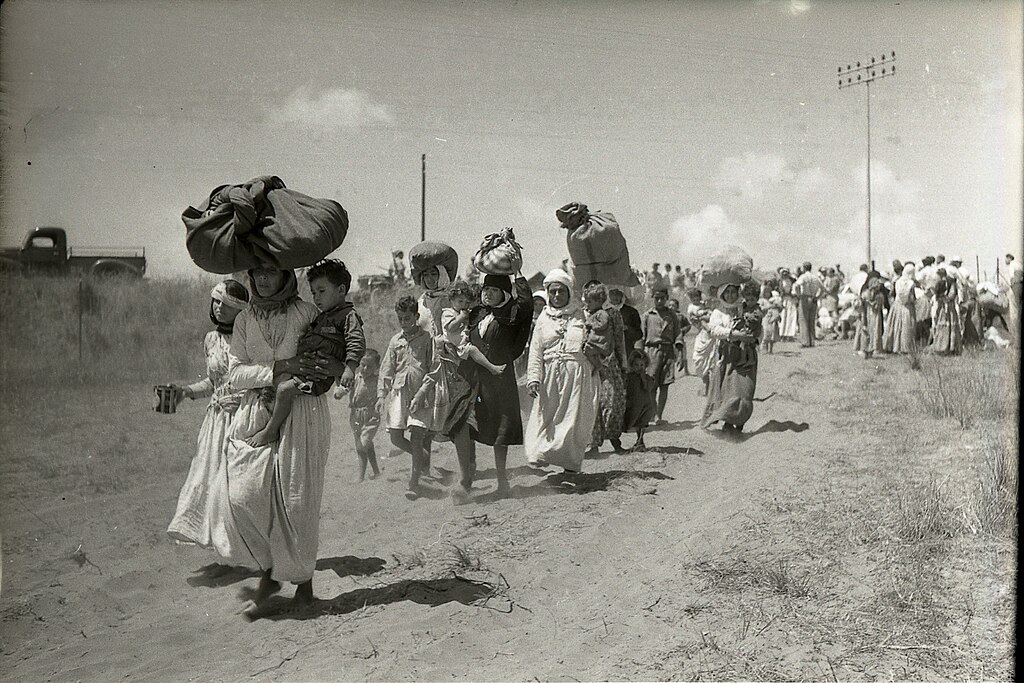
Suhail Zidan grew up under Israeli occupation in the port city of Akko, raised with an awareness of the Nakba – the mass expulsion of Palestinians from what is now Israel – even though his parents never set he and his siblings down and explicitly told them the full story of how they as children were violently displaced from their homeland in the late 1940s.
“There was no need to have an episode of telling the story because it was told daily through everything we did,” said Zidan, who will share aspects of his family history in “Stories from Our Homeland” beginning at 2 p.m. at the Upper Arlington Main Library on Monday, Jan. 20, speaking alongside the likes of poet Sara Abou Rashed and author, poet and Matter News columnist Mandy Shunnarah. “It was omnipresent. It permeated our lives.”
Zidan recounted how as a child his father was forced with his family from their village near Haifa and pushed to the Mediterranean Sea as the Nakba unfolded, and how the currents carried the boat on which the family traveled across the harbor to Akko while others drifted further north to places such as Sidon and Lebanon. Life under occupation could be difficult. As a teenager, Zidan’s father would venture on most days to the harbor, where he would spend hours unloading boats or produce trucks, generally accepting a few fish or some fruit and vegetables as payment. On days he couldn’t find work, the family wouldn’t eat.
A donation powers the future of local, independent news in Columbus.
Support Matter News
Zidan said he didn’t feel the weight of the occupation on a day-to-day basis as a child, but he increasingly took notice of the armed soldiers stalking the perimeters of the town as he moved into his teenage years. “It was everywhere, and you could see it, and you knew they were not there to protect you,” said Zidan, who emigrated to Florida at age 22 to pursue his studies, continuing on to Ohio State and Columbus, where he had remained for the years since.
This reality forever altered the concept of the word “home” for Zidan, though not in ways that one might expect. Rather than corrupting the idea or infecting it with a sense of distance or detachment, Zidan said that living under occupation only served to heighten the powerful sway the place held on him. “Any person who is born and raised in an area has a sense of home, and that sense of home is probably part of human nature,” he said. “But when you have that strong sense of home and your home is being occupied, that sense of dispossession, that sense of injustice, they have ways of strengthening that sense of belonging, that sense of home.”
When approached by Rashed to speak as part of “Stories from Our Homeland,” Zidan said his mind immediately turned to thoughts of connection and resilience, describing his family’s story as one of dignity and survival – concepts he said have long been synonymous with his people and which have been on global display over the last 15 months in Gaza.
Having grown up feeling shockwaves from the Nakba, Zidan said the brutal Israeli campaign that continues to unfold in Gaza – despite recent news that a ceasefire has been negotiated – is nothing new. “What is happening today happened in 1948, and it happened in ’67, and it never really stopped,” he said. “Really, it’s just other people who haven’t lived it, haven’t paid attention to it, haven’t cared about it, and don’t see it. We have seen it. … I mean, there are different details here and there – different weapons, different strategies, different actions – but in essence, the dispossession of Palestinians, the killing of Palestinians, the attempt to eliminate Palestinians as a people, it happened before 1948 and continues today.”
And yet, Zidan said he feels more hope in this moment than he has in many years, which he traced to the deep wells of resilience he first observed in his parents and now witnesses in those who continue to carry on in their daily existence amid the ongoing genocide. “I think my hope stems from … the continued resilience and resistance of Palestinian people in Gaza – and not the warriors but the children, the men, the women, the doctors, the civil servants, the firefighters, the people who run into buildings after the bombings to pull people from the rubble,” he said. “That kind of persistence, that kind of existence, it’s amazing. And despite all the genocidal acts, despite all the misery and the losses of innocent lives, that gives me a stronger sense of hope and an optimism toward the future. And you can see it in the children themselves there who have survived.”
Author
Related Articles
An Ohio school needs funds. It voted to cut Anduril’s tax bill, anyway
How a factory for AI-powered weapons, a data center, and a needy public school collided in rural Ohio.
Flock is on pause. What about all that other surveillance tech we use?
Columbus has had a contract with Shotspotter, an AI-powered gunshot detection microphone system, since 2018.

If you start from a place of love, you can’t go wrong
A vigil for an unhoused community member who recently died in Newark served as a call to not look away.