
The damaging persistence of the 'Painkiller' narrative
The Netflix series misses the more complex, nuanced story at the heart of the ongoing opioid crisis.
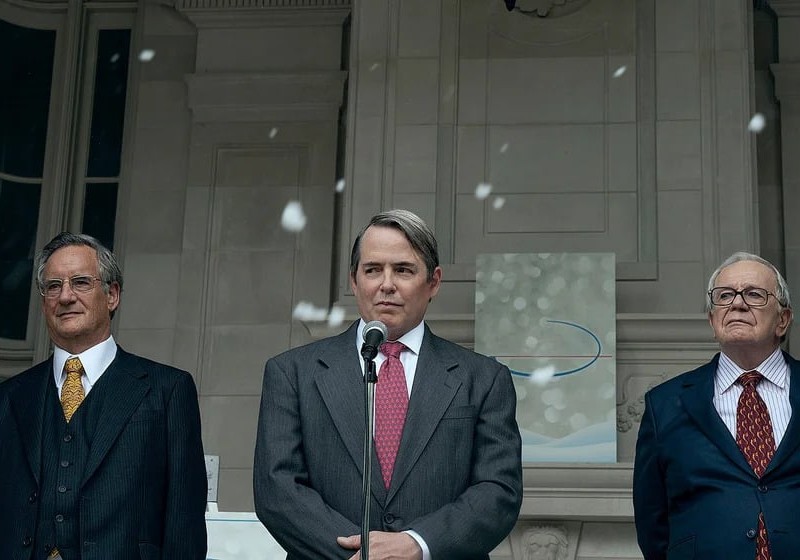
The screen is dark. A piercing beep. A shot of a French-style chateau. Another piercing beep. A white-haired man in silk pajamas lies in bed next to an enormous Italian mastiff.
The beeping won’t stop. Arthur Sackler of Purdue Pharma infamy, played by Matthew Broderick, slowly wakes up. “What the fuck,” he says.
It’s a smoke alarm, of course. But this is Arthur Sackler, and as the Netflix series “Painkiller” opens, it’s clear director Peter Berg wants that beeping to mean so much more. The beeping is his conscience. It’s the truth. It’s the lamentations of those who have lost loved ones.
“Painkiller,” based on Patrick Radden Keefe’s New Yorker story about the Sackler’s and Barry Meier’s book, Pain Killer, delivers a version of the popular narrative about Purdue Pharma, the company that created Oxycontin and that has since become synonymous with the opioid epidemic.
The series exudes a kind of Baz Luhrmann hyperreality. In “Painkiller,” hot, young salespeople model skimpy outfits in high-rise luxury apartments, carry boxes of donuts to doofus “pill mill” doctors and party at conferences. The folks who use Oxycontin become quickly addicted – an injured volleyball player, a hard-working small business owner. Their lives devolve into nightmares.
There’s some truth in that menagerie of stereotypes, but we’re also told that some things have been “fictionalized for dramatic purposes.”
Short intros before each episode feature parents who have lost a child to an overdose. Each parent’s story is a significant nod to reality, for sure, but a nod that does more to obfuscate truth than to privilege it. That is because the truth is complicated.
It is true that Appalachia and American Indian Reservations saw unprecedented numbers of prescription painkillers enter the licit and illicit drug markets in their communities. People used this medication to address physical and mental health. They also used this medication to escape reality, or to have a good time.
Painkillers had been a part of healthcare and the illicit market long before Purdue introduced Oxycontin in 1996. There were many to choose from, including Percocet, Vicodin, Lortab and Darvocet. In 2007, the American Journal of Psychiatry reported that of people who used Oxy who were in treatment, 78 percent reported obtaining the drug illicitly – and this was during the height of the pill mills (pain clinics that were often little more than a doctor and a script pad).
Well-intentioned people worked hard to shut down the pill mills. Politicians allied themselves with these grassroots activists and, in Ohio at least, pill-mills were shut down around 2011. And just like that, heroin replaced the pills and the politicians and agencies left those communities to pick up the pieces. Then came the lawsuits and settlements. And the jury is still out on how that money will be spent.
I have no love for companies (and government agencies – I’m looking at you, DEA) that punched down (and continue to) on American communities already devastated by extractive necro-capitalism. According to The Washington Post, some 76 billion oxycodone and hydrocodone pills were distributed in the United States between 2006 and 2012. Big Pharma knew its product was being diverted, and Purdue Pharma’s sales tactics can go kick rocks, but they’re not the only pharmaceutical company that markets medications using pressure tactics with doctors. (Gotten any free samples or pens from your physician lately?)
Netflix producer Eric Newman told Newsweek that the story of Purdue Pharma “is a story that needs to be told as loudly and as often as possible.”
No, it does not. Because that’s not the story. It’s not that opioids just happened, that some people became addicted, that some people died. It’s that there was a need in the first place and that there was no effective public health response when the pills were restricted. It ignores the effects of prohibitionist regulations of opioids on pain patients and on people with an opioid-use disorder. It makes it hard to get on medication-assisted treatment, for one.
Communities needed robust access to medication-assisted treatment. Instead they got prohibition, “drug take back” days and smug politicians. Actual pain patients needed healthcare. Instead, they have been left to struggle with medications that can grant them only some quality of life. And the illicit drug supply shifted from pills to heroin to fentanyl to a slurry of benzo and “tranq dope” that has fueled ever-increasing overdose deaths.
The problem with the “Painkiller” narrative is that it distracts and detracts from what’s happening now.
As the first scene of “Painkiller” develops, a groggy Arthur Sackler shuffles out of his bedroom, his dog at his heels. He walks down a marble staircase, past an indoor pool, searching for the offending smoke alarm. He eventually finds it, stuck high up on the ceiling. So he stands on a table and chucks apples from a bowl at the alarm. Eventually, he throws the bowl. A maintenance worker then comes to his aid, knocking the alarm off the ceiling.
The easy story about a sad, old man who did bad things and has now, sort of, reaped the whirlwind, will leave us feeling good about ourselves and our choices. It will unburden us. We can rest easy knowing that the bad man has been caught.
The persistence of this narrative is a manifestation of the power of story, and the story we wish to tell ourselves about what is happening in this country. We want to tell the Purdue Pharma story because it’s so much easier to digest.
The complicated story, the nuanced story, forces confrontation with a system that continues to marginalize people who use drugs, and that continues to support the drug war and failed prohibitionist policies.
The alarm is still beeping. The sound is getting closer. America’s urban and rural sacrifice zones are still hurting. There’s still a housing crisis, a healthcare crisis, an overdose crisis.
The alarm is still beeping.
Author

Related Articles
Thousands of missed trips leave Columbus COTA riders stranded
New records obtained by Matter News show that between Jan. 1 and Aug. 31 the number of missed COTA trips totaled 32,056, an average of almost 132 missed trips per day. The agency placed the majority of the blame on an in-house fleet maintenance issue and said it is taking steps to correct the problem.

On Development: Rapid-transit is moving slowly. Maybe we need a new model
Our policies suggest a willingness to spend any amount to add lanes and bigger (towering!) interchanges for major highways, while transit spending is too often regarded as frivolous.

Unpacking Vivek Ramaswamy’s plan to eliminate Ohio’s income tax
The campaign promise comes along with a $9.8 billion dollar budget gap to fund public education, health care, and public safety services across the state, according to a February report released by Innovation Ohio.