
Chris Weldon and Doug Leed embrace the moment with ‘Sound & Vision’
The two artists and musicians will perform an improvisational set at Old First Presbyterian Church as part of Fuse Fest on Friday, May 22.
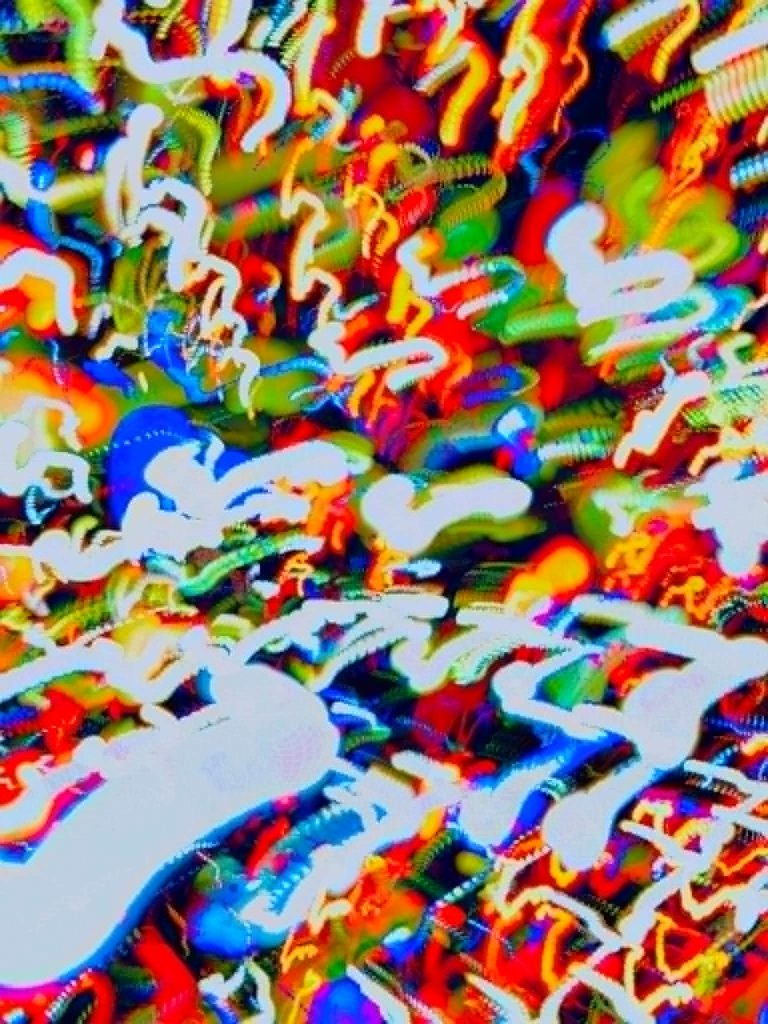
Normally when interviewing musicians, I’ll spend time absorbing their albums, attempting to discern lyrical themes and brainstorming questions that might offer some deeper insight into the artistic process. This proved more challenging in preparing for my conversation with Chris Weldon and Doug Leed, two artists and improvisational musicians who have never before collaborated, and whose upcoming set as part of Fuse Fest will take shape in the moment, serving as an unplanned, evolving sonic conversation between the two.
“We both create sonic environments from nothing, and although we haven’t done that together, we’re operating on the same wavelength,” said Weldon, who will join Leed for “Sound & Vision” at Old First Presbyterian Church on Friday, May 22. (Click here for the full slate of remaining Fuse Fest shows.) “And we have some outlines of what we might do, but there’s no concrete anything, really. Just some loose idea of where to start.”
While the two have never performed together, they have previously appeared on the same bills, both at the Fuse Factory and as part of the monthly experimental music showcase S.T.A.T.I.C. Both are also drawn to improvisational music for similar reasons, with Weldon alternately describing the practice as “going someplace you’ve never been” and “the act of creation” and Leed comparing it to a developing dialogue. “Initially, you’re kind of listening, dipping your toe in the water,” he said. “And then you kind of start adding your musical voice to that conversation.”
A donation powers the future of local, independent news in Columbus.
Support Matter News
Internally, there are a number of things happening at once when the performers are engaged in improvisation. Weldon said he is listening intently to what is taking place around him, but also to a number of tracks that are running solely in his head, offering blueprints as to where he might move next. And while he’s fully engaged, there are times he can zone out and enter into a trance-like state. “It’s a little bit of all those things. … And I feel out of time and space when it’s really working,” said Weldon, who is still narrowing down the instruments he might adopt for his performance with Leed, weighing the inclusion of everything from piano to the cimbalom, a large hammered dulcimer.
For his part, Leed plans to focus on a 61-key Casio keyboard that offers nearly limitless sonic possibilities, including banks of sound effects that can conjure rumbling trains, crowing roosters, and other sounds reflective of the musicality both performers are able to pull from their surroundings as they move through their daily existence. “At my primary care physician’s office, when I go in the bathroom, there’s this really loud HVAC motor sound,” said Leed, who then mimicked the oscillating whirl of the rig. “And I’ve actually recorded it on my phone to use in a set at some point. … And then also, I live in the Clintonville area, and … by Lucky’s Market you can hear all these frogs come out every year when it’s warm, and you can essentially hear them chirping all night long. And I’ve recorded that and used it in a set, as well.”
“I imagine that’s a thing with a lot of people who do the music we’re doing,” said Weldon, who described how me might encounter a sonic pattern in the course of his day – the whir of traffic or the urgent beep of a crosswalk signal – and then fold it into a set later the same evening. “And maybe it’s something you couldn’t have come up with on your own, and it’s happenstance you even caught it.”
The pair’s music will be augmented by a video display created by Leed and composed of artwork done by both. (Weldon said he sent his collaborator a range of images pulled from his decades as a visual artist, from portrait work and photographs to abstract paintings.) And while Leed wasn’t yet sure what form the video might take, he envisioned the middle section including a slideshow of Weldon’s portraits in which the camera would begin with closeups of the figures mouths and then pan backwards, creating a sense “that the music is coming out of their mouths,” he explained.
With improvisational music, Weldon said it can sometimes be a challenge determining when and how to resolve a piece – a process reliant on visual and sonic cues that can at times be difficult for the performers to discern. “And especially when the group gets a little larger, it can be harder to come to resolution, and you might have one person who’s not with the other three people and who just keeps going,” he said. “And when that happens, you can just let that morph into the next piece, or everyone can jump back in and keep it going for a while.”
Sticking that landing, though, can generate a sense of elation that both said can be difficult to quantify.
“It’s really exhilarating to have connected with someone on that deeper level,” Leed said. “It’s definitely a formative experience, and it strengthens my friendship and kinship with other artists and musicians, for sure. And I immediately want to know when it’s going to happen again.”
Author
Related Articles
Prison finds freedom in sprawling psych-rock jams
The New York band’s current tour hits Rich Street Records on Saturday, Aug. 15.
Curiosity, community continue to fuel Oneida
The long-running experimental rock band will visit Cafe Bourbon Street for a concert on Friday, Aug. 14.
Angela Autumn attempts to find heaven on Earth with ‘Believer’
The Nashville-based country singer performs a free concert at the Snow Fork Event Center in nearby Nelsonville on Thursday, Aug. 13.