
‘Art from the Inside’ gives voice to the incarcerated
A new exhibition at All People Arts features work by artists from Trumbull and Grafton correctional institutions and runs through Oct. 28.
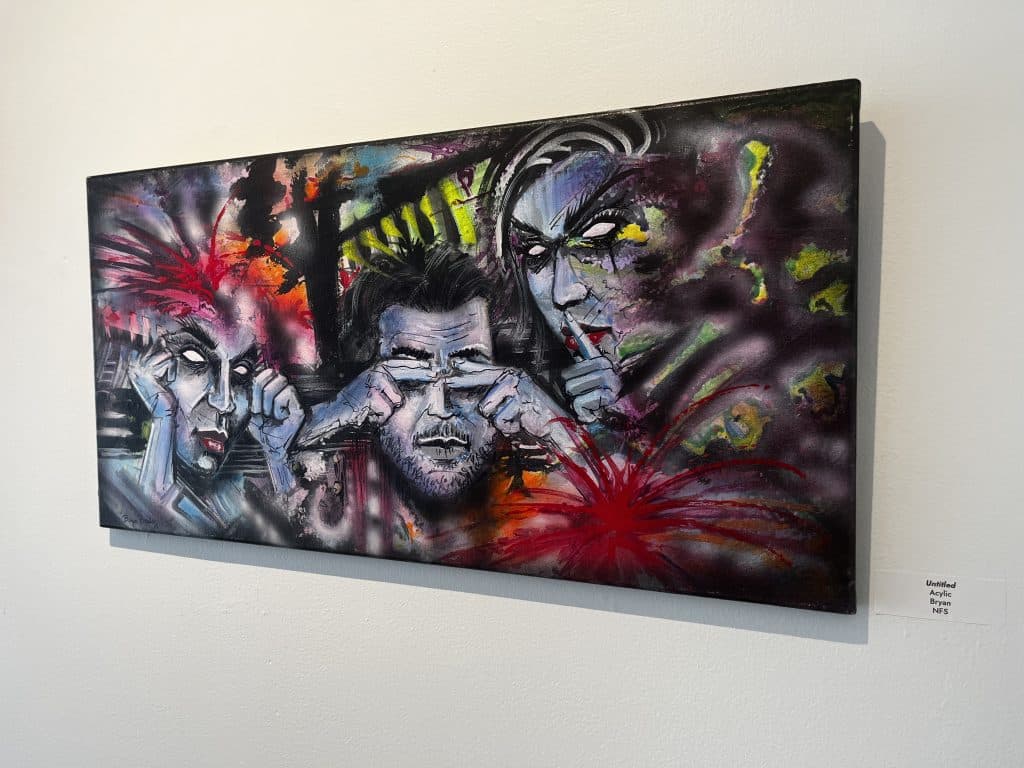
The path from conception to reality was at times a knotty one for “Art from the Inside,” which opened at All People Arts on Aug. 14 and will remain on view through Oct. 28, with Lyn Logan-Grimes recounting the various bureaucratic hurdles that needed to be cleared in order to display the work done by incarcerated people at two prison facilities: Trumbull Correctional Institution and Grafton Correctional Institution.
“We first met a year or two back just to try and get everyone on the same page,” Logan-Grimes said from the South Side art space in late August, joined for the interview by gallery director Sydnee Spivey. “There are some [prisons] that are really into the arts and advocate for the artists, and we brought them to the table to get a feel for if they wanted to do [an exhibition], and if so, what it could look like.”
While not every detail ended up being resolved – the process of transferring money to those incarcerated at Trumbull is so complex that the gallery eventually scrapped the idea of making the pieces done by those artists available for purchase – this back and forth did little to dim the enthusiasm of the curators, both of whom homed in on how the artists were able to transform limited materials (canvases, paints, Styrofoam) into an eclectic collection centered on a handful of recurring themes: freedom, perseverance, and the necessity of finding beauty in dark times.
A donation powers the future of local, independent news in Columbus.
Support Matter News
A handful of paintings feature either wild animals (lions, zebras) or winged butterflies, while others depict surreal worlds that Spivey described as “daydreaming or thinking of different realities.” A roughly textured painting of multicolored flowers done on Styrofoam, meanwhile, is titled “Inspiring Positivity,” which could have served as an alternate name for an exhibition that lingered on images that capture the promise of better days rather than more explicitly abolitionist or political messaging.
And yet, the sense of erasure that can often go hand-in-hand with imprisonment – “When people are [incarcerated], it’s often like, ‘They’re away, oh well,’” Logan-Grimes said – made its presence felt at the exhibition opening, which only one artist, the formerly incarcerated Twyanna, could attend, with the remaining artists still serving out their sentences.
“I definitely think having the artists here, having them give feedback and background [on the work], would have been a great addition to the opening,” said Spivey, who tried to fill some of the gap by playing recordings of spoken word poems read by people incarcerated at Trumbull and Grafton, hand-written copies of which are tacked to the gallery wall.
Compared with the artwork, the political messaging included in some of the poems is compellingly blunt. In “What About Tomorrow,” for instance, Poetic writes of “throwing rocks at penitentiaries with the owners inside,” while “Incarcerated” by King Dewey opens with him longing for the missed nights of intimacy with his spouse and then contrasts this serene scene with lines detailing the screams that routinely soundtrack his days.
Though limited in materials, the artists deploy the supplies allowed of them in often ingenious ways, with Jonathan hand-carving and airbrushing Styrofoam with such skill that even in close-up a trio of three-dimensional masked figures can read as wood. “During the reception, someone was like, ‘How did they curve Styrofoam?’” Spivey said, pointing to the curled hands on one figure, chiseled by the artist from a small block of Styrofoam.
A similarly disorienting effect happens in one four-paneled work by Fred, which is also crafted from Styrofoam but looks as though it were painted on a section torn from a wall and loosely held together by rusting rebar.
Regardless of the form taken, Logan-Grimes said the work on display within “Art from the Inside” can serve multiple essential purposes, fostering a greater sense of connection, challenging perceptions, and offering a potential path to healing.
“I see it as bridging the gap for artists who are incarcerated. Being able to express yourself beyond those borders is everything,” she said. “And then it’s great for the community to see this work, which I think gives a different perception [of the incarcerated]. And I think you can see as well that art is a healer, and that art has … the power to be transformative.”
Author
Related Articles
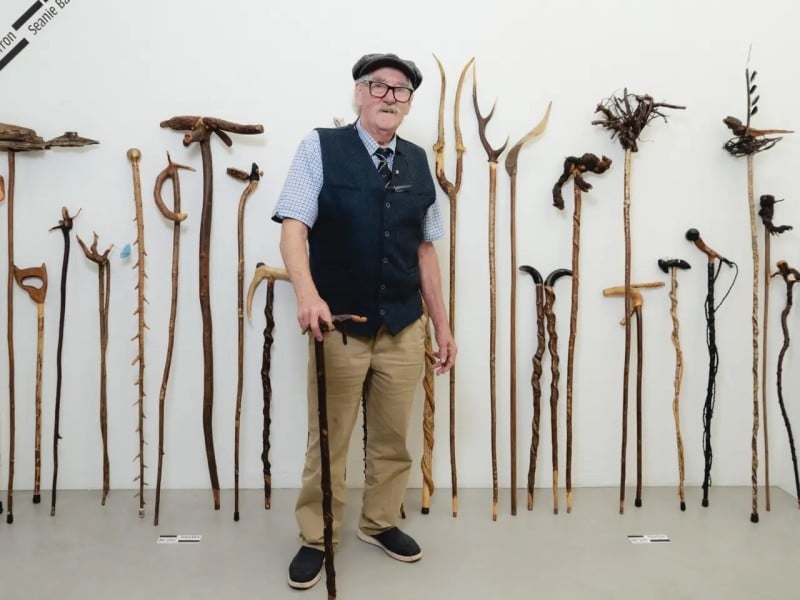
Take a leisurely stroll through the woods with Seanie Barron
The Irish artist’s new exhibition of hand-carved walking sticks kicks off at No Place Gallery with an opening reception today (Friday, Oct. 16).
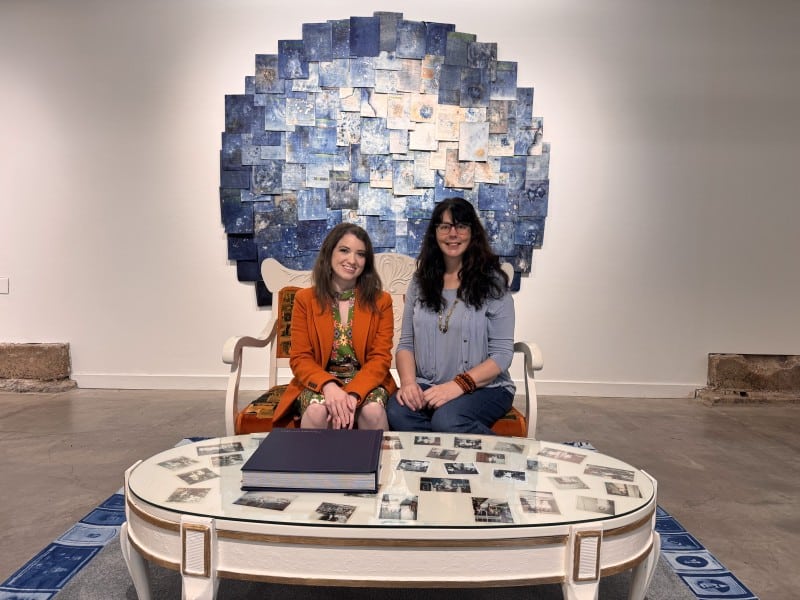
New Urban Arts Space exhibition opens up a conversation about death
‘Spirit & Dust,’ co-curated by Diane Callahan and Michelle Burdine, explores grief, loss, and the weight of mortality from a wealth of perspectives.
Scrawl meets Scrawl
Marcy Mays and Sue Harshe recently joined pioneering Urban Scrawl artist Dan Gerdeman for a conversation ahead of the band’s performance at the Franklinton art event that has been a longtime source of confusion for some of their fans.