
Charlie Goering harnesses his ghosts for ‘Anima, Animus’
The Cincinnati artist’s new exhibition opens at No Place Gallery on Friday, Sept. 4.
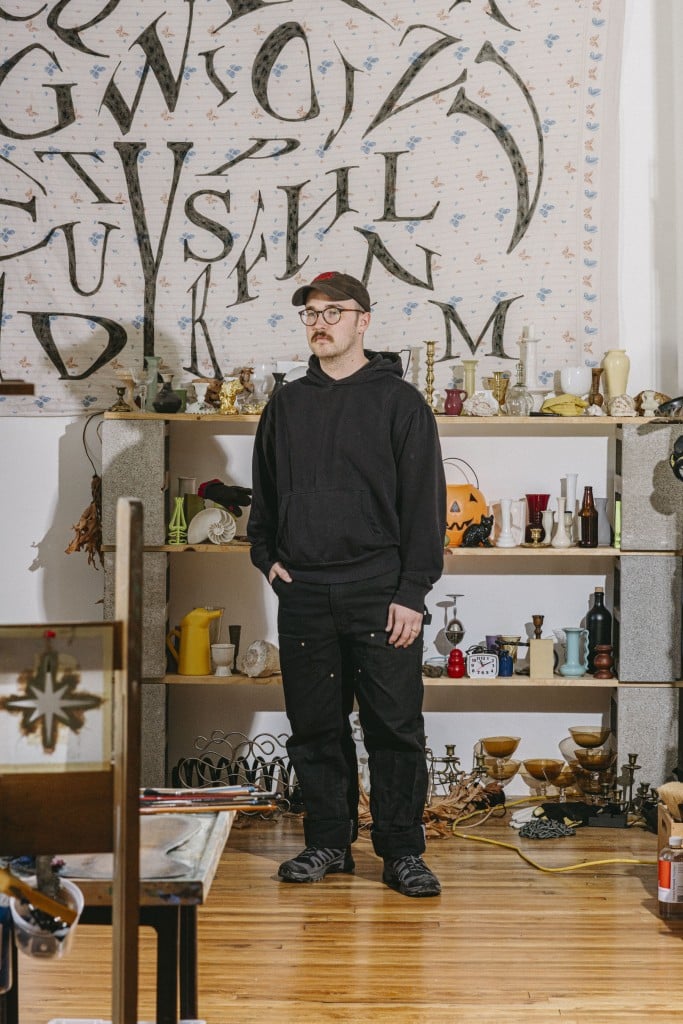
In pulling together the work for “Anima, Animus,” opening at No Place Gallery on Friday, Sept. 5, Charlie Goering had to sort through dozens of paintings he had completed since early 2024 – a prolific stretch shaped in part by a personal and creative evolution given rise by the birth of the artist’s first child.
“I’d just been constantly making paintings,” Goering said from his Cincinnati studio in early September, tracing this initial creative burst to the need to populate a pair of shows he had booked a couple years back that ended up falling through in the wake of the 2024 election. “And these were overseas shows, so we can put two and two together and think maybe people lost interest, which was a shame. But a number of those paintings are in this show, so it’s not a shame anymore.”
These earlier works are joined in “Anima, Animus” by paintings the artist has completed since the birth of his son, including one titled “Looking Up” that he finished, appropriately, while holding the newborn in his arms. “Going through that changed everything for me,” Goering said. “There was a depth to my work before, but I had never experienced a really intense miracle in my life like that, and now the paintings feel way deeper than they did before I saw him enter the world.”
A donation powers the future of local, independent news in Columbus.
Support Matter News
Goering said he sees this intensity reflected in newer paintings such as “Fecundity,” a stunning, large-scale work depicting two skeletons dancing above a moonlit body of water. The meaning of the title is twofold, referencing both a physical fertility, or the ability to produce offspring, and also a conceptual fertility connected to how freely new ideas then began to flow for the artist.
Given time and distance, additional dimensions have emerged within the piece for Goering, who among other things sees in it now his struggles with depression and “this sense of life dancing alongside death,” as he explained it. “So, there are all these meanings I come to see in the two skeletons dancing, like my wife and I coming together to create life. And then also maybe it’s two ideas coming together to create something that’s more than its whole, which is how I often feel about the paintings. It’s all of these sort of disparate things – one, two, three, four ideas – that come together to make something greater.”
Painting, for Goering, is a time-consuming process, with canvases sometimes taking six months or longer to complete – a duration he attributed to the fine detail work required but also the reality that conceptual ideas need to filter through his being in a way that can’t be rushed.
“I can’t force it, right?” said the artist, who will sometimes leave canvases untouched in his studio for long stretches, coming back to them only when inspiration has returned. “And that’s why I often say that … my paintings are the ideas that haunt my studio like ghosts. I almost feel like the paintings are sort of always here. They’re in my mind. They’re in my studio. And then as I start to stretch a canvas and find the form for them, they come into their own.”
Owing in part to this patience-testing process, Goering years back began experimenting with collage – a form of expression that allowed him to react and respond in the moment, and which also has a presence within “Anima, Animus.”
“There’s certainly something more immediate about collage,” said the artist, who recalled how these cut-and-paste works were initially informed by the paintings and then evolved over time to a point where they began to shape how he approached his canvases. “And then that goes on and on and on” in an ever-rotating circle of inspiration, he added.
Over the years, Goering’s paintings have also continued to change and take new shape in similar fashion, the artist’s early figurative works giving way to still life during the three months he and his wife lived together in Spain shortly after they married in 2018. Going into the move, Goering held grand ideas of being a figure painter who worked on massive canvases. But once it became clear the stay would be shorter than expected, he pivoted to comparatively small still life paintings that could more easily return stateside with the couple.
“And it set me off on this trajectory where all the work that you’ll see, it kind of stems from the humble still life,” said Goering, who adopts an approach to the craft in line with the painter Giorgio Morandi. “The objects Morandi painted he imbued with meaning because he put his attention on them. And so, the objects in my studio and in my paintings, which are this forgotten thrift store bric-a-brac, sort of gain prominence because I’ve put my attention upon them.”
Regardless of the form his work has taken, however, Goering believes it has always been underpinned by a degree of melancholy that he traced to his lifelong experiences navigating depression, and which he said remains a presence even now as some of his paintings begin to reflect the joyous afterglow of new fatherhood.
“I don’t think there will ever be a painting I make that doesn’t have some melancholia behind it. … There are certain things you just can’t hide from, and that can show up in the way you apply the paint, in the way you compose the image. That something in you is just always inherently there,” said Goering, who later acknowledged that other dimensions have risen to greater prominence in his art. “I think perhaps, yes, the work is on an upturn, and there’s a lot more confidence. … I just feel like psychically there is something great going on, and I think it’s because I’ve embraced love, and I’ve embraced the love for another human being that’s come into the world. And when you can do that, I think it brings a lot of love and beautiful things back to you.”
Author
Related Articles
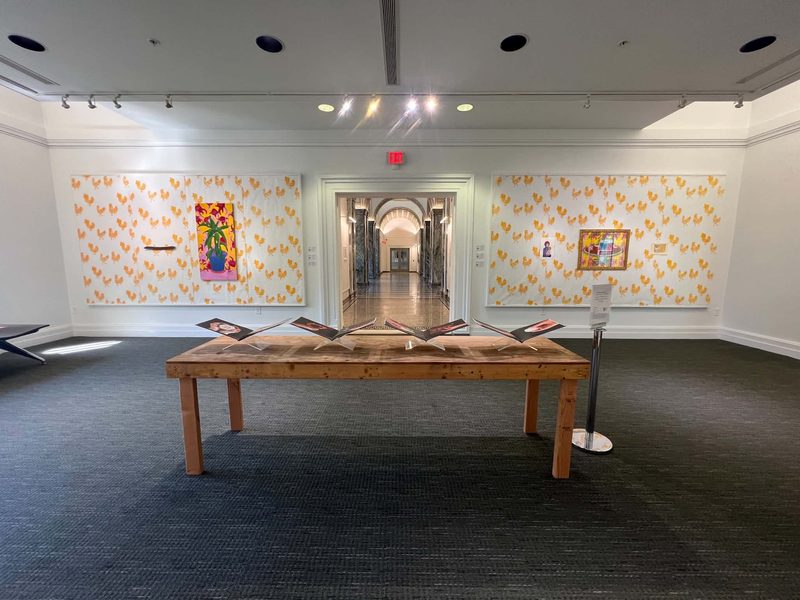
‘Immigration: A Journey of Belonging’ seeks deeper understanding
The new group exhibition, open now at the Losinski Gallery at the Main Library, will host a reception from 2-4 p.m. on Saturday, Oct. 3.
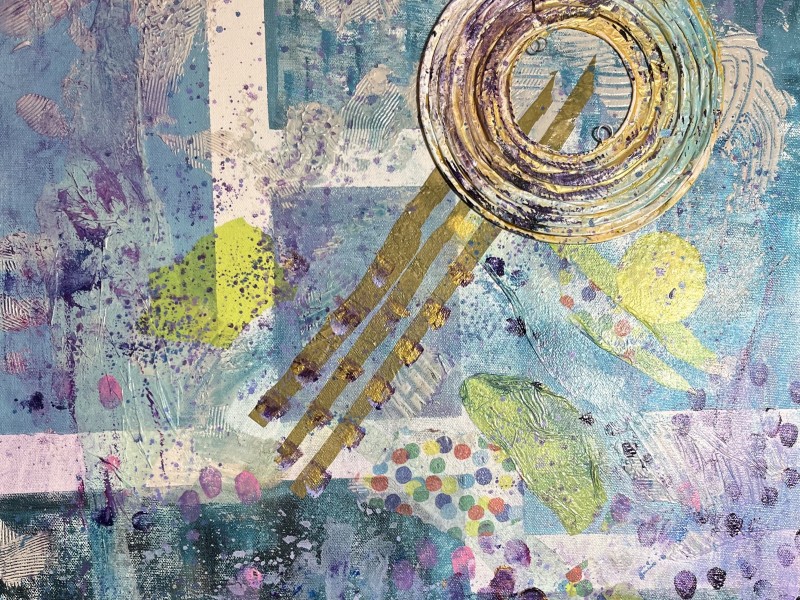
Deep conversations pave the way to ‘Chasing the Light’
A couple of years ago, Loren Bucek invited a group of artist friends to her Clintonville home. The gathering soon evolved into regular meetups that shaped the creation of a new exhibition opening this week at McConnell Arts Center.
Henry Hess says goodbye to his longtime Chromedge studio
Faced with a rent increase of more than 30 percent, the Hess family opted to move on from the artist’s creative home of the last eight years. And while the next steps remain uncertain, they stressed that Henry would maintain a presence in Franklinton. ‘We’re not going anywhere,’ Sophia Hess said.