
Lydia Smith seeks out stillness in ‘Burial Sites’
The photographer and ethnographer will celebrate the release of her limited-run art book in conversation at Two Dollar Radio Headquarters on Tuesday, Jan. 14.

Lydia Smith can trace her fascination with gravesites back to around 2012, when as an undergrad at Rice University she began visiting cemeteries in and around Houston, Texas, seeking out quiet spaces in which to sit and draw her surroundings.
Smith said the months preceding these earliest visits were defined by death, recalling how she “lost a lot of family members in a concentrated period of time,” and how she initially sought out these final resting places as a means to reestablish a sense of grounding.
“And so, I began visiting cemeteries, drawing them. And it became this thing that just spiraled,” said Smith, who quickly ditched a sketchbook in favor of a camera, often training her lens on “the overlooked moments” that existed within these constantly evolving spaces. “So, the project now is less about processing my own grief than it is understanding the limitlessness of death.”
A donation powers the future of local, independent news in Columbus.
Support Matter News
Smith’s interest took on a more formalized structure in 2015 when she received the Thomas J. Watson Fellowship, a grant designed to aid a year of purposeful, independent exploration outside of the United States, and which allowed her to visit cemeteries in Sweden, Egypt, Japan, Argentina and Australia. Traversing the globe, Smith began to unpack the various ways different cultures memorialize the dead, along with the impact of race, politics, economics, climate, and religion on these burial spaces. Visiting Sweden, for instance, led Smith to consider the impacts of atheism, particularly as she toured a burial site that consisted of little more than a grassy mound where mourners could distribute the ashes of the dead.
“And that was partially because of the way people [in Sweden] began to reconsider their relationship to the end of life,” said Smith, whose decade-plus of graveyard visitations are documented in the new limited-run art book, Burial Sites. (A reading initially scheduled to take place at Two Dollar Radio Headquarters today, Tuesday, Jan. 7, has been delayed until Tuesday, Jan. 14, owing to the inclement weather.)
Beyond religious practices and tradition, Smith said the countless cemeteries she visited were also heavily shaped by the surrounding environment, recalling a trip to Waverley Cemetery in Sydney, which is modeled on Victorian cemeteries in England (a byproduct of the colonial link between the two countries) but has taken on a radically different feel from the source inspiration as the stones have continued to weather in the intense Australia sun.
The condition of a cemetery can also offer contextual clues about everything from the economics to the history of a place. In Houston, for instance, Smith frequented one cemetery that had adopted a perpetual mowing routine to keep the grass at a uniform one-inch height throughout the grounds – a stark contrast to the overgrown plots she encountered in more disadvantaged areas. Similarly, Smith recounted one trip to Poland where she came upon a Jewish cemetery nestled beside a Protestant Christian cemetery and a Polish Catholic cemetery.
“And the Protestant Christian cemetery was located at a church, and it was preserved but less visited,” Smith said. “The Jewish cemetery was just across a fence, and there were only maybe three stones, and all of them were broken. And then the Catholic cemetery, there were maybe 15 visitors when I was there, and there were lights and candles and people were taking hoses and washing the graves. And that can tell you a lot about that particular area of Poland. Of course, things change rapidly in our history, and what communities live where changes with migration and violence and all of these other things. And we can find records of that in the cemetery, whether it’s written explicitly for us on a sign or not.”
When Smith began this ongoing project, she would take copious notes, trying to capture every sensory detail of her experience. Quickly, though, she realized the impossibility of this task, paring back and learning to train her camera on moments of stillness and those places where the impact of the living could still be felt – left-behind gardening tools, decaying flowers, hand washed grave markers.
“I think the relationship of the senses has always been something that drove me there. It’s often a place where there’s quiet, or there’s a slowing down. There’s this affective mood that’s different in that space from anywhere else in the city that you’re in,” Smith said. “And so, I was always trying to figure out, like, how is that being produced? Where is that coming from? How is that making me respond to this site? And I think my instinct was to record that. But that thing, that moment, that feeling or reckoning with the unknown around death is something that can’t really be recorded. Or we can continue to try, and maybe that’s our big question in life.”
By its nature, the Burial Sites project has forced Smith to consider more heavily the act of remembering, along with a host of ethical questions with which she has continued to grapple, including the idea that she could somehow be exploiting or disturbing the rest of the dead in taking photographs. Smith began to weigh these ideas when introduced to The Artist as Ethnographer, a 1995 essay by Hal Foster, countering any lingering sense of unease by remaining in dialogue with these types of questions and embracing a methodology ethnologist Clifford Geertz termed “deep hanging out,” which involves remaining in a space perhaps longer than intended, affording it a greater opportunity to impact one’s senses in unexpected ways.
“So, I became really conscious of other people’s mourning, and the sacredness people connect with these sites,” said Smith, whose ideas around memorializing the dead have also evolved as she has become more deeply enmeshed in these studies. “At some points I was even like, are cemeteries actually really wasteful for the environment? A lot of people are like, ‘Oh, I love this. Let’s preserve this forever.’ But over time I’ve started to think, ‘I don’t know about that.’ I think there’s actually a beauty in accepting the loss of a place … rather than holding onto something that might actually burden us.”
Author

Related Articles
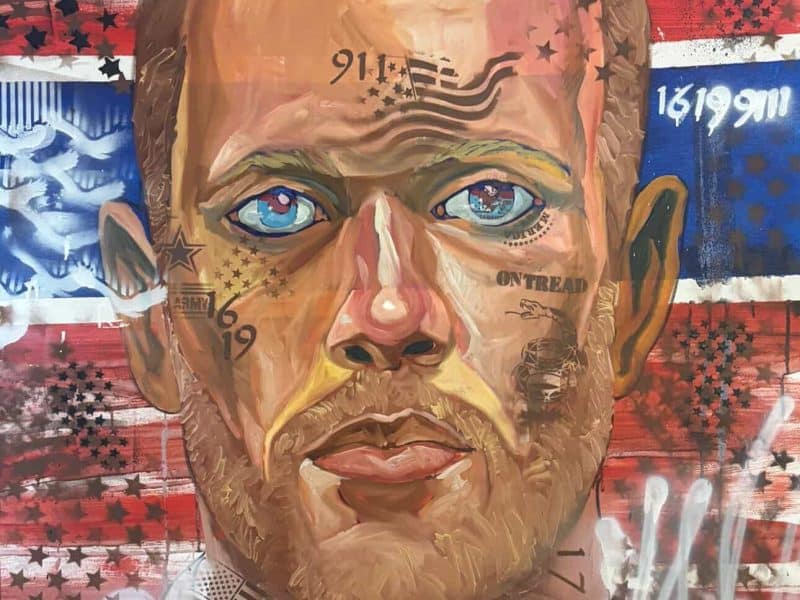
David Butler makes a stunning return to ‘Whiteland’
The Columbus artist’s thought-provoking new exhibition kicks off at Hammond Harkins Galleries with an opening reception on Saturday, May 9.
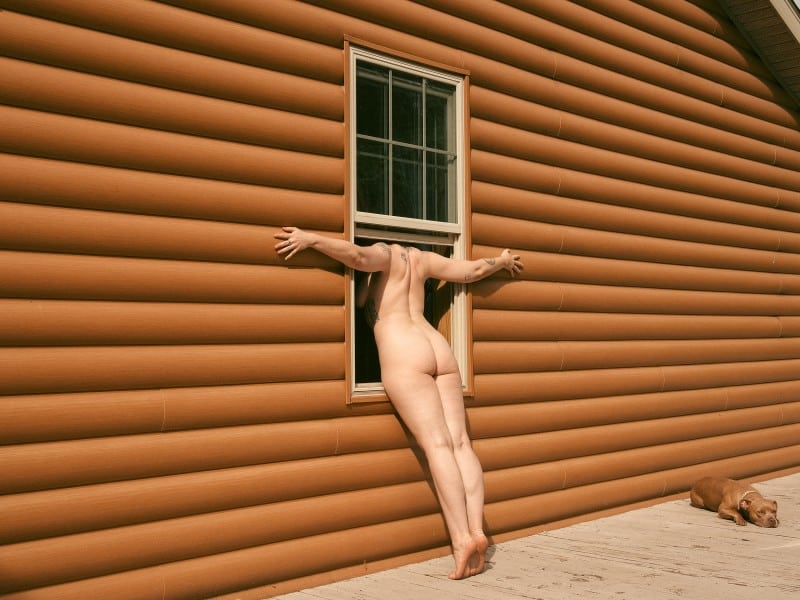
Kate Sweeney captures herself at the threshold
The Columbus photographer recently had two images named to the 2025 Booooooom photo awards longlist, including an eye-catching shot taken on a summer trip to Michigan that she described as ‘a self-portrait of transformation.’
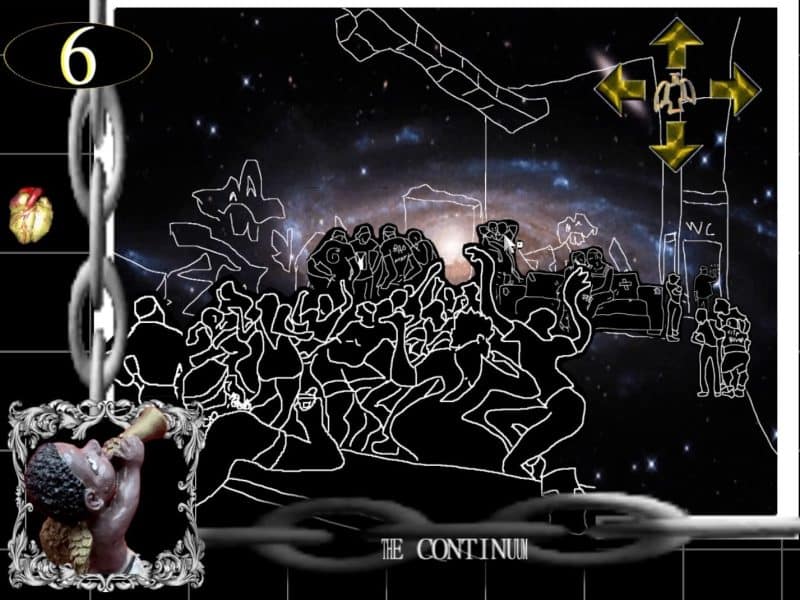
Cameron Granger’s debut video game doubles as a love letter to the Columbus DIY scene
In ‘Sidechain,’ set at a warehouse party on the final night before the world ends, players navigate scenes that draw inspiration from the formative years the artist spent frequenting spaces such as MINT, Corrugate, and Skylab.