
Marcus Blackwell slows down to take in the ‘Songs of Stillness’
The Columbus artist’s new exhibition, now on display at St. James Tavern, emerged from a challenging year in which he learned to overcome grief by accepting the need to sit with it.
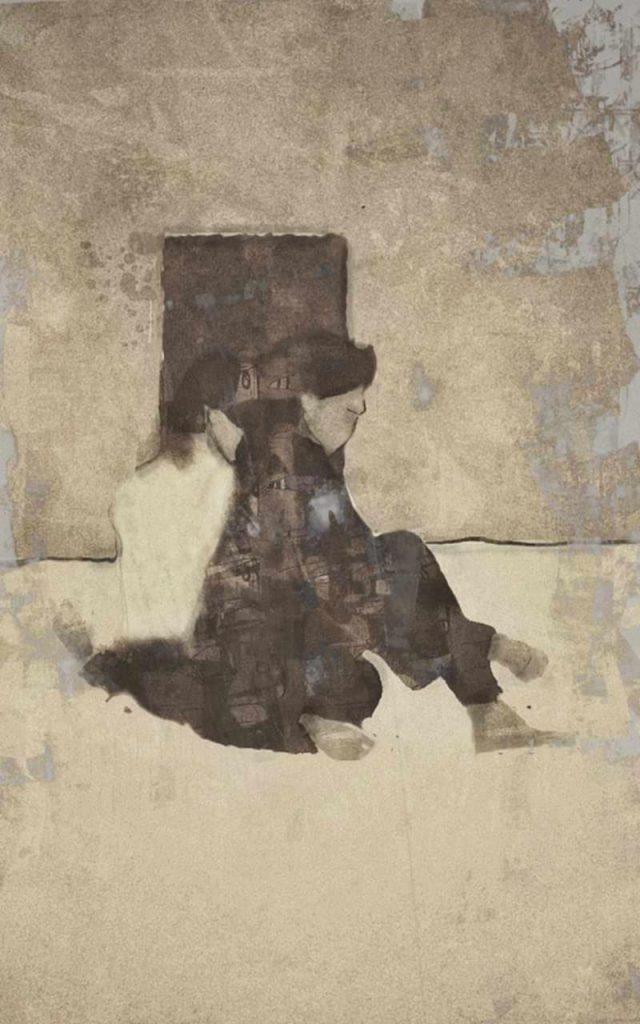
The last year has been difficult for artist Marcus Blackwell, defined in many ways by a relentless series of personal tragedies that left a long trail of grief stretching in their wake.
As he attempted to navigate these accumulated pains, Blackwell said he frequently found his thoughts turning to the many daily tasks that needed to be accomplished, his relative stasis in the face of loss driving a feeling of guilt that began to gnaw away at him.
“I was always fighting it, like, ‘You’ve got 10 things you need to do today,’” said Blackwell, seated in mid-February at St. James Tavern, which will host a kick-off for his new exhibition, “Songs of Stillness,” beginning at 4 p.m. today (Friday, Feb. 21). “I had so many things to do, and I thought if I got them done, I wouldn’t grieve anymore. And grief was like, ‘No, you’ve got to sit here.’ So, after a while, it turned into this thing where I was like, ‘You know what? Yeah, you have all these things you need to do, but apparently you’re supposed to be doing what you’re doing right now, which is just sitting here.’ And the moment that happened, and the moment I stopped running, now you have to face these thoughts and feelings. And then a miraculous thing happened where I wasn’t so fearful of those things anymore. And the more I got used to thinking about things, and the more I got used to being sad, the more I let go, and the more I gained an understanding of what was really going on with me.”
A donation powers the future of local, independent news in Columbus.
Support Matter News
Gradually, Blackwell learned to embrace stillness as a practice, allowing himself time to sit not only in sadness but in joy and serenity and doubt and rage, letting each emotion better imprint itself on his being and enabling him to better place these fragmented moments within the larger context of his existence. In this, he began to understand that the grief he navigated over the last year wasn’t necessarily a bad thing, often serving as a means to hold in embrace those whose memory he so wanted to keep alive.
“You continue to grieve because you … want to hold onto this strong emotion that keeps them here,” said Blackwell, 58, who has since come to understand that those lost and his grief are not one and the same, and that it’s possible to let go of the latter without losing the former. “Oftentimes when we experience an emotion, we personally identify with it, and we say, ‘I am sad,’ or ‘I am angry,’ when the real thing is ‘I’m feeling this.’ By saying, ‘I am,’ we’re incorporating that feeling or emotion into our identity in a way it can stick with us. And the stillness helped me realize these emotions that we run from have more stamina than we do. They’ll give you a lifetime head start, and then when you get tuckered out and you’re at the end of your rope, they’re right there waiting, saying, ‘Are you ready to deal with me now?’”
In “Songs of Stillness,” viewers are able to see how this meditative practice has shaped and informed Blackwell’s art, both in terms of subject matter and technique. Stretching back to his earliest days drawing, Blackwell said he has been a fan of “clean, definitive, bold linework.” But in more recent pieces, many of these lines have receded, with the artist focusing more on color and shape. And in those places where lines do appear, they’re often less certain, varying in thickness and less clearly defined, mirroring how in stillness certainty can give way to something murkier and more complex, and how intense feelings can begin to soften and blur at the edges over time.
“For me, the line has always represented the clearest thought I can put down. You can’t dispute a line. And if you make a bunch of other lines, you have this clear precise statement,” he said. “And I wanted things to be less in your face, where it was like, ‘This is the law of the land, and you better do this and this.’ And in that, I’ve found myself working more with form and color and shape, and trying to express the nuances of these feelings, because so often we consider emotions in binary terms, where they’re either good or bad, pleasant or unpleasant. Anger might invoke unpleasant thoughts in our heads, but anger is a warning signal. Fear is a warning. … And that’s how emotions work. It’s no longer up or down, but instead all these little bits and pieces.”
The stillness also had a pronounced impact on the subject matter that spilled onto the canvases, a muse over which Blackwell acknowledged that he had little control, with images starting to surface from the deepest recesses of the artist’s mind, including one piece born of his first love at age 18. “When you’re 18, you’re an epic hero and the world is a mythic quest, and your first love is the love of your life, your eternal love,” he said. “And I think we carry that pathology with us until we get to a place where we realize it was just a myth, and things really weren’t as big as that. But the emotions are big enough to survive in the memory to the point where they’re still with you, and what does that mean? And how do you reconcile that?”
Rather than simply emerging as a byproduct of these excavations, Blackwell has come to understand this latest body of work is also reflective of a larger evolution, and one in which has begun to reconsider the intent with which he approaches his art.
“With these pieces I’ve created … there’s not a thought in my mind about where it’s going to go or what it’s for,” he said. “It’s not for a show. It’s not for a gallery. It’s just for me to work things through. … It used to be, ‘I want to be famous. I want gallery representation. I want to be in the Smithsonian. I want the flowers. I want the candy. I want, I want, I want.’ And now it’s turned to asking, ‘What do you need?’”
Author

Related Articles
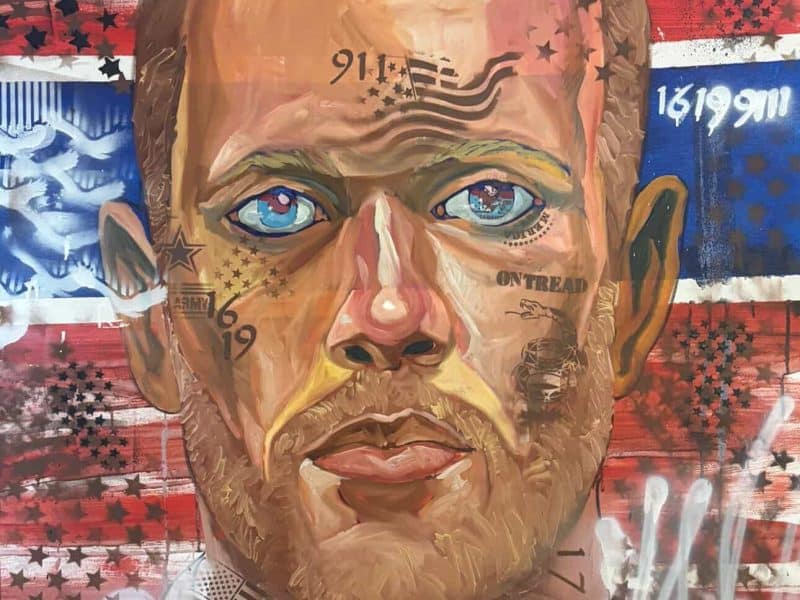
David Butler makes a stunning return to ‘Whiteland’
The Columbus artist’s thought-provoking new exhibition kicks off at Hammond Harkins Galleries with an opening reception on Saturday, May 9.
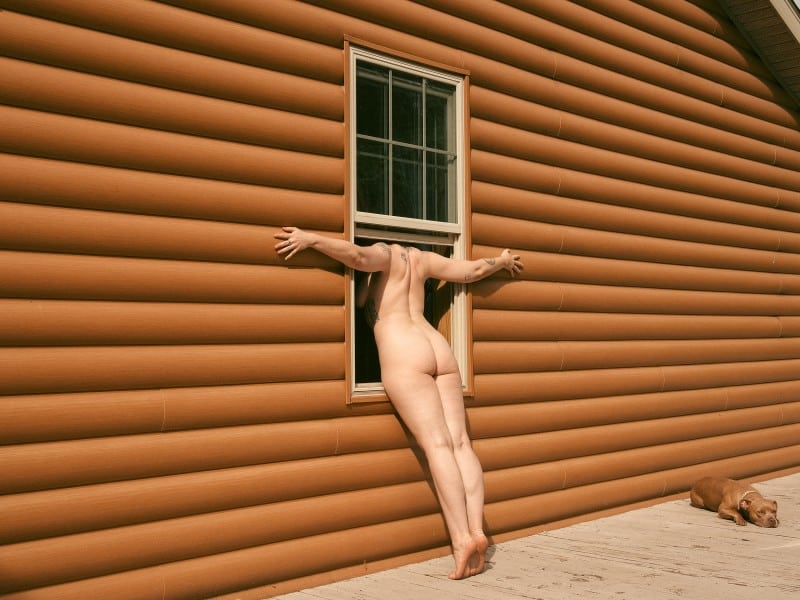
Kate Sweeney captures herself at the threshold
The Columbus photographer recently had two images named to the 2025 Booooooom photo awards longlist, including an eye-catching shot taken on a summer trip to Michigan that she described as ‘a self-portrait of transformation.’
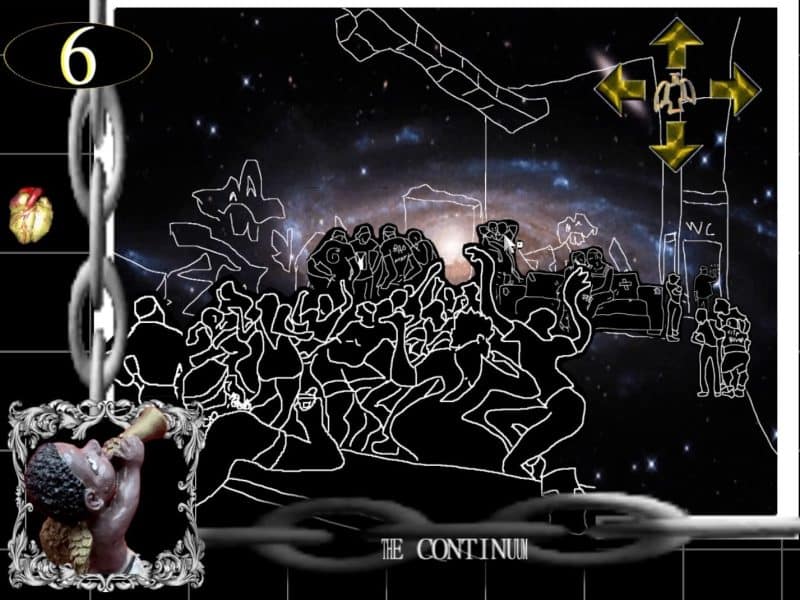
Cameron Granger’s debut video game doubles as a love letter to the Columbus DIY scene
In ‘Sidechain,’ set at a warehouse party on the final night before the world ends, players navigate scenes that draw inspiration from the formative years the artist spent frequenting spaces such as MINT, Corrugate, and Skylab.